Khaberni - Economists confirmed that the Asian tour of His Majesty King Abdullah II, starting with a visit to Japan, represents a strategic economic opportunity to deepen Jordan’s presence in international supply chains, attract quality investments in various sectors, and expand the production and export base.
They pointed out that these data will support economic growth in the kingdom, provide sustainable job opportunities, and solidify Jordan’s position as a regional center for manufacturing and launching into global markets, while adding new consumers for Jordanian products, which today enjoy a high reputation and competitiveness.
They said that the royal tour will lead to the establishment of partnerships with the countries included in His Majesty's tour, which will contribute to generating new job opportunities for Jordanians, increasing the export capacity of the industrial sector, and enhancing the kingdom’s position as an industrial operation center in the Middle East.
They noted that the tour reflects the insightful royal vision in diversifying economic and trade partners and enhancing Jordan's status as a regional hub for trade, investment, and business, emphasizing the importance of monitoring its outputs and results and turning them into opportunities that serve the national economy.
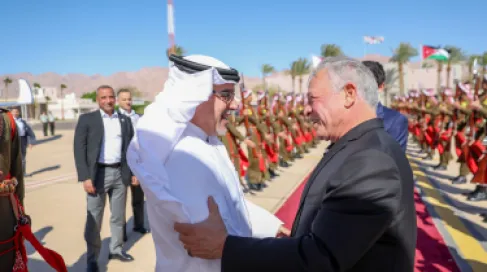
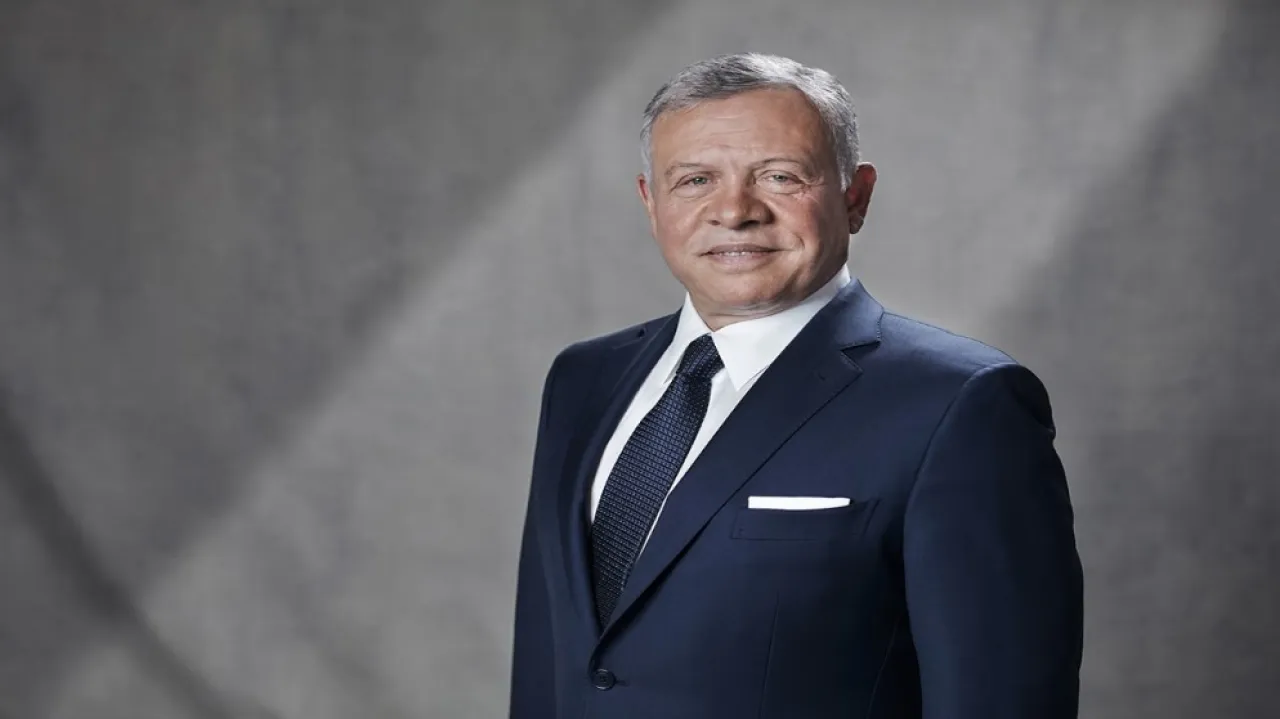
His Majesty King Abdullah II will begin tomorrow, Saturday, a visit to Japan at the start of an Asian business tour that also includes Vietnam, Singapore, Indonesia, and Pakistan.
The royal tour aims to strengthen cooperation between Jordan and these countries and enhance partnerships especially in the economic and investment fields.
Jordan is due to sign, during the tour and on the sidelines of His Majesty’s meetings, cooperation agreements and memoranda of understanding in various areas.
According to numerical data from the Department of Statistics, Jordan’s imports from Japan during the past eight months of this year amounted to about 180 million dinars, against 29 million dinars in exports.
According to the same data, Jordan imported from Vietnam during the past eight months of this year at a value of 135 million dinars, against one million only in exports, while Jordan's imports from Singapore during the past eight months of this year amounted to about 19 million dinars, against nearly 7 million dinars in exports.
In 2004, Jordan and Singapore signed a free trade agreement, the first for Jordan with an Asian country in the region and the first for Singapore with a country in the Middle East.
According to the same numerical data, Jordan’s imports from Indonesia during the past eight months of this year amounted to 267 million dinars, against about 67 million dinars in exports while the statistical data showed that Jordan’s imports from Pakistan during the eight months of this year amounted to about 20 million dinars, against 9 million dinars in exports.
The former minister and economic expert Dr. Khair Abu Saileek said that the timing of the royal tour to Asian countries carries deep strategic connotations, particularly as the economies of Asia today constitute more than 40 percent of the global economy size, and these economies are looking for reliable partners in a region characterized by fluctuations.
He added that His Majesty the King possesses an insightful vision in marketing Jordan as a safe and attractive platform for Asian investments, confirming that the visit to Vietnam represents a qualitative step that could contribute to increasing Jordan's clothing exports over the next three years, in addition to generating new direct job opportunities.
He mentioned that Jordan looks forward to enhancing its partnerships with Japan and Singapore in technology, innovation, artificial intelligence, renewable energy, in addition to digital transformation and financial services, indicating that the transformation of Jordan into a regional hub for advanced technology is no longer a distant dream, but a feasible and achievable opportunity thanks to the royal vision and the state’s efforts in modernizing the economy and attracting quality investments.
He emphasized the importance of the participation of the Jordanian private sector in this royal tour, noting that the private sector is the natural partner in implementing the outcomes of the visits and opening new markets, and that the presence of representatives from the chambers of commerce, industry, and major companies contribute to transforming political understandings into concrete economic opportunities, and enhances the presence of Jordanian products and services in the promising Asian markets.
In turn, the head of the Jordan Exporters Association, Alain Ahmad Al-Khudari emphasized that the royal tour represents a pivotal moment in Jordan's efforts to expand its economic partnerships with the Asian continent and enhance the presence of Jordanian exports in new and promising markets.
He saw that His Majesty's meetings with the leaders of these countries, and representatives of major economic institutions, will contribute to opening broader prospects for Jordanian exports, especially in the sectors of clothing, pharmaceuticals, food products, chemicals, and technical services, which enjoy a distinguished reputation in the global markets.
Al-Khudari noted that the royal efforts constitute a source of pride and esteem for all Jordanians, affirming His Majesty's deep belief in the role of the productive economy in building the future, stating that signing the cooperation agreements and memoranda of understanding during the tour will enhance the institutional framework of economic relations, and open the door to sustainable partnerships between Jordan and countries of Eastern and Southeast Asia.
In his capacity, the president of the Jordan Businessmen Association, Ayman Al-Alawneh confirmed that the royal tour represents a strategic transformation in Jordan's economic policy, to reach equitable economic partnerships, explaining that it early opens doors for Jordanian businessmen in rising East Asian countries in the global economy and gives high flexibility to adapt to global changes, and a shift towards traditional markets.
He noted that moving away from the traditional investment model will direct attention towards benefiting from the developmental models of Asia in transferring the experience of digital transformation in Singapore and agricultural development in Vietnam and advanced manufacturing in Japan and food security technologies in Pakistan.
Al-Alawneh emphasized the need to establish mechanisms to translate the results of the royal tour into actual investment opportunities and strategic partnerships through the development of the Invest in Jordan platform to become there is a special Asian gateway for Asian investors, and to allocate special industrial areas for Asian investments and announce incentives dedicated to high-value-added industries supporting economic growth.
In turn, the representative of the leather and textile industries sector in the Jordan Chamber of Industry, Engineer Ihab Qadri, stated that the royal tour represents a strategic economic opportunity to deepen Jordan’s presence in the global supply chains and attract quality industrial investments, and to expand the production and export base, which supports economic growth, provides sustainable job opportunities, and contributes to solidifying Jordan's position as a regional center for manufacturing and launching into global markets.
He said, "His Majesty's visit comes within the context of a strategic direction to enhance economic partnerships and diversify sources of investments, especially with the rising Asian economies that possess advanced industrial expertise and large production capabilities."
He added that the visit represents an important step toward opening new prospects for the Jordanian industry, in light of the ongoing changes in global supply chains and increasing competition in international markets.
Qadri saw that Vietnam stands out as one of the most important stops in His Majesty’s visit, being one of the largest global centers in the clothing and ready-made garments industry, possessing extensive supply networks primarily directed at the American and European markets.
He explained that with the recent changes in customs tariffs and international trade policies, many Vietnamese companies started searching for alternative or complementary locations for their operations to reduce costs and enhance the ability to access markets without barriers.
He pointed out in this context that Jordan appears as a competitive and distinctive destination, benefiting from the free trade agreement with the United States, which grants its products duty-free entry into the American market, alongside having facilitated rules of origin, diverse industrial cities providing a ready operating environment, a qualified and quickly trainable workforce, as well as investment incentives packages that facilitate starting and maximizing production operations.
Qadri highlighted that Jordan possesses a successful and existing model in the leather and textile industries sector, which achieves exports exceeding 2.3 billion dollars annually, reflecting the industrial expertise and stable operational structure in the kingdom.
Engineer Qadri noted that enhancing industrial cooperation between Jordan and Vietnam can pave the way for establishing joint production and operational partnerships, whether through transferring part of the production lines, establishing new factories within Jordanian industrial cities, or implementing integrative production models that serve the American and European markets.