Khaberni - Mexico hopes to achieve significant economic gains when it hosts matches in the 2026 World Cup including the opening match, but street vendors in the capital see the event as both an opportunity and a threat at the same time.
Alejandra Sarasua said "the expectations are zero," expressing her fear of being expelled from her usual site near Azteca Stadium where she sells Mexican Hala candy, but Japanese chef Satoru Hasuike, who runs a ramen (a type of noodle soup) stand in the city, hopes to officially work inside the Azteca Stadium "in the style of street food."
Mexico will host 13 matches in June and July, including five in the capital, noting that the remaining matches will primarily take place in the United States and Canada, as the Mexican Ministry of Tourism estimates that the tournament will bring about 3 billion into the local economy.
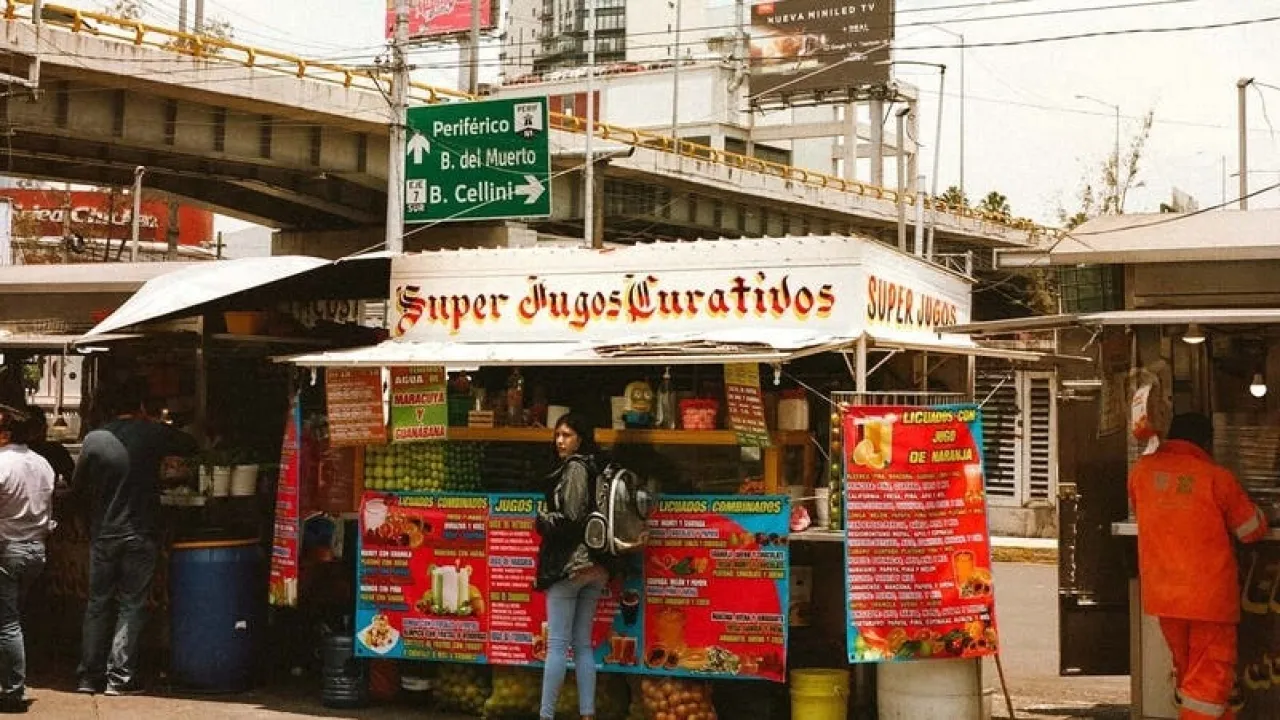
In Mexico, selling inside the stadium, where the international federation "FIFA" traditionally supervises who is allowed to sell and in the surrounding areas, sparks wide controversy. Street food vendors are a fundamental element in the vast Mexican capital and one of the most prominent attractions for foreign tourists.
A government report this year estimated that 1.5 million people earn their living from selling on the city streets, but tensions between them and the government have occurred before, with the latter sending riot police in 2007 to clear the historic city center from vendors.
Sarasua (55 years old), a former hospital employee, said: I am worried about how I will continue. I have received warnings about continuing, and I am trying to make alternative plans, but unfortunately, I will not be allowed to sell even while walking around.
On a pedestrian bridge near Azteca Stadium leading to the train station, workers are removing debris where dozens of stalls stood until late October, and a person who had been working there since the 1980s, who asked not to be identified for fear of reprisal, said: They took everything at night. We don't know where our stuff went.
Another vendor refused to talk to anyone taking notes, whispering: Don't let them see me while I give information. This is a mafia. There is a lot of money. You have to pay bribes to the bosses and the authorities, and “FIFA” does not like us, and that's why they drive us away.
An official told "France Press Agency" that the vendors will be moved to another place, noting that negotiations are ongoing to determine their new destination.
These stalls do not have official permits but are described as "permitted," and their owners have no legal protection. However, other vendors see the World Cup as a business opportunity.
A simple fence separates the Azteca Stadium from the "El Estadio" sandwich shop, which proudly displays pictures of the Brazilian legend Pele and the Argentine Diego Maradona, crowned with the World Cup in Mexico in 1970 and 1986.
The owner of the shop, Oscar Hernandez, said: I am learning English to serve foreign customers, and at the same time, I am thinking of other ways if they force me to close my shop. But as a Mexican, you always find a solution. I will set up a stall two streets away, and if they do not allow me, I will go out with my sandwiches in a bag and sell them.
On the other side of the city, in the Roma-Condesa area, which is home to many Americans working remotely, Hasuike stands out with his ramen stall which attracts long queues, thanks to the videos he posts on the TikTok app, and says: I hope to work inside Azteca Stadium on match days, I will sign a contract with "FIFA" to establish a shop inside the stadium, not just a stall.