Khaberni - The Higher Council for the Rights of Persons with Disabilities issued its achievements report for the past October.
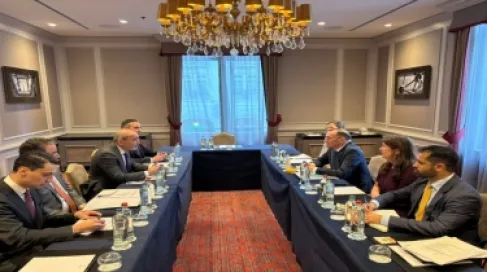
According to a statement from the Council today, Thursday, the Council started with the aim of ensuring equal opportunities and accessibility for all, including people with disabilities and the elderly, in collaboration with the Ministry of Tourism and Antiquities and the Ministry of Labor to execute a consulting and analytical project, aimed at developing practical recommendations to enhance accessibility at archaeological and historical sites, and building the capacities of the tourism sector to achieve inclusivity through the preparation of specialized training materials, explaining that the project enjoys support from the Multi-donor Trust Fund for Inclusive Growth and Opportunities, co-chaired by the Ministry of Planning and International Cooperation and the World Bank.
The report states that within the project, field visits were carried out and meetings were held with concerned parties in several tourist sites, with the goal of gathering the necessary information to prepare the recommendations and explore potential improvement opportunities.
The report mentioned that in order to enhance communication with parents of students, the Council conducted 14 dialogue sessions with parents of students with and without disabilities enrolled in alternative boarding schools across the three regions of the Kingdom with the participation of 253 parents.
The Council also implemented 31 training programs, ranging from awareness programs to specialized ones, targeting 662 male and female participants from public sector institutions, private sector, and civil society organizations. The awareness programs focused on a rights-based approach and the etiquette of communicating with persons with disabilities, while the specialized programs revolved around "Early Intervention for Visually Impaired Children," "Enhancing the Capacity of Healthcare Providers as Providers of Reproductive and Sexual Health Services within an Inclusive and Holistic Framework," "Enhancing the Inclusive Operational Environment in Tourist Restaurants," "Roadmap for a Child-Friendly Learning Environment in Kindergarten Stage," "Basics of Braille Method," "Methods of Communicating with Abused Women with Disabilities and others.
The report indicated that the Justice Center, in cooperation with the Higher Council, concluded the project "Empowerment for Empowerment," which aimed at empowering lawyers and legal professionals with disabilities in the legal profession.
In the context of promoting job integration, the Council completed the identification of requirements for hiring 20 disabled employees in the Ministries of Justice and Education, and received 7 labor-related complaints that were all resolved and closed.
The Council completed 33 field and exploratory visits, which included schools, public sector institutions, security centers, archaeological areas, and associations, and prepared technical reports to determine the financial costs required for the necessary preparations in those institutions.
The Council also conducted 5 field visits to service centers for persons with disabilities, and put forth recommendations needed to rectify situations in those centers.
In a related context, the Council conducted 11 field visits to accredited institutions, to follow up and verify their compliance with the national standards requirements for services to persons with intellectual disabilities and autism spectrum disorders.
The Council also continued to follow up on receiving complaints and inquiries where it handled 139 inquiries and complaints, and responded to them through various communication channels (the Council's social media sites, the government platform for receiving complaints, and by phone).
In the legislative field, the Higher Council issued the identification card instructions for 2025 in the Official Gazette, which provided for the formation of technical committees to assess the condition of the applicants, a committee to issue the card to study the reports and interview the applicants and make the decision to grant or reject, in addition to an objection and audit committee, as the instructions included procedures for submitting the request via the designated electronic system, and issuing a classification list of disabilities and the code for each disability.
In the same issue, instructions were issued for the qualification and licensing of certified experts for facilitating communication with persons with disabilities at the stages of investigation and litigation for the year (2025), which included the formation of technical committees for qualification and licensing of the experts, specifying membership conditions, their tasks, working mechanism, and conditions for obtaining and renewing the license.