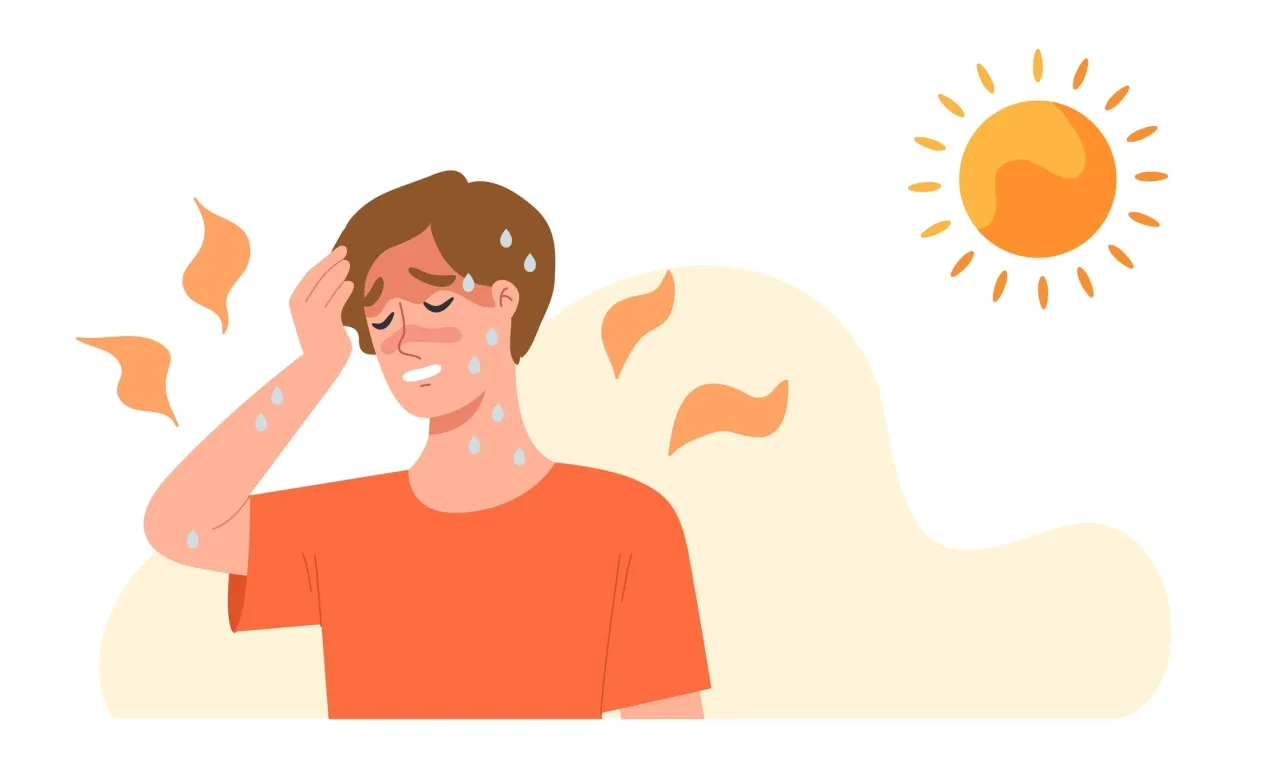
Khaberni - With the arrival of summer and rising temperatures, many people suffer from headaches during heatwaves, even if they are not directly exposed to the sun.
This type of headache is one of the most common symptoms in hot weather, and affects people to varying degrees of pain and dizziness.
But what is the scientific reason behind this pain? And why does the increased heat affect the head and brain in this way?
In this article, we will review the physiological and medical causes of headaches during heatwaves, and provide a set of tips for prevention.
First: How does heat affect the body and brain?
When temperatures rise, the body tries to regulate its internal temperature through sweating and dilating blood vessels near the skin, but if the lost fluids are not replenished, dehydration occurs in the body leading to decreased blood flow to the brain, causing headaches and general fatigue.
The rise in temperature also leads to changes in blood pressure and salt levels in the body, factors that directly affect the activity of pain-sensitive nerves inside the head.
Thus, headaches in hot weather are a natural response of the body to thermal stress, and warn of the need to cool the body or quickly replenish lost fluids.
Secondly: The main scientific reasons for headaches during heatwaves
1. Dehydration and fluid deficiency
• Dehydration is the most common cause of headaches in hot weather.
• When the body loses large amounts of water through sweating and it is not replenished, the volume of blood reaching the brain decreases, leading to contraction of blood vessels and pain in the head.
• Furthermore, a lack of water leads to an increase in salt concentration in the blood, affecting the electrical balance in the brain cells and stimulating pain receptors.
Tip: Make sure to drink water regularly, even if you do not feel thirsty, because feeling thirsty means that you have already started losing your water balance.
2. Direct exposure to the sun (heatstroke or thermal stress)
• Exposure to strong sun rays for extended periods can lead to what is known as thermal stress or heatstroke, a dangerous condition that can develop into severe headaches accompanied by nausea, dizziness, and difficulty concentrating.
• In this situation, the temperature of the brain itself rises, causing minor inflammations in the blood vessels inside the head.
• It also increases the secretion of certain chemicals such as "prostaglandins" associated with pain and inflammation.
Warning signs: Severe headache with high temperature and nausea, excessive sweating — these are signs that require immediate rest in the shade or in an air-conditioned place and drinking cold fluids.
3. Dilation of blood vessels in the head
• When the body's temperature rises, the blood vessels expand to cool the body, and this process may also involve the vessels in the head.
• This sudden expansion in the cerebral blood vessels puts pressure on the surrounding nerves, resulting in throbbing pain in the head, similar to tension headache or migraine.
• This type of headache is sometimes called "heat-related vascular headache" and often appears with prolonged exposure to hot weather or when engaging in physical activity outdoors.
4. Lack of salts and minerals
• With intense sweating, the body loses not only water but also sodium, potassium, and magnesium, minerals important for nerve and muscle functions.
• When the levels of these minerals decrease, there is a disruption in the neural signals inside the brain, leading to headaches, dizziness, and general weakness.
• People who do not eat a balanced diet or do not replenish these salts are more prone to headaches during heatwaves.
Tip: Drink beverages containing mineral salts or natural juices like orange and banana juice to replenish lost minerals.
5. Sleep disturbances due to heat
• High night temperatures prevent the body from entering deep, restful sleep, leading to insufficient sleep or interrupted sleep.
• Lack of sleep, in turn, raises levels of the hormone "cortisol" (stress hormone) and increases the sensitivity of the nervous system to pain.
• Therefore, many people experience headaches in the morning after a hot, restless night, even without direct exposure to the sun.
6. Sensitivity to changes in atmospheric pressure
• Some people have a high sensitivity to changes in atmospheric pressure and humidity.
• In heatwaves, atmospheric pressure often decreases, leading to dilation of blood vessels inside the head and causing headaches similar to migraines.
• People who suffer from migraines are more prone to worsening symptoms in hot and humid weather.
Thirdly: Types of headaches associated with heat
• Dehydration-induced headache: General pain in the head, which increases with movement and decreases when drinking water.
• Vascular headache: Throbbing pain on one side of the head, which increases with exposure to the sun or heat.
• Heatstroke-induced headache: Severe headache with nausea, dizziness, and excessive sweating.
• Sleep deprivation-induced headache: Persistent morning headache with general fatigue and inability to concentrate.
Fourthly: Ways to prevent headaches during heatwaves
• Continuous hydration: Drink water throughout the day, even if you do not feel thirsty.
• Avoid direct sun exposure: Use a hat, sunglasses, and always seek shade.
• Avoid diuretic drinks such as coffee and carbonated drinks, as they increase fluid loss.
• Eat foods rich in water and minerals such as cucumbers, watermelon, and oranges.
• Get enough rest and sleep in a cool, ventilated room.
• Use cold compresses on the head when feeling a headache to reduce the dilation of blood vessels.
• Avoid excessive physical effort at the peak of heat, especially between 12 noon and 4 pm.
Fifthly: When is a headache dangerous?
Headaches caused by heat usually disappear after hydration and rest, but you should consult a doctor immediately if the following symptoms appear:
• Sudden severe headache that does not subside with rest.
• Dizziness or fainting.
• Body temperature above 39 degrees Celsius.
• Persistent nausea and vomiting.
• Disturbances in vision or speech.
These signs may indicate severe heatstroke or a severe lack of salts, and require urgent medical intervention.
It can be said that:
1. Headaches during heatwaves are not just a minor inconvenience, but a signal from the body that there is a disturbance in its thermal or water balance.
2. Common factors such as dehydration, loss of salts, vascular expansion, and lack of sleep, all lead to pressure on the brain and trigger pain receptors.
3. Prevention starts with regular water intake, avoiding direct exposure to heat, and maintaining good rest and sleep.
4. Remember that the body needs care in hot weather just as it does in cold, and that headaches are merely a gentle warning inviting you to lighten the thermal load on yourself.