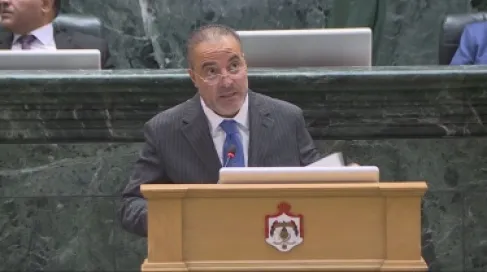
The head of the Oil Press Owners Guild, Taysir Najdawi, urged citizens to be cautious in purchasing olive oil and to avoid rushing. He confirmed that current prices are temporarily high and they will decrease within a week to stabilize between 110 and 125 Jordanian Dinars per high-quality tank.
Najdawi, in a television statement on Tuesday, stated that the unjustified rush to purchase oil has artificially driven up prices, emphasizing that oil is available in sufficient quantities and that the market will soon stabilize.
He added that the price hike this season is due to low production as a result of light yield, although the oil quality is considered the highest in recent years due to the minimal impact of the olive fly pest.
While pointing out that some traders and middlemen have secured entire farms in various areas such as Mafraq and the eastern regions in order to control supply and raise prices, Najdawi affirmed that these practices harm both the consumer and the small-scale farmer alike.
He explained that the Jordanian farmer awaits the olive season to settle his financial obligations, such as university tuition and home building, calling for consideration towards the farmer and not to blame him for the high prices.
He pointed out that a temporary solution for controlling prices could be by allowing military and civilian institutions to import, to meet market needs without flooding it or harming the local product.
Najdawi concluded his statement by saying, “If the price of a tank exceeds 125 Dinars, I advise the citizen not to buy, because the prices will decline soon. The oil is available, but the rush is what increases the price.”
The Consumer Protection Association, represented by Maher Hajat, stated that the association has received many complaints over the past few days about significant increases in olive oil prices, with the price of a tank of oil reaching up to about 150 Dinars in some regions.
He added that during a field trip in the Irbid region, it was observed that prices ranged between 130 and 150 Dinars per tank, describing the prices as unrealistic and not in line with the purchasing capabilities of Jordanian citizens, especially in light of the decreased production quantities in the northern and western areas that rely on rainwater.
Meanwhile, the Ministry of Agriculture stated that it does not intervene in pricing, but will soon open the door to imports.