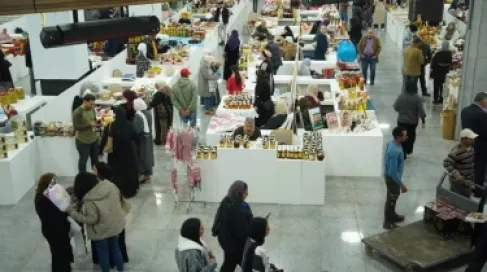
Khaberni - Olive oil prices in the local market are still "stuck" at high levels, with the price of a single 16-kilogram canister ranging between 110 dinars and 140 dinars.
These prices, unprecedented in the Jordanian market, have increased by between 15% and 40% compared to last season, when the price of one canister ranged between 95 dinars and 100 dinars, according to Al-Ghad.
This comes at a time when workers are calling for the necessity to confront the price rise through both opening up imports and boycotting the purchase of oil for a limited period.
Tayseer Najdawi, head of the Jordanian olive press owners and producers, said, "The scarcity of olives has led to the rise in oil prices."
Najdawi added that the current quantities of oil do not reach 12,000 tons, and the shortage is about 10,000 tons.
The union demanded the necessity of opening imports for the oil commodity and selling it in military and civilian institutions to the citizen to regulate the markets and sell at last season's levels, hovering around 100 dinars per canister.
Najdawi attributed the scarcity of olive quantities to climate changes in addition to the lack of rain and the rise in operational costs for farms, most importantly water prices.
He explained that many Jordanian families work in this sector from the start of the season until its end, considering it their source of livelihood, and they await this season which starts in October and extends to January.
Najdawi warned the consumer against buying oil from unreliable sources to avoid fraud and scam operations, urging consumers to purchase from guaranteed sources like presses and farms and to stay away from any unofficial or untrusted source.
Najdawi estimated that the investment volume in the agricultural sector reaches 2 billion dinars, including land, trees, presses, and packaging factories, which number 151.
A single press employs more than 60 workers in various stages of the oil production process.
Nidal Sama'een, former deputy head of the press owners and an investor in the sector, complained, "This season is notably weak as a farm that produced 100 bags last season is currently producing only 3 bags."
He confirmed that the price increase, which reached up to 140 dinars in some presses, was due to increased demand amid declining supply, which has driven prices up this season by up to 30%.
Fayad Al-Ziyoud, an investor in the press sector, said, "The price increase between 115 and 130 is a realistic and sensible price given the decline in supply and the increase in demand."
He confirmed that some areas had excessive price increases that were significantly high and unacceptable, with the price of a drum reaching 150 dinars.
He pointed out that the "Ba'liyah" regions, which rely on rainfall, experienced a significant decline this season, with their annual production not exceeding 25% of their annual averages due to climate change. Al-Ziyoud called for the necessity of caution and not hurrying to make purchases at reasonable prices.