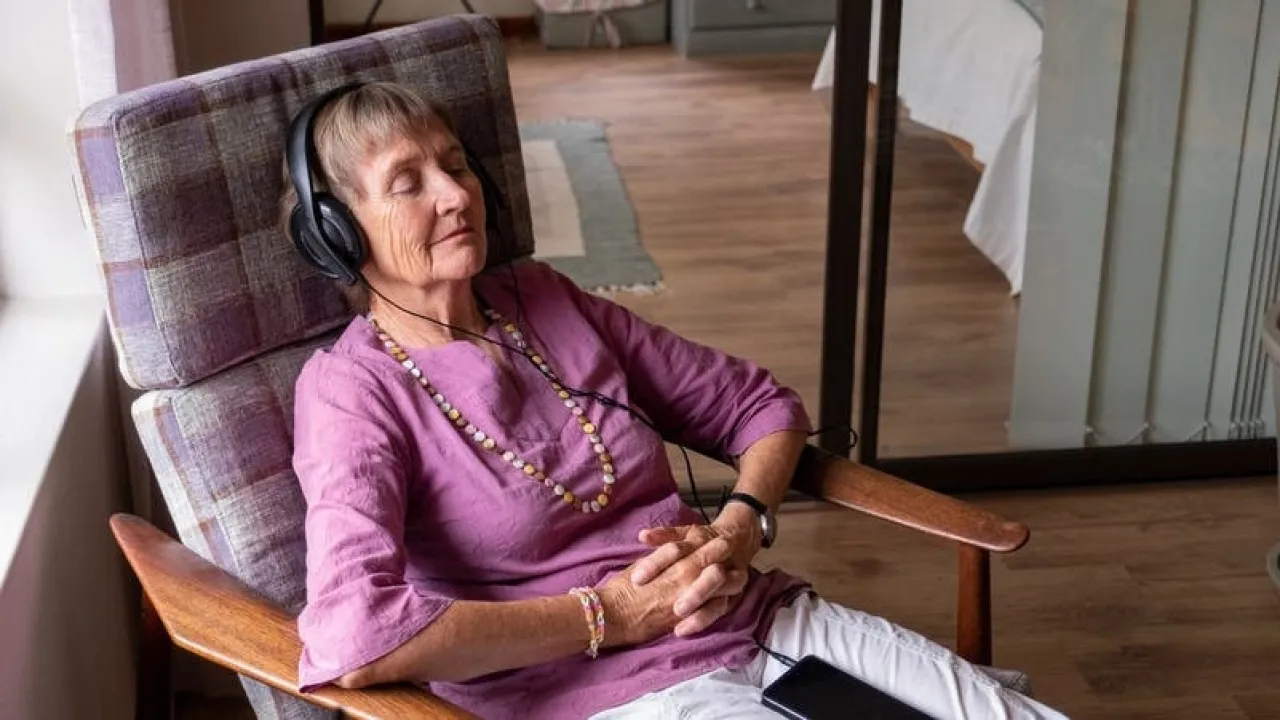
Khaberni - A new study encouraging listening to or playing music might have you singing a new tune, as its results suggest that it can reduce the risk of dementia by nearly 40% in the elderly.
According to the study, conducted by researchers at Monash University in Melbourne, Australia, individuals over the age of seventy who regularly listen to music were found to be 39% less likely to develop dementia and showed better performance in memory tests.
Those who played musical instruments had a 35% reduced risk of developing dementia, while combining listening and playing offered greater protective effects against cognitive decline, according to the research team led by student Emma Java and Professor Joan Ryan.
Lifestyle and Environment
In turn, Ryan stated in a press release: "Given that there is currently no effective cure for dementia, identifying strategies that can prevent or delay its onset is crucial".
She added: "Evidence suggests that brain aging depends not only on age or genetics but is also influenced by lifestyle and the environment an individual chooses for themselves".
The study included more than 10,800 people over the age of seventy, who were followed for several years in long-term Australian studies. Participants were asked about the extent of their musical activities — whether listening or playing — and data were analyzed and published last month in the International Journal of Geriatric Psychiatry.
The researchers also found that regular engagement in both listening and playing music reduced the risk of "mild cognitive impairment" — less severe than dementia — by 22% and was associated with higher scores in cognitive abilities and episodic memory that helps in remembering daily events.
The researchers wrote in their report: "Musical activities might be a readily accessible and easy way to preserve cognitive health in the elderly, although we cannot assert a direct causal relationship".
Benefits of Music
The benefits of music were more evident in those with higher educational levels — those who completed at least 16 years of education — while results were mixed for those with average education.
The study added to the accumulation of evidence showing that creative, social, and mentally stimulating hobbies such as music, reading, and arts contribute to maintaining brain health as one ages.
A joint American-Japanese research review in 2022 concluded similar findings that playing musical instruments improves brain functions in the elderly.
However, Dr. Morten Schieve-Knudsen, a professor of geriatrics at the University of Copenhagen, urged caution, saying: "In general, stimulating the brain is advisable, but the scientific evidence about this is not yet conclusive," noting that studies addressing the impact of activities such as music or puzzles or learning new skills showed varying results.
Nevertheless, he added: "There are additional benefits to playing musical instruments, including increased social interaction — a factor whose significant importance has been proven with age."
According to the World Health Organization, there are roughly 57 million people worldwide suffering from dementia, and the study results suggest that music might be a simple means to maintain brain health, although it does not conclusively prove that it prevents dementia.