Khaberni - Researchers from the University of Copenhagen in Denmark have revealed the role of a specific type of brain cell in the development of schizophrenia symptoms in later life stages, although the responsible genetic changes begin before birth.
The study, published in the scientific journal Neuron, explained that hyperactivity in a small group of neurons can lead to disturbances in brain activity, paving the way for symptoms such as hallucinations, poor concentration, and sleep disorders, which are prominent features of schizophrenia.
The schizophrenia puzzle.. and why do symptoms appear late?
For many years, scientists have been puzzled by an important question: Why do schizophrenia symptoms not appear in childhood despite the presence of genetic factors from birth?
Researchers at the University of Copenhagen say they have found a new explanation for this puzzle: schizophrenia not only arises from a genetic flaw but also from a complex interaction between genes and brain development over the years.
In the study, the scientists used a mouse model that carries a genetic change called the microdeletion 15q13.3, which is linked to an increased risk of schizophrenia, epilepsy, and autism. Interestingly, the mice appeared normal initially, but as they aged, they began to exhibit clear disturbances in nerve cells.
Dr. Katarina Dragisic, the principal researcher in the study, explains: The brain in the early years can adapt to evolutionary errors, but it loses this ability at a certain stage, and that's when symptoms start to appear.
Small neural cells and a huge impact
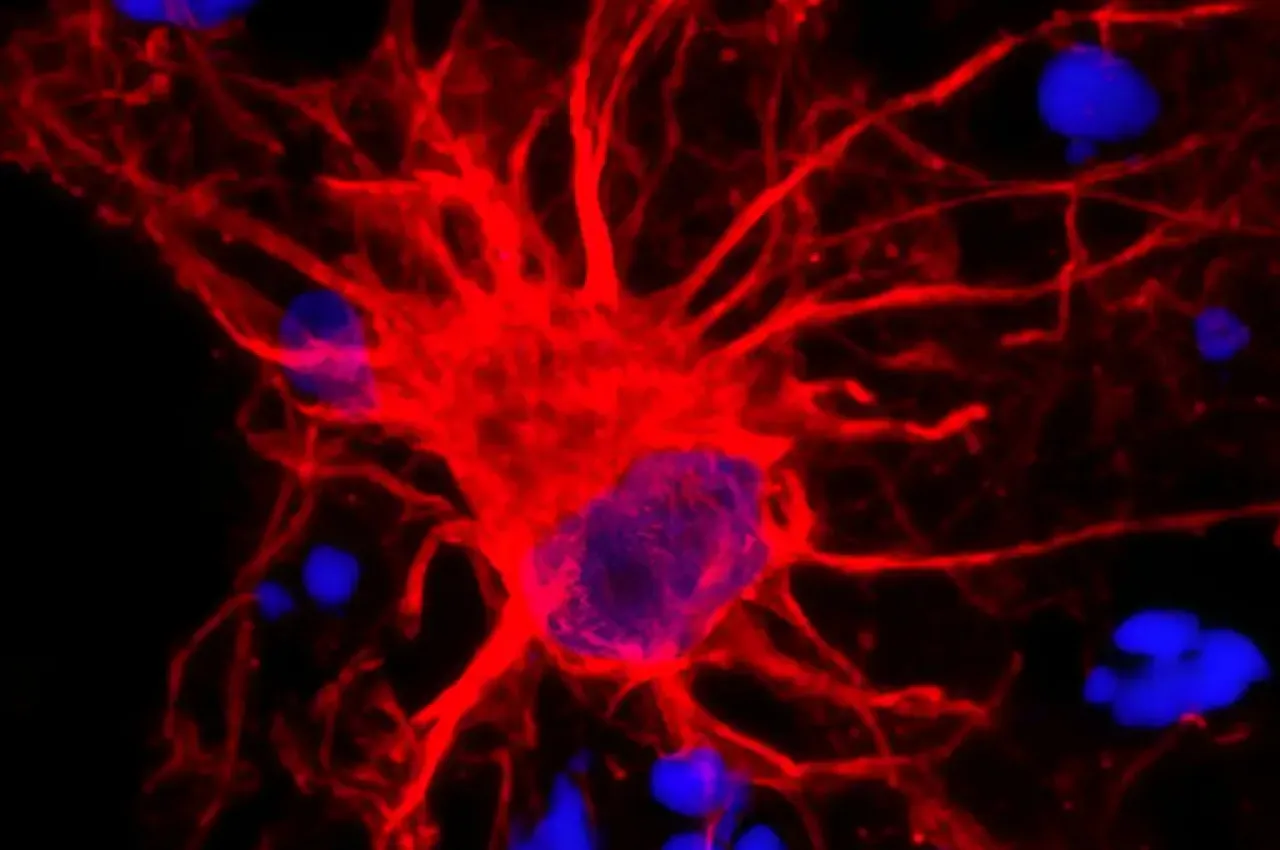
Using advanced RNA sequencing techniques, the team identified a specific type of neuron known as Sst_Chodl cells, which are part of a family of cells that regulate electrical activity inside the brain.
These cells act as a "natural stabilizer" that prevents excessive activity between neurons. However, in mice with the genetic mutation, these cells became hyperactive, leading to disturbances in brain rhythms and sleep disorders.
Dr. Navneet Vasisth, a participant in the study, said: Although the number of these cells is small, their impact is very broad, as their failure to perform their function confuses the entire brain circuitry.
Sleep.. a mirror of brain health
The study also focused on the relationship between sleep disorders and the emergence of psychiatric symptoms. Researchers observed that mice with excessive activity in Sst_Chodl cells suffered from fragmented sleep and a reduction in slow-wave sleep (which helps the brain rest and reorganize).
When using genetic chemistry techniques to temporarily calm the activity of these cells, the scientists observed remarkable results:
The sleep of the mice significantly improved.
The brain rhythms returned to normal.
Signs of anxiety and excessive alertness decreased.
And Dr. Dragisic said: This means that controlling the activity of these cells could prevent not only sleep disorders but also the cognitive symptoms associated with schizophrenia.
A step towards a new treatment for schizophrenia
Professor Konstantin Khodosvitch from the Biotechnology Research Center in Copenhagen clarified that the study could open up possibilities for a more precise treatment of schizophrenia, relying on targeting specific types of neurons instead of affecting the whole brain.
He added: Current treatments focus on alleviating behavioral symptoms, but they do not reach the roots of the disorder in the brain. What we are trying now is to understand the underlying cause of the cognitive and behavioral changes, to achieve a targeted and effective treatment.
Wide future applications
The study is not limited to schizophrenia only, but could extend its results to other diseases such as autism and bipolar disorder, as it clarifies how genetic changes can remain "silent" until a certain age stage and then begin to impact brain functions gradually.
The researchers believe that tracking these changes over time can help develop methods for early diagnosis of psychiatric diseases before symptoms appear.
They also emphasized that sleep could become an early diagnostic tool, as its disorder might be the first signal of the onset of dysfunction in neural cell activity.
The hope in prevention
Although the research is still in its early stages, its results are promising for the future development of a preventive treatment for schizophrenia, based on timely intervention before symptoms appear.
If scientists can stabilize the activity of hyperactive neural cells at an early stage, it might be possible to prevent the disease from developing altogether.