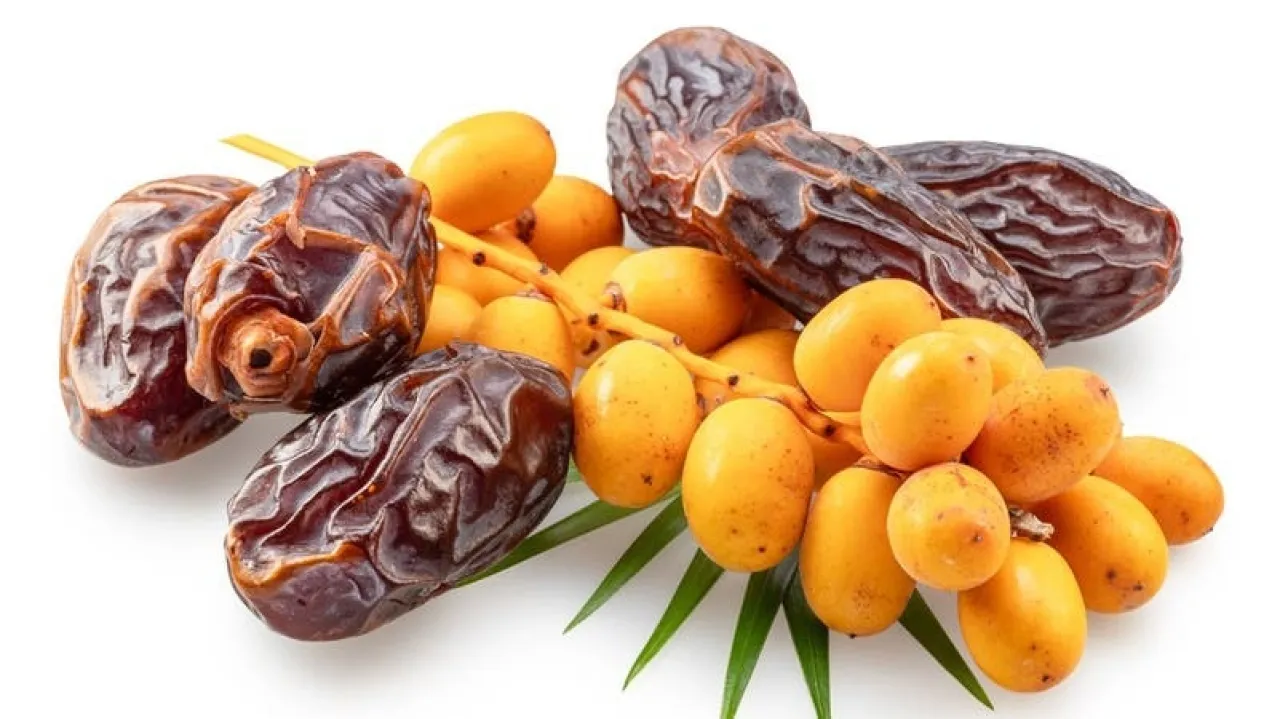
Khaberni - Dried dates, available year-round, are a healthy snack rich in fiber and other nutrients. Fresh dates, in their season, provide less sugar and calories and more antioxidants, according to Very Well Health.
Both fresh and dried dates contain many nutrients and vitamins, but they differ slightly in their nutrient content. While fresh dates contain moderate amounts of potassium and magnesium, dried dates have higher amounts of these micro-nutrients and calcium.
Natalie Allen, a nutritionist and assistant professor of nutrition and dietetics at Missouri State University, says that fresh dates contain a higher percentage of water, which makes them lower in calories and less concentrated in sugar.
Allen adds, "Dried dates are more calorie-dense, but they provide a convenient source of quick energy throughout the year."
Joan Salge Blake, a nutritionist and professor of nutrition at Boston University, says that if one can get fresh dates, their water content would be about 60% compared to dried dates, which have about 25% only. Blake explains that water content in fruit is important because it helps enhance the feeling of fullness and satiety.
Blake explains that "the high water content can contribute to feeling full faster than dried dates. Without this high water content, it is easy to overeat dried dates, given their calorie content."
Fibers and Minerals... Fats and Proteins
Both fresh and dried dates provide essential minerals, but the drying process increases the nutrient concentration. Therefore, although dried dates contain more sugar and calories than fresh dates, they are also a richer source of fiber, calcium, and potassium. Dried dates can contain more than double the amount of fiber found in fresh dates.
Research has shown that the content of vitamins and antioxidants in dried dates is less than in fresh dates. One study, which explored the possibility of developing dates into functional energy bars, found that dried dates contain slightly more fats and proteins than fresh dates.
Multiple Vitamins and More Antioxidants
The study also pointed out that dates can be a relatively good source of vitamins B, C, A, and K. However, there may be a loss of vitamins during the drying process, which means that fresh dates may contain a greater amount of these important vitamins.
Another study, which analyzed the antioxidant activity in three varieties, whether fresh or sun-dried, found that all date varieties are a good source of natural antioxidants and can be considered a functional food. However, some antioxidant components are lost during sun drying.
Difference in Flavor and Texture
While both fresh and dried dates have a sweet taste, their flavor and texture differ due to the drying process.
Dr. Allen says that fresh dates are usually softer, more moist, and juicier, while dried dates have less moisture and a firmer, chewier texture.
In terms of taste, fresh dates have a rich caramel-like flavor, whereas dried dates are sweeter and more flavorful, resembling toffee due to their higher sugar content.