Khaberni - Fee collection on the "Harranah–Omari" road will start from Monday morning.
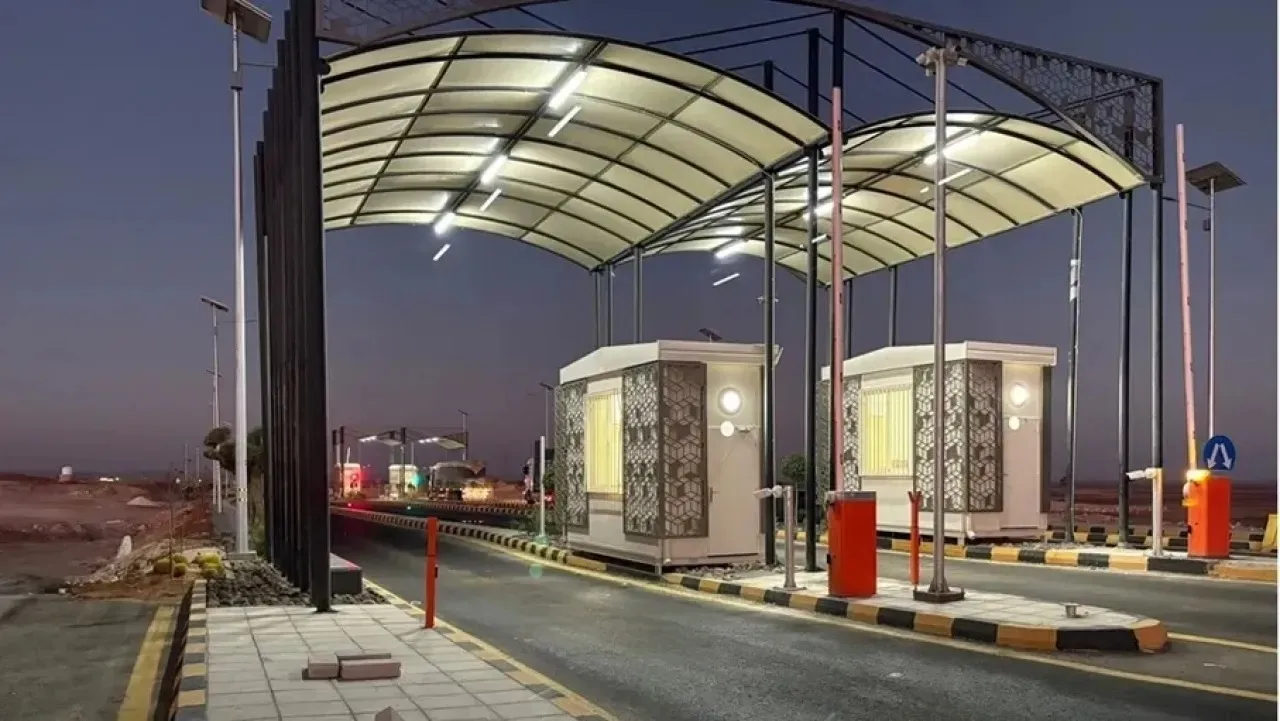
According to the amended system, a traffic service fee will be charged for each vehicle that passes through the toll gate on the road, located between Qasir Omrah and Harranah towards the Saudi border.
The Ministry of Public Works has set the fee at (850) fils for a small vehicle, and (2) dinars and (500) fils for trucks and foreign vehicles.
According to the decision, government and military vehicles, public security and civil defense vehicles, ambulances, and official delegation vehicles will be exempt from paying the fees, in addition to any other vehicles specified by the Minister.
The Ministry confirmed that the fee collection will be carried out through multiple payment methods, whether in cash or through approved electronic payment methods.
Waseem Al-Adwan, the Director of Road Management in the Ministry, stated that this project is part of the Ministry's plan aimed at developing the national road network and enhancing its efficiency, ensuring smoother traffic flow, and improving the quality of services provided to road users.
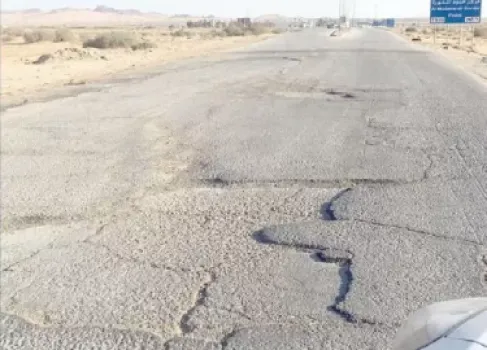
He explained that the road underwent a comprehensive rehabilitation process, which included the removal of old asphalt layers, laying a new asphalt mixture according to the highest international technical specifications, and enhancing traffic safety elements along the route. The works also included the maintenance of the concrete bridge in the industrial area of Muwaqqar and equipping it with solar-powered lighting poles, aligning with environmental sustainability standards.
The Harranah–Omari road serves as a practical model of the implementation of alternative toll roads, chosen after comprehensive infrastructure development works were completed for this road and for the free alternative route consisting of the Azraq–Zarqa–Omari road, which underwent a comprehensive rehabilitation project including its expansion to four lanes separated by a median strip and provided with lighting, making it ready to accommodate traffic efficiently and without fees.
The Ministry indicated in a statement on Saturday that the operation of the Harranah–Omari road project will be managed entirely by its staff, following the hiring and training of a number of youth from areas surrounding the site, supporting local development and providing employment opportunities.
The Ministry of Public Works also confirmed that the alternative toll road project does not imply imposing fees on currently used public roads, as these roads will remain completely free and will not be included in the project. The aim is to create a new system of modern roads offering drivers multiple options, with every toll road having a free alternative ready for use.
The Ministry explained that the Harranah–Omari experience represents the first step towards the implementation of the concept of alternative toll roads, with current preparations for technical and financial studies for similar future projects, to be an attractive model for investment in the transport and infrastructure sector.
The execution of this project is in line with government orientations towards smart and sustainable road management, enabling users to choose the most suitable course according to their priorities in terms of time and cost, contributing to relieving pressure on main roads, and reducing fuel consumption and carbon emissions.
The implementation of the concept of alternative toll roads represents an important step towards stimulating investments in the sector, expanding the national road network, and achieving a developmental shift in the regions traversed by these projects.
The Ministry concluded by confirming that no currently used and open roads will be part of the toll roads, and that the direction towards future projects within the program for alternative roads will be limited to constructing new roads or completing major circular road projects, such as the Amman Development Road and Irbid Circular Road, which will enhance the infrastructure for transportation and serve the economic and logistic development goals in the Kingdom.