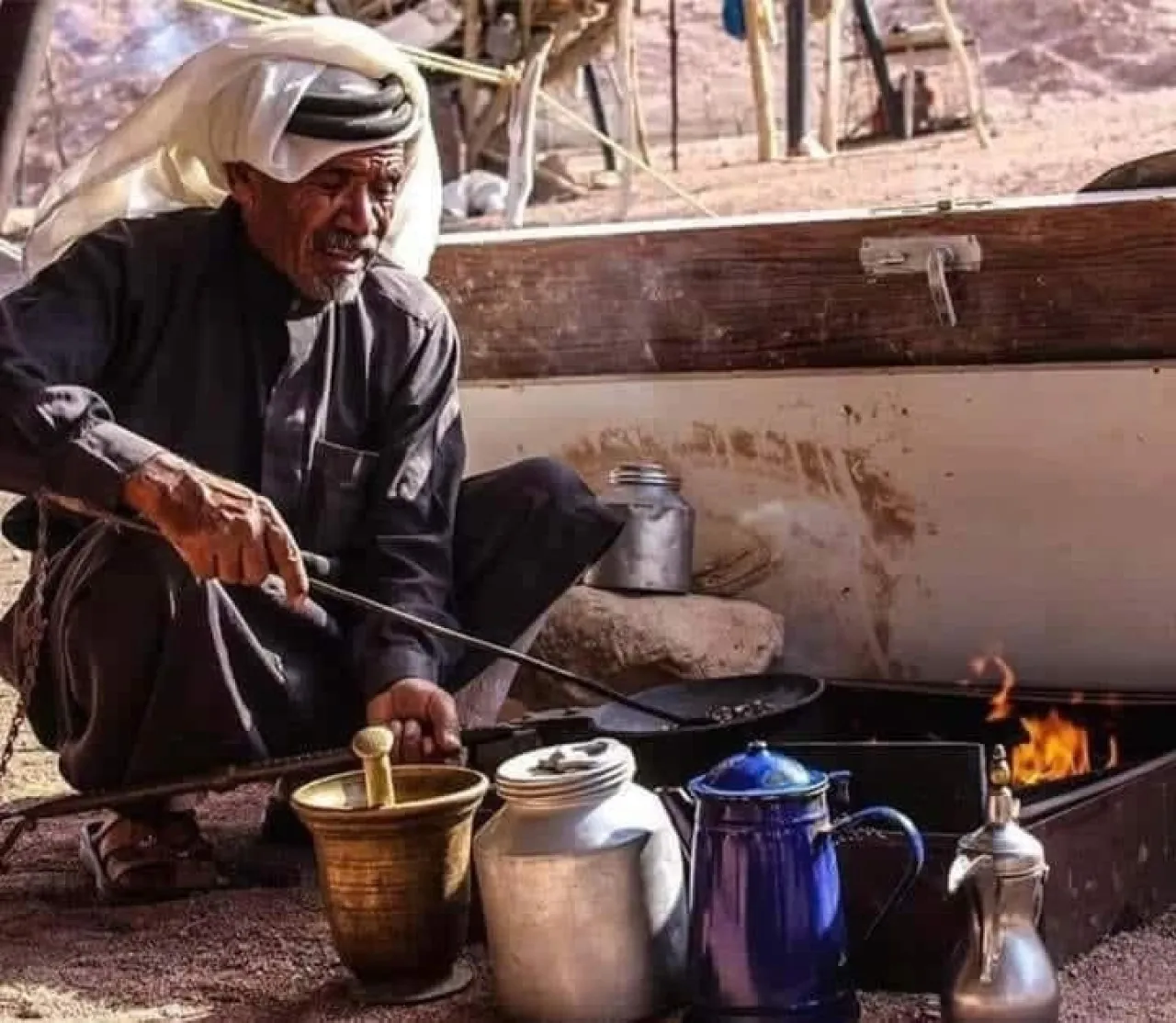
Khaberni - What is the secret behind the distinctive taste of Bedouin coffee? Discover the difference between Bedouin and Arabic coffee, as well as the traditional way it is prepared using authentic ingredients that reflect the generosity of the Jordanian and Arabic Bedouin.
Coffee is not just an ordinary beverage as it is the most popular drink in the Arab lands, and the most consumed, transforming from being a regular morning beverage to a symbol of generosity and hospitality among Arabs.
Bedouin coffee, in particular, is quite different from regular Arabic coffee as it has a distinct taste, strong flavor, and distinctive aroma, with its own special preparation and presentation methods.
But what makes Bedouin coffee have this unique taste? And does it really differ from the Arabic coffee known in cities? This is what we will discover in the following lines.
What is Bedouin coffee?
• Bedouin coffee is a type of authentic Arab coffee that reflects the heritage of the Jordanian and Arab Bedouin of old.
• It is prepared from coffee beans roasted directly on a fire, then manually ground in a "mihbash," and boiled gently in a "dallah" until its pleasant aroma which signals the arrival of guests or the beginning of a genuine Arab council.
Bedouin coffee is part of the cultural and social identity of the Bedouin, where it is said:
"A cup of coffee is a man's honor," indicating that its presentation is a sign of generosity, chivalry, and authenticity.
The secret to Bedouin coffee's flavor
The secret to the taste of Bedouin coffee lies in its traditional preparation method and special ingredients. It is not just a drink, but a complete ritual that starts from roasting the beans on fire until distributing the cups among the guests:
1. Roasting on fire
Bedouin coffee is not roasted in an electric machine as is common today, but the coffee beans are roasted over wood or charcoal fire.
This manual roasting gives it a unique smoky flavor that cannot be imitated by modern machines.
2. Grinding with a mihbash
After roasting, the beans are ground in a wooden tool called "mihbash," where it is pounded rhythmically, a sound known in the Bedouin lands as the coffee sound, and manual grinding preserves the natural oils of the beans adding a rich and concentrated flavor.
3. The secret addition: Cardamom
Cardamom is the essential ingredient that gives Bedouin coffee its unique fragrance, but some tribes also add a bit of saffron, mastic, or clove to impart various flavors depending on the region and customs.
4. Water and fire
The coffee is boiled over a gentle fire in a copper dallah for a relatively long period, which makes the flavor more concentrated and grants it a light but richly flavored body.
The difference between Bedouin and Arabic coffee
Despite the similar names "Bedouin coffee" and "Arabic coffee," there are clear differences in preparation, taste, and even presentation:
Element Bedouin Coffee Arabic Coffee
Roasting Method Roasted manually over fire until dark Generally roasted over medium fire or in a machine
Flavor Strong, smoky, concentrated Mild and more aromatic
Additives Cardamom essential, sometimes saffron or clove Cardamom and saffron common, sometimes cinnamon added
Coffee Color Dark leaning towards deep brown Gold leaning towards yellow
Presentation Method In small cups without sugar in small dallahs, usually with dates or sweets
Symbolism Symbol of Bedouin generosity and authenticity Symbol of general hospitality in cities and the Gulf
Arabic coffee in cities tends to be lighter in taste and more aromatic, while Bedouin coffee retains the depth of flavor and the strength of the rustic character.
Rituals of preparing and serving Bedouin coffee
In the Bedouin lands, coffee is not just a passing drink, but a meticulous traditional ceremony that reflects respect for guests and their appreciation, among these rituals:
• Roasting the beans in front of the guests as a sign of honesty and transparency.
• Pounding the mihbash to announce the start of coffee preparation, a distinctive sound heard by locals signaling the presence of guests.
• Pouring coffee in the first cup called "cup of heif," which is drunk by the host to ensure the coffee is clean and not poisoned.
• Serving coffee with the right hand to the most important guest, maintaining the order of the cups.
• Not filling the cup completely, as a full cup is considered an indication of disinterest in communication or that the hospitality has ended.
Benefits of Bedouin coffee
Along with its rich taste and social status, Bedouin coffee has several health benefits, thanks to its natural ingredients:
• Stimulates the mind and improves focus due to natural caffeine.
• Stimulates blood circulation.
• Antioxidant due to cardamom and roasted beans.
• Improves mood and reduces fatigue.
• However, it is recommended to consume it in moderation to avoid insomnia or high blood pressure resulting from excessive caffeine intake.
Bedouin coffee in Jordanian culture
• In the Jordanian Bedouin, coffee is still considered a sign of generosity and the face of the home.
• It is said that the first thing offered to guests is "a cup of coffee," followed by food, because coffee expresses respect and welcome.
• Even today, Jordanians in cities and villages still maintain Bedouin coffee preparation rituals on occasions, holidays, and family visits, affirming authenticity and inherited customs.
The secret of Bedouin coffee's taste lies in its simple details—the fire, mihbash, dallah, and cardamom—elements that create a harmony between heritage and nature.
Despite the evolution of coffee preparation methods and the spread of modern machines, Bedouin coffee still holds a special place in the hearts of those who cherish authenticity and strong flavor.
It is not just a cup to be drunk, but a tale told about the generosity of the desert and the purity of hearts.