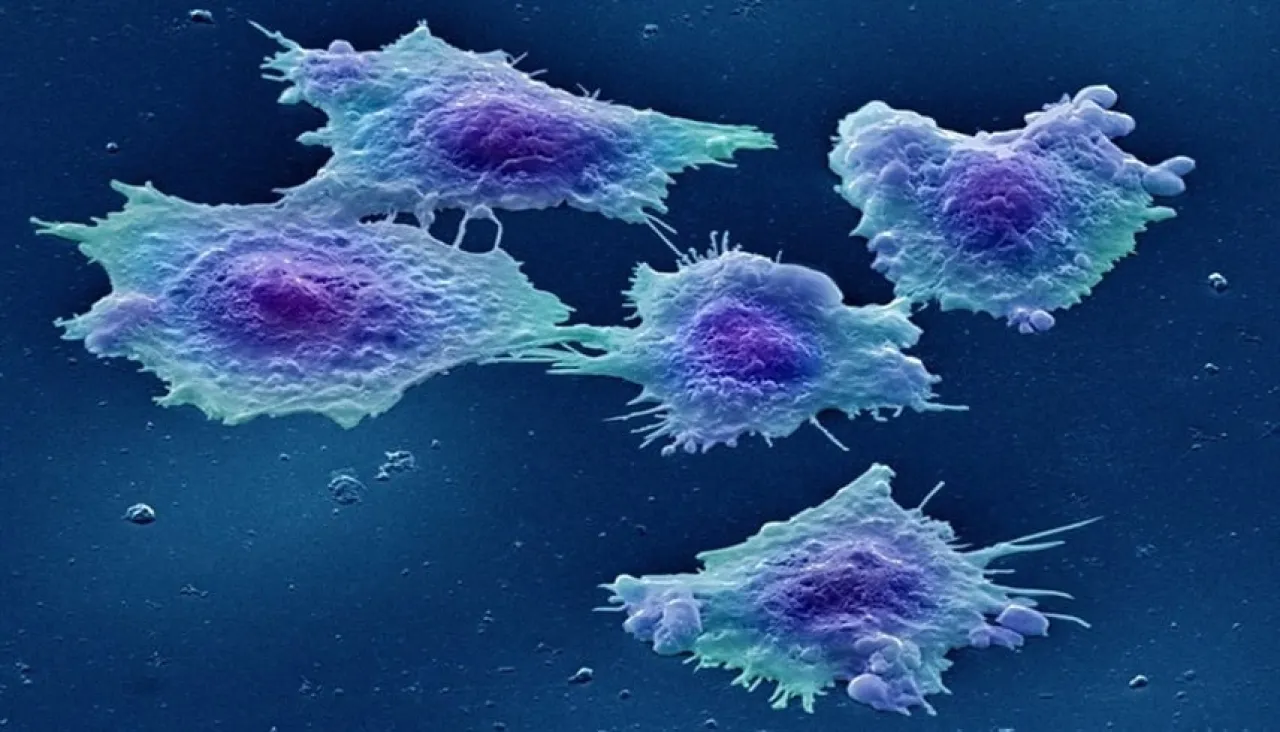
Khaberni - In a promising step that could change the future of cancer treatment, a research team from the University of Texas at Austin has developed a new technique that combines light and nanodevices to precisely target cancer cells while preserving healthy cells.
The researchers relied on infrared light emitted from LED lamps in lab experiments directed towards test tubes containing human skin and colon cancer cells, as well as healthy skin cells.
Nanoflakes of tin oxide (SnOx nanoflakes) were added, which were absorbed by the cancerous cells but not the healthy ones. When exposed to light, these nanoflakes became microscopic heaters generating heat inside the cells, leading to the destruction of 92% of skin cancer cells and 50% of colon cancer cells, while the healthy cells remained largely undamaged, according to the "Daily Mail".
Dr. Jean Anne Incorvia, the leader of the study, emphasized that the goal was to develop a treatment that is "effective, safe, and accessible," pointing out that combining LED lamps and SnOx nanoflakes provides a method that targets cancer cells precisely without affecting the healthy cells.
This technique represents a new advance in the field of Photothermal Therapy, but it differs from traditional methods by using low-cost LED lamps instead of expensive lasers, making its widespread application more feasible in the future.
The study, published in the journal ACS Nano, showed that the temperature of the nanoparticles rose by 19 degrees Celsius within 30 minutes, a temperature sufficient to cause internal damage to the cancer cells and disrupt proteins and the cell membrane, leading to cell death. The researchers hope that the process will also help stimulate the immune system to attack any remaining cancer cells.
In a statement by Dr. Artur Pinto from the University of Porto in Portugal, who participated in the research, he said that the ultimate goal is to enable patients to use the treatment at home, especially in areas with limited resources, through a portable device placed on the skin after surgery to destroy the remaining cells and reduce the risk of the disease returning.
Cancer in Numbers
More than 5 million Americans are diagnosed annually with skin cancer, with about 9,000 deaths recorded.
Approximately 152,000 cases of colon cancer are recorded annually in the United States, with about 50,000 fatalities.
Incidence rates are increasing among young people, with colon cancer cases among those aged 20 to 39 years increasing by 2% annually since the mid-1990s.
Despite the promising results, the technology is still in its experimental stages and has not yet been approved by the U.S. Food and Drug Administration (FDA) as a standalone treatment for cancer, but it is already approved for treating some skin conditions.