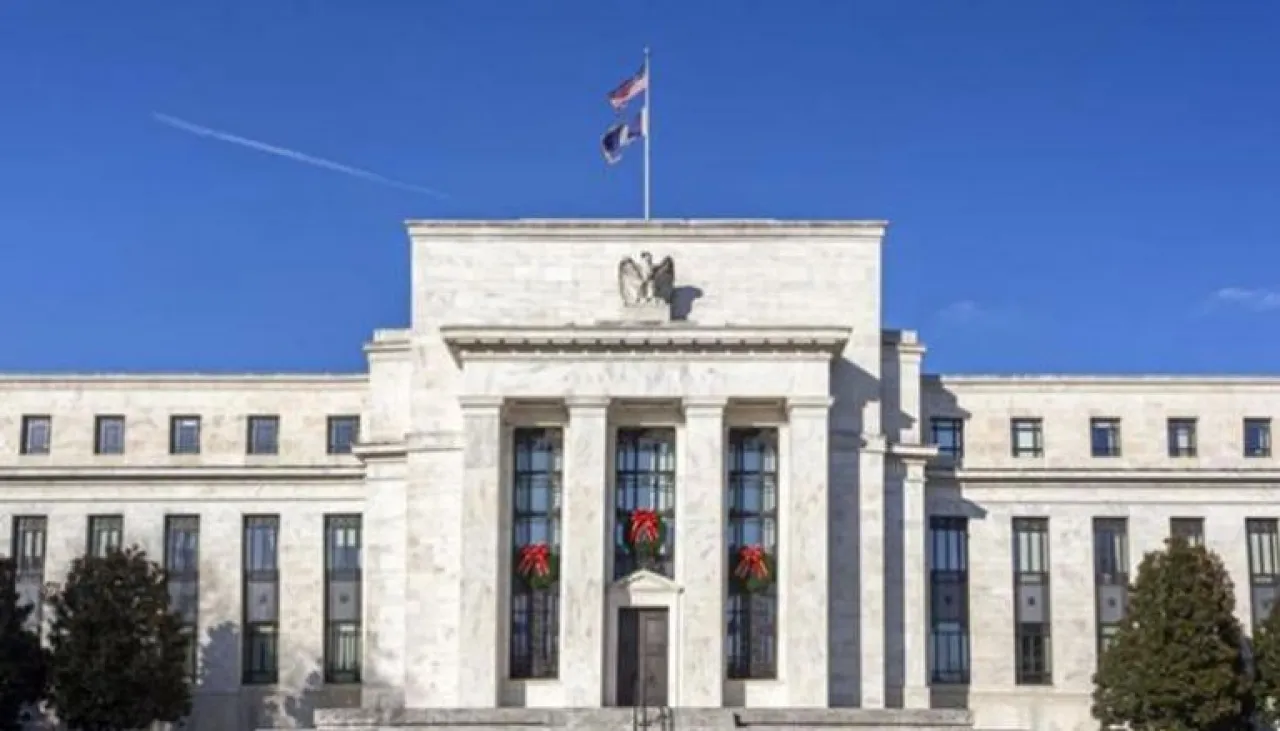
Khaberni - The American Federal Reserve is expected to cut borrowing costs again on Wednesday, in a new move aimed at supporting economic growth.
A further cut by a quarter of a percentage point—after the September cut—would keep the federal funds rate within a range of 3.75% to 4.00%.
The federal funds rate—set by the Federal Open Market Committee—is the rate at which banks lend to each other overnight. While this rate does not apply directly to consumers, the Federal Reserve's decisions cast a shadow over various types of consumer loans, from credit cards to mortgages.
The Federal Open Market Committee has also set expectations for an additional rate cut in December, but the future path of interest rates remains unclear.
Meanwhile, US President Donald Trump continues to criticize the Federal Reserve's policies, suggesting the possibility of choosing an alternative to its current chairman Jerome Powell before the year's end, and demanding a sharper cut in interest rates to support the economy.
However, interest rates are not expected to continue to decline sharply, and even if they do, not all consumer loans will be affected to the same extent. When the Federal Reserve raised interest rates in 2022 and 2023, consumer loan rates rose at a roughly similar pace.
However, even though this would be the second consecutive cut, borrowing rates are likely to remain relatively high.
Mike Boglis, Chief Economist at Wells Fargo Economics for CNBC said: "The Federal Reserve does not cut all interest rates in the world. Some borrowing rates are more sensitive to changes in monetary policy than others. At one end of the spectrum are short-term variable rates, and at the other, 30-year fixed-rate mortgages."
Short-term rates are closely linked to the prime rate that banks offer to their most creditworthy customers—often three percentage points higher than the federal funds rate—while long-term rates are affected by factors such as inflation and the overall economic performance.
According to Bankrate data, about half of American households have credit card debt, paying more than 20% interest on their revolving balances, making it one of the most expensive forms of borrowing available.
Since most credit cards rely on a short-term variable interest rate, they are directly affected by Federal Reserve decisions. When the Fed cuts interest rates, the base rate also decreases, and it is likely that interest rates on card balances will be adjusted within one or two billing cycles.
But even so, annual interest rates on credit cards will remain relatively high, as card issuing companies maintain high levels to minimize risks associated with more vulnerable borrowers.
Matt Schulz, Chief Credit Analyst at LendingTree said: "Even if the Federal Reserve cuts interest rates in the coming months, credit card rates won't turn from bad to amazing overnight."
And Schulz gave an example: "If you have a debt of $7,000 on a card with an interest rate of 24.19% and pay $250 a month, cutting the annual interest rate by a quarter percentage point would only save about $61 over the course of repayment."
As for car loans, which have fixed interest rates throughout the loan duration, they are likely to see relative stability, although the reduction in borrowing costs may benefit buyers in the future. The current average interest rate for a new five-year car loan is about 7%.
Jessica Caldwell, director of insights at Edmunds, told CNBC: "The slight reduction in the federal interest rate won't significantly lower monthly installments, but it could boost buyer confidence and stimulate market activity."
Long-term mortgages, such as 15 and 30-year loans, are less affected by Federal decisions and are more closely linked to U.S. Treasury yields and overall economic performance.
However, the anticipation of further future rate cuts may put downward pressure on mortgage rates, which could encourage some Americans to return to the housing market after a period of recession, according to Schulz from LendingTree.
Adjustable-rate mortgages (ARMs) and home equity line of credit (HELOCs) are more affected by Federal decisions, as their rates are adjusted periodically—ARMs typically annually and HELOCs almost immediately after any change in the base rate.