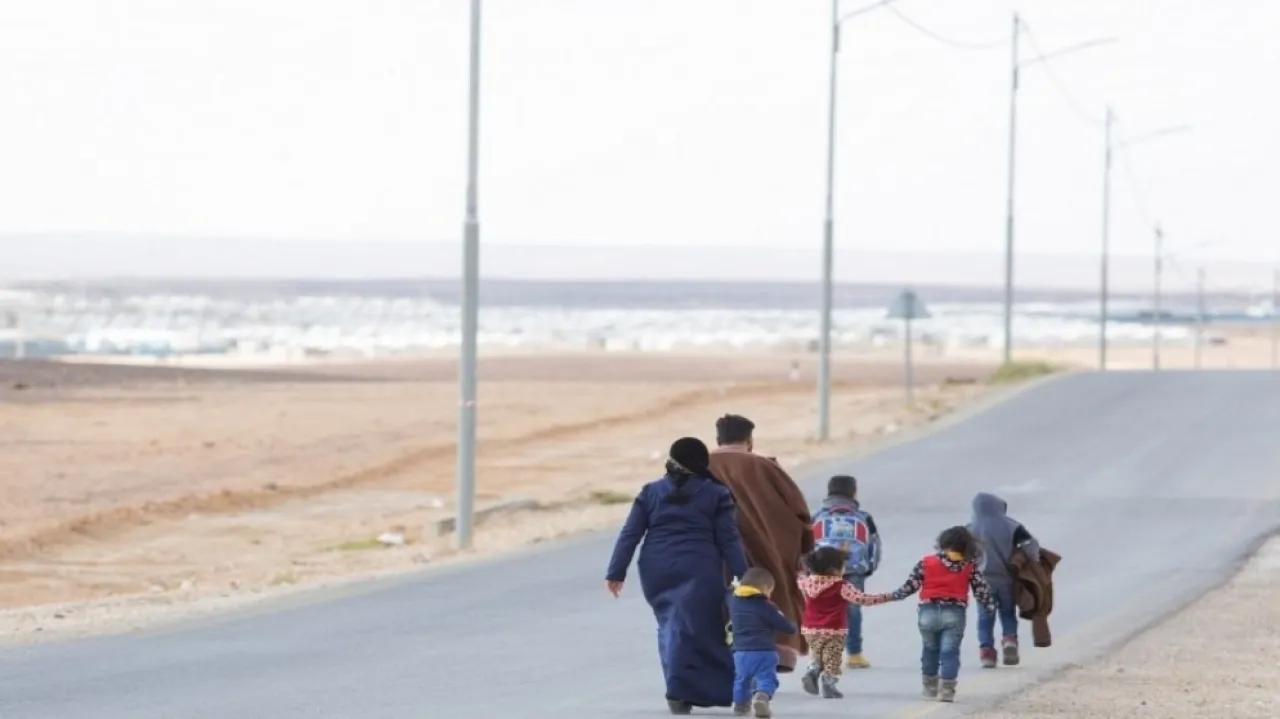
Khaberni - Many Syrian refugees in Jordan plan to delay their return until after the winter season, due to poor housing conditions and difficulties in mobility during cold weather, in addition to the academic year, according to the United Nations High Commissioner for Refugees.
Many refugees indicated that they plan to delay their return until conditions improve, especially regarding housing and weather, with expectations that this trend might recur next winter.
The pace of return tends to decrease during Ramadan, as many refugees prefer to spend the holy month in Jordan before organizing their return. With Ramadan expected in the winter of 2026, many families are expected to postpone their return until after Eid al-Fitr.
Data analysis available to the Commission suggests that return movements are highly seasonal, affected by practical factors such as security conditions in Syria, the academic calendar, weather conditions, and major holidays.
The Commission noted that the peak of returns usually occurs in July, then gradually decreases during August and September, whether in camps or urban areas.
According to the Commission, about 165,000 registered refugees have returned from Jordan to Syria from December 8, 2024, to October 18, 2025, explaining that the demographic characteristics of the returnees have remained stable, with women and girls representing about 49% of the total returnees, while children make up about 43%, and men aged between 18 and 40 years constitute about 19%.
The report added that with some minor changes, the demographic patterns remained relatively stable throughout the year; at the beginning of 2025, women and girls constituted 45% of the returnees, and children 44%, while the percentage of men (18-40 years old) was 23%. Most refugees continue to return from host communities, especially from Amman and Irbid.
Return data since December 2024 shows that about 57% of families returned with all their members, while about 43% had partial returns, with some members remaining in Jordan. Refugee statements indicate that families adopt different return strategies depending on their circumstances; in about half of the cases, wives returned first to Syria while husbands remained in Jordan to work, and in the other half, husbands returned first to secure housing and stability, preparing for the rest of the family to join later.
In a related context, the Commission continues to implement the cash assistance initiative for voluntary return, launched last September in the Zaatari and Azraq camps. The new criteria include supporting large families (seven members or more), families with some members already returned to Syria, in addition to primary eligible categories such as families that include people with disabilities, chronic patients, the elderly, or female breadwinners.
The Commission pointed out that as of October 20, cash assistance was provided to approximately 1,650 refugees in the pilot phase, while the Hotline received more than 1,300 calls to inquire about the program, and 41% of the callers were deemed eligible, with beneficiaries given two weeks to return to Syria after receiving the assistance.
The United Nations Refugee Agency confirmed that it continues to provide logistical support for transportation, having facilitated the transfer of about 40 refugees from Jordan to Syria on October 23, noting that since the launch of the transportation initiative on January 20, 2025, it has supported more than 9,850 refugees, in coordination with its office in Syria to ensure reception and support for returnees upon their arrival at their final destinations.
The UN High Commissioner for Refugees emphasized that returning to Syria remains a completely individual and voluntary decision, and it continues to provide the necessary support for refugees wishing to return, in a way that preserves their dignity, safety, and ensures their future stability.