Khaberni - Europe has begun to recognize the need to prepare for war with Russia, and to respond to Moscow's hybrid attacks. This shift reflects an increasing awareness that Russia's hybrid operations confirm German intelligence assessments regarding the high likelihood of a military conflict between Europe and Moscow by 2027.
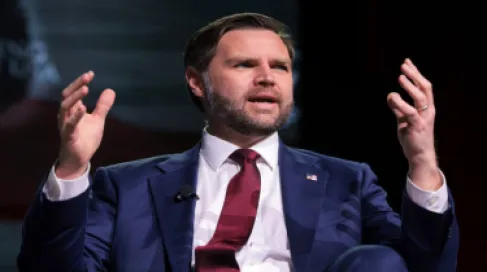
On October 19, 2025, in an interview with Swedish Radio, Swedish Defense Minister, Paul Johnson, stated that the intensification of Russian hybrid operations requires a firm response from European countries and preparation for a potential war.
Johnson believes that to maintain peace in Europe "we must prepare ourselves mentally and militarily for the possibility of war."
Despite most NATO members recognizing Moscow's path toward regional escalation, they are still not psychologically prepared for the confrontation, or even for systematic preparation for it.
Despite the growing calls on Russian state television to strike and destroy Paris, London, and Berlin, Western governments still rely on Cold War era assessments of the likelihood of confrontation.
However, Russia’s psychological readiness, whether its leadership or its people, is now much higher than it was during the Cold War.
By ignoring hybrid attacks, sabotage, and influence operations, the West is actually encouraging Russian aggression, according to European observers.
Retaliatory strikes
During the war in Ukraine, the Kremlin fully recognized its developmental delay compared to Western countries. This realization has undermined Moscow's longstanding propaganda about its alleged advantage in natural resources.
Russia's reliance on China, Iran, and even North Korea leaves it no choice but to continue waging war, similar to attacks on the Roman Empire.
Johnson added: "Changing our mindset is essential. We must switch to war mode for deterrence, defense, and the preservation of peace."
Swedish Defense Minister said that "recent incidents involving drones and aircraft violating NATO airspace show that Russia is ready to take political and military risks and intensify its hybrid operations. Therefore, we must respond and counterattack, and direct retaliatory strikes. We must take new military steps to confront the escalation of Russian aggression, whether against hybrid operations or airspace violations."
Johnson emphasized the need for Russia to understand that any provocation will be met with a firm response. According to the Swedish Defense Minister, 90% of Swedes support increased defense spending and maintaining or expanding aid to Ukraine. He said: "Our proximity to Russia has taught us one thing: peace is not a gift, it’s something we must defend every day."
Therefore, Johnson called on European allies to increase weapon shipments to Ukraine and tighten sanctions on Russia. This logic reflects the late Cold War strategy, as the depletion of the Russian budget through the arms race proved effective in the 1980s.
Given that Russia today completely relies on its limited economic resources and lacks the industrial capabilities that the former Soviet republics had, such a strategy could be more efficient and less costly for NATO countries.
Johnson called for tighter restrictions on the Russian energy sector and the "shadow fleet," and the use of frozen Russian assets to fund Ukraine's defense. He said: "Only then will Putin realize that this war threatens his power and cannot be won."
Increasing awareness
Johnson's statements reflect an increasing awareness from Europe that Russia is indeed waging a hybrid war against the West, using tools ranging from cyber attacks and media misinformation to airspace breaches and energy blackmail.
For Europe, especially Sweden, this means that the frontline now runs not only through Donbas (in Ukraine) or the Black Sea, but through the heart of the West.
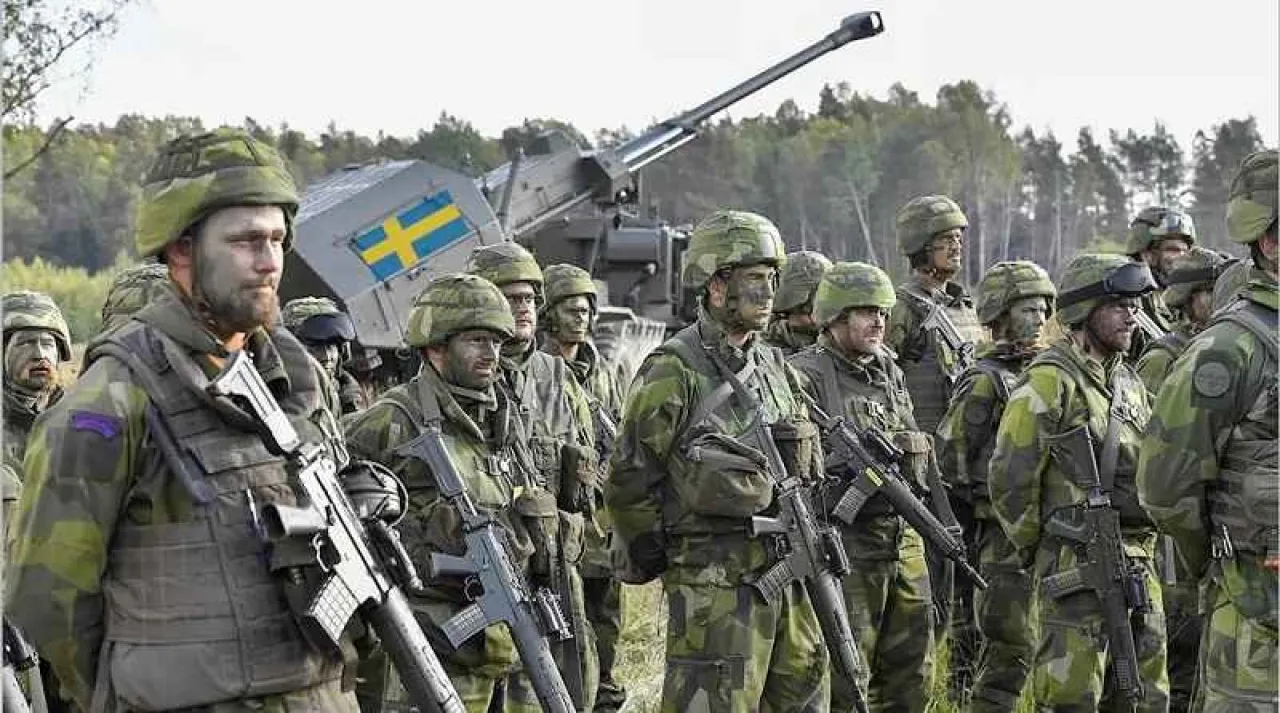
After finally joining NATO, Sweden is quickly adapting to the new security reality and is showing its readiness to think from a military perspective.
The "war mode" adopted by Johnson is not a call for attack, but a "mobilization strategy" and a psychological and structural stance that acknowledges that peace only lasts with strength.
In this context, aiding Ukraine is not just a solidarity act with a victim of aggression, but an investment in Europe's security itself.
Johnson explicitly links aid to Kyiv with maintaining its defense line in the face of Russian expansion that may soon threaten other countries. For Sweden and its allies, this is a deterrence strategy, showing Putin that aggression will provoke a collective reaction, not just a local one.
Sweden embodies a new European determination, and an end to the illusions of neutrality or stability at a time when Moscow seeks to reshape the global order by force.
European analysts believe that Stockholm's approach should be a model for other EU and NATO members, who realize that maintaining peace requires being technically, politically, and morally ready for war.
Biggest threat
In the summer of 2024, Sweden officially classified Russia as the "biggest threat" to its national security in a new strategic document, describing the current situation as "the most dangerous since World War II." Preparedness for military escalation by Moscow and its willingness to use force against its neighbors are cited as major concerns.
In 2025, Sweden recorded a sharp increase in GPS system disruptions above the Baltic Sea, attributed to Russia. These actions endangered civil aviation and marine transport, and were considered part of Russia's hybrid operations against Northern Europe.
These incidents show Moscow's intent to test NATO's reaction and the alertness of the governments of the Nordic and Baltic countries. In September, two unidentified drones were detected over the "Karlskrona" archipelago, home to Sweden's main naval base.
Similar incidents involving drones occurred in other European countries, linked by intelligence agencies to Russia.
These operations prompted Stockholm to invest in defensive capabilities against drones, while the European Union accelerated work on its proposed "Drone Wall" project to counter these threats. From "National Interest"
Enhancing local capabilities
In June 2025, the Swedish government adopted a comprehensive new defense industry strategy, aimed at enhancing innovation, increasing production, and promoting collaboration.
This initiative seeks to build a competitive and resilient sector capable of supporting Sweden's security and contributing to European defense efforts.
The government stressed that the deteriorating geopolitical climate requires enhancing local capabilities. It noted that "the defense industry plays a key role in rearming Sweden and providing support to Ukraine."
The defense industry strategy is based on three main pillars: innovation, production, and cooperation, deeply embedded in the national security strategy and the political direction outlined in the Comprehensive Defense Bill 2025-2030.
Swedish Defense Minister, Paul Johnson, said: "Through significant investment in research and development and advanced production technologies, the defense industry not only defends Sweden but also enhances our status as a high-tech industrial nation."
He added: "This makes Sweden a reliable partner for cooperation, and helps to strengthen our security relationships within the European Union and NATO, as well as with other countries."
The new strategy aligns with a broader industrial strategy currently being developed, aimed at making Sweden more flexible and secure in the face of increasing threats.