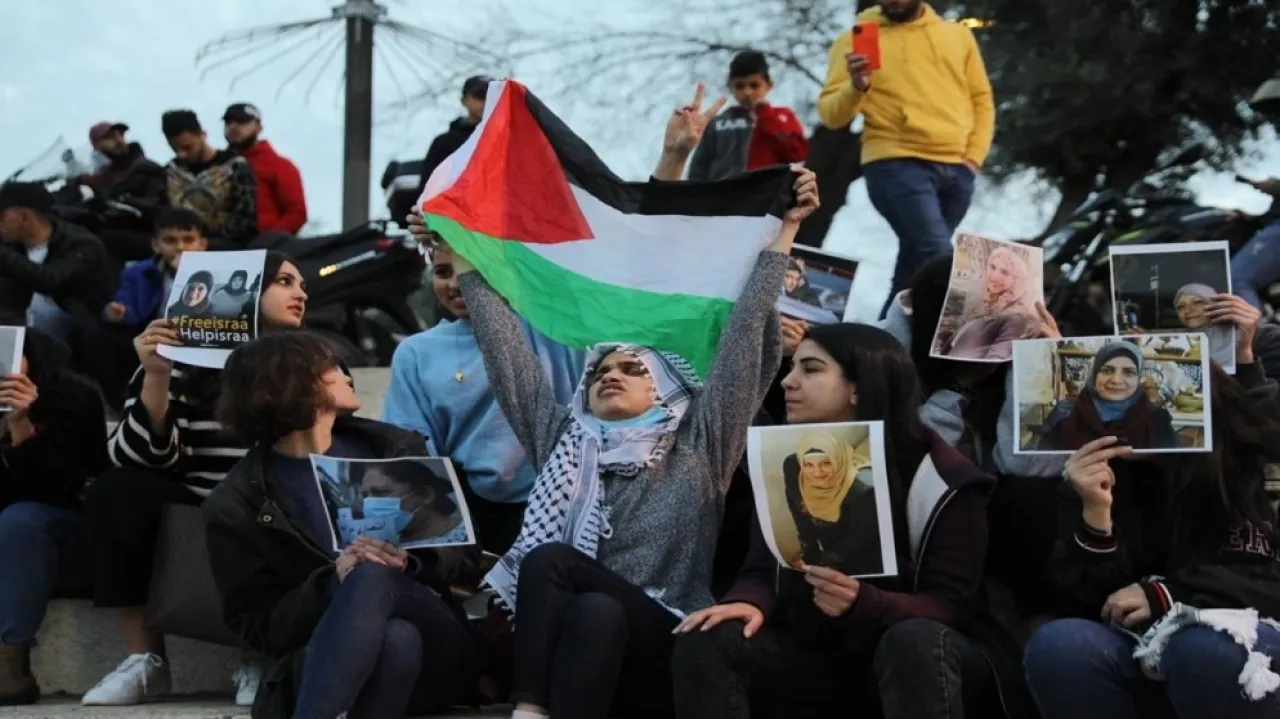
Khaberni - Amjad Al-Najjar, the General Manager of the Palestinian Prisoner Club, said that 49 Palestinian female prisoners are currently held in Israeli occupation jails, in detention conditions that violate the most basic human rights enshrined by international covenants, indicating that what the female prisoners are subjected to reflects a systematic policy aimed at breaking the will of the Palestinian woman and undermining her national and social role.
Al-Najjar clarified that the conditions of Palestinian female prisoners in Israeli occupation jails represent a focused image of the Palestinians' suffering within a detention system that violates international customs and laws.
Al-Najjar explained that the occupation escalated its arrest operations against women since October 7, 2023, where human rights institutions documented more than 595 cases of arrest across the West Bank including Jerusalem, and in territories occupied in 1948, while accurate statistics on the number of women detained from the Gaza Strip are not available.
He noted that female prisoners held in Damon and Sharon prisons face harsh living conditions, including overcrowding in rooms, poor ventilation, lack of basic hygiene materials, and insufficient lighting in detention places.
He added that prison administration deliberately restricts movement and imposes collective punishments, by reducing yard time, seizing electrical appliances, preventing the entry of winter clothing and basic needs, in addition to deliberately delaying or denying medical treatment, and the lack of specialist doctors, especially in women's health areas, which aggravates the suffering of female prisoners needing constant medical follow-up.
Al-Najjar stated that the violations extend beyond medical neglect to include oppressive and degrading practices such as humiliating body searches, solitary confinement, verbal and physical assaults, and depriving female prisoners of family visits and contact with their relatives, explaining that prison administration uses these methods as tools for collective punishment and continuous psychological pressure.
He added that incarcerated mothers suffer doubly due to being deprived of communication with their children, the imposition of glass barriers during visits, and the absence of any psychological or social support for them. Additionally, motherhood is used as a means of extortion during interrogation, by threatening to deprive the prisoner from seeing her children or harming them, which constitutes a blatant violation of international laws.
He emphasized that the suffering of female prisoners is not limited to mothers but extends to minors who face harsh interrogation tactics and psychological pressure, not considering their age or legal status as children, stressing that this constitutes a clear breach of the Convention on the Rights of the Child and the Fourth Geneva Convention, which mandates special protection for women and children during armed conflicts.
Al-Najjar pointed out that the occupation exploits the conditions of detention to weaken the Palestinian woman morally and physically, through denying education, confiscating books and cultural materials, and imposing fines and collective punishments, making life inside prison a daily struggle for survival and dignity preservation.
Al-Najjar said that international human rights organizations, including the International Committee of the Red Cross, Amnesty International, and Human Rights Watch, have received numerous complaints and reports from the Prisoner Club about violations against female prisoners, affirming that these organizations have repeatedly called for improving detention conditions and ensuring respect for international humanitarian law.
Al-Najjar stressed that the continued suffering of Palestinian female prisoners reflects an Israeli systematic policy based on medical neglect, psychological torture, and deprivation of basic human rights, calling on the international community to take its legal and ethical responsibilities, and demanding that the occupation authorities cease these violations immediately, and ensure the enforcement of the Fourth Geneva Convention that protects women during times of war and occupation.
Al-Najjar confirmed that despite everything the Palestinian woman endures concerning oppression and deprivation inside prisons, she remains a symbol of resilience and national will, and that the resilience of female prisoners reflects the spirit of defiance that the occupation has been unable to break since the beginning of the occupation and to this day.