Khaberni - Choosing the right cooking oil has become one of the most controversial topics in modern kitchens.
With the emergence of new alternatives and the rise of health concerns linked to some traditional types, some oils are considered "heart-friendly" and promote brain health, while others are blamed for increasing inflammation and raising the risk of heart disease, especially when used incorrectly.
Nutrition experts warn that some oils degrade when stored for long periods, while others lose their benefits when exposed to high temperatures, potentially leading to the production of harmful compounds.
So what are the best healthy options? And which ones should be used with caution?
Olive oil
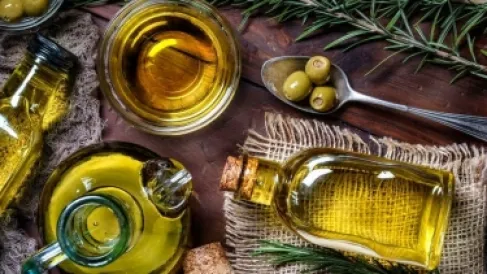
It is a preferred choice for many due to its content of monounsaturated fats and antioxidants beneficial for heart and vascular health. It has a low level of saturated fats and contains polyphenol compounds that support vessel and brain health.
However, experts emphasize that extra virgin olive oil is not suitable for cooking at high temperatures, as it begins to decompose at about 160-190 degrees Celsius, losing its benefits and producing harmful molecules, so it is preferably used for salads and dressings, while refined oil is a better option for cooking and frying.
Coconut oil
Despite its popularity in healthy food recipes, it remains controversial, as it contains a very high percentage of saturated fats, up to 90% of its components, a percentage exceeding that found in butter. It may raise blood cholesterol levels, thereby increasing heart risks when consumed excessively.
Although it contains lauric acid, which may raise good cholesterol, experts recommend using it moderately and only in specific recipes such as baked goods and Asian dishes.
Rapeseed oil (canola)
Nutrition experts consider it a strong competitor to olive oil in terms of benefits, as it features a low level of saturated fats and contains omega-3 acids that support heart and brain health. It also withstands high temperatures up to 220 degrees Celsius, making it suitable for frying and roasting.
Despite ongoing controversy over oilseed processing and production, specialists believe that concerns are often exaggerated.
Choosing the right cooking oil is a controversial topic
Flaxseed oil
Rich in omega-3 acids and low in saturated fats, but highly sensitive to heat, where it starts to degrade at about 110 degrees Celsius. Therefore, it is not recommended for cooking, but for salads or adding to cold foods to preserve its nutritional value.
Sunflower oil
Despite widespread attacks on "seed oils" via social media, experts confirm that sunflower oil is completely safe when used in moderation. It features a low level of saturated fats and a high smoke point of 232 degrees Celsius, making it suitable for frying.
Concerns revolve around its high content of omega-6 acids, which may promote inflammation when consumed excessively at the expense of omega-3, but the scientific evidence is still inconclusive.