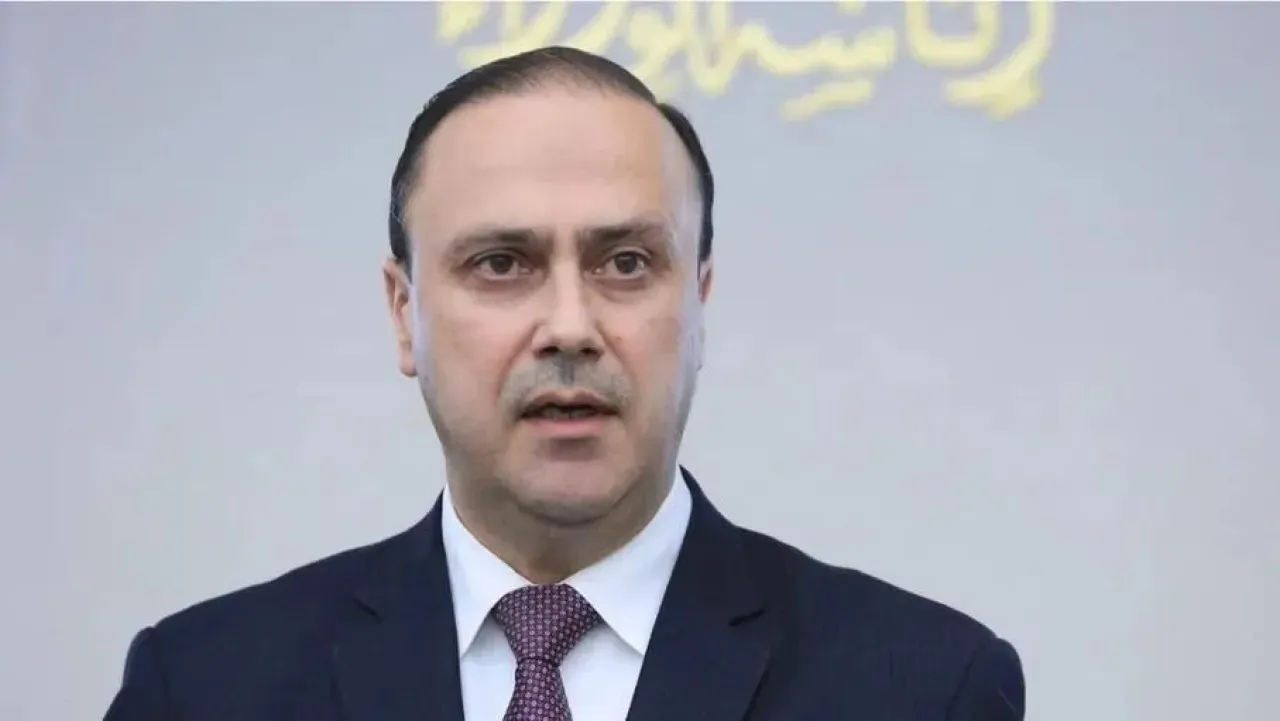
Khaberni - Dr. Mohammad Al-Momani, the government communication minister and official government spokesperson, said that the relations which connect Jordan and Egypt, with their solid historical pillars, are the result of mutual keenness by the leaderships of the two countries, His Majesty King Abdullah II and his brother President Abdel Fattah al-Sisi, and continuous coordination between them, and their directions to the officials of the two countries to strengthen the foundations of bilateral cooperation and develop and expand its mechanisms continuously.
Al-Momani added in an interview with Al-Ahram Al-Arabi magazine conducted by the magazine's editor-in-chief, Gamal El-Keshky, published today, Saturday, that these existing relations, based on genuine desire and the constants of trust and mutual respect, have today reached honorable levels that express an exceptional model in joint Arab action and bilateral integration, supported by the wise vision of the leaderships of the two countries.
Al-Momani explained that on the bilateral level, the meetings of the 33rd session of the joint Jordanian-Egyptian Higher Committee, hosted by Amman last August, are a clear proof of the strength of the relations between the two brotherly countries.
He pointed out that the committee is one of the most regular Arab joint committees, as its meetings have not been interrupted since its establishment, making it an effective institutional framework for following up and implementing joint work files between Jordan and Egypt in various fields.
He clarified that the latest session of the joint Jordanian-Egyptian Higher Committee, attended by the two countries' prime ministers, Dr. Jafar Hassan and Dr. Mostafa Madbouly, embodied the advanced level of coordination between the two sides.
He affirmed that the committee witnessed the signing of 10 agreements and memorandums of understanding in various fields that serve to enhance bilateral cooperation and open broader horizons for economic and investment integration between Jordan and Egypt.
Regarding Arab issues, Al-Momani confirmed that all milestones affirm that Jordanian-Egyptian coordination forms one of the most important pillars of Arab and regional national security stability.
Al-Momani added that the leaderships of the two countries, His Majesty King Abdullah II and President Abdel Fattah al-Sisi, are characterized by wisdom, rationality, and balance, and they work to employ all efforts and relations with the international community to serve Arab issues, foremost among which is the fair and central Palestinian cause, which represents a shared priority and supreme interest for both Jordan and Egypt.
Al-Momani said that it is impossible for any effort or dialogue related to Arab issues to start without a main and effective role for both Jordan and Egypt, noting that the consultation and political movement between the two countries represent a fundamental pillar in enhancing the unity of the Arab position and coordinating regional efforts.
He added that the Jordanian and Egyptian positions are so close as to be identical regarding the Palestinian issue, explaining that the two countries share a firm and clear stance based on supporting the two-state solution and rejecting any plans for the displacement of Palestinians, besides their prominent human and relief role in supporting the brothers in the Gaza Strip.
When asked about the role of national media in supporting society and protecting it from negative risks that may threaten it, Al-Momani said that the media is synonymous with awareness and its means, in all its national, social, cultural, and information dimensions.
He explained that the role of the media is not limited to transmitting information only, but extends to building solid media and information knowledge, based on objectivity, neutrality, and establishing correct information and excluding false information, confirming that this forms the first line of defense in protecting society from misinformation, rumors, and false information.
He indicated that the government views the media as an essential partner in creating awareness and shaping sound public opinion, noting that this approach has solidified Jordan's position as a pioneering country in the region in building an integrated national system of media education and information.
He referred to the launch of the national strategy for media literacy and information in 2019 as an advanced step in this direction, pointing out that work is underway to implement the second national plan at the beginning of next year, with the aim of enhancing community awareness and establishing responsible media culture.
He stated that enhancing media awareness has become a pressing need to protect society from digital and information chaos, especially in light of some people's unwise use of modern media tools and social media platforms.
He explained that this reality imposes the need for an integrative partnership between public and private media on the one hand, and governments that set the regulating policies and strategies on the other, asserting that Jordan has embodied this concept as a practical reality, and the Ministry of Government Communication seeks to enhance it through its management of the media literacy and information file and expanding its scope at the national level.
In talking about the basic principles on which the government communication strategy in the kingdom is based, Al-Momani said that communication is an effective tool for governments in building a sound and sustainable relationship with citizens.
He explained that the successful communication process is based on clear foundations that include transparent information flow and providing effective channels for feedback with citizens, pointing out that this methodology makes government communication a comprehensive partnership process that contributes to enhancing trust and establishing constructive communication between the state and society.
He said that in the Jordanian case, the government communication strategy is based on a set of solid principles that form the essence of institutional communication work.
He stated that these principles are transparency and disclosure, participation and positive engagement with various groups, in addition to integration with national media and interaction with its right to access information, confirming that these foundations reflect the government's commitment to establishing an open and responsible communication environment that enhances trust and serves the public interest.
He said that the strategy implemented by the Ministry of Government Communication is based on clear, practical, and scientific starting points, explaining that these starting points are concerned with monitoring and defending the nation's interests, and building a robust relationship with partners to formulate a comprehensive vision for Jordanian media.
The Minister of Government Communication emphasized that this relationship is based on the foundations of responsible freedom, mutual trust, media professionalism, and sincere service to the national interest.
He said that the government continues to develop the government communication and media system by keeping up with the latest developments in media and communication strategies and modern media tools.
He added that this development is directly reflected in the performance of those involved in government communication, especially media spokespersons, who take the main role in formulating and supporting communication messages and highlighting institutional efforts in a contemporary manner.
He confirmed that the government communication strategy includes a training and qualification plan for spokespersons, in addition to preparing a special regulatory system for them, to be a clear framework that governs their work and focuses on enabling them and enhancing their ability to present the institutional image of the ministries and institutions they represent in the best possible manner.
When asked about Arab media cooperation and Jordan's role in enhancing it, especially in light of the unique experiences and vision that the Kingdom possesses, Al-Momani said that Jordan has always been and will remain committed to supporting joint Arab media work.
He explained that the unprecedented circumstances the region is going through, along with the acceleration of media globalization, the informational flow, and the communication revolution, in addition to the expanding circle of media disinformation and the danger of rumors targeting Arab youth, require the coordination of Arab steps and movements in the field of media.
Al-Momani confirmed that through this, Jordan seeks to build a narrative, tools, and media content that contribute to serving Arab issues and protecting Arab identity and culture.
He said that the challenges facing our region in recent years cannot be dealt with from a political angle alone, but have multiple implications that require collective awareness and unifying the Arab discourse.
He added that immunizing the Arab mind, particularly the youth, requires opening dialogue channels with them through modern media platforms, within democratic limits that provide answers to their questions and involve them in dialogue and decision-making.
He emphasized that raising awareness about using communication technology and tools wisely, and pride in the Arab position and support for the nation's issues through conveying the correct information, truth, and realistic image, form fundamental pillars in facing these challenges.
Regarding the impact of artificial intelligence on various aspects of life, including journalism and media, and the extent of potential risks, Al-Momani said that Jordan is keen to harness technology and its developments for all sectors.
He explained that the concerns do not lie in the replacement of artificial intelligence applications for the human mind, but in the misuse of this technology, especially since artificial intelligence algorithms depend on the content provided by humans to these applications.
He added that any challenge posed by artificial intelligence carries opportunities that can be exploited, as long as this technology has become a reality and its progress cannot be stopped by fears.
Al-Momani noted that artificial intelligence applications have made significant advancements in the media and content industry and contributed to enhancing data analysis skills in an unprecedented way.
He added that these positives do not overlook the challenges posed by artificial intelligence, which relate to ethical and professional concerns, such as risks of content manipulation, privacy violations, voice and image falsification, and the possibility of promoting misleading information.
Al-Momani confirmed that dealing with the opportunities and challenges of artificial intelligence should not be through fears, but through sound practices and building digital awareness, and training media personnel in a digital culture that enhances their ability to benefit from modern technology.
He emphasized that media institutions need to enhance cooperation with academic bodies and specialists in artificial intelligence to keep up with the developments of these applications and best practices, and to rebuild trust with the public through verifying information sources.
He added that at the level of countries, regulatory legislation for the use of artificial intelligence can be enacted, including provisions related to content, access capability according to age categories, and reporting any breach of professional values or privacy.
Regarding the modernization programs in the Kingdom and the role of government communication in them, Al-Momani said that modernization in Jordan's journey is a sustainable approach, and the Jordanian state's project in its second centennial represents a comprehensive reform project.
He explained that His Majesty King Abdullah II called for the launch of comprehensive modernization plans that include political, economic, and administrative aspects, to be a strategic priority that enables the young Jordanian generation to build a future full of confidence and the ability to develop the state and turn it into a model to be emulated.
Al-Momani said that the modernization programs in Jordan are launched from a democratic perspective and the foundations of genuine partnership with various segments of society.
He explained that these programs are the fruit of national dialogues characterized by freedom and transparency, and included the diversity of participants from parties, official institutions, civil society organizations, universities, in addition to youth, women, and the private sector, where each of them contributed within their committees and sessions in defining the features of the modernization vision according to their expertise.
He noted that the sessions and dialogue workshops of all committees were supported and continuously monitored, and often witnessed the presence of His Majesty King Abdullah II and His Royal Highness Prince Hussein bin Abdullah II, the Crown Prince.
Al-Momani added that the Royal Hashemite Court hosted a series of these sessions and workshops, which resulted in tangible achievements in advancing the political process and enhancing citizen participation in decision-making.
He referred to several recent sessions held with experts and specialists from the private and government sectors, aimed at reviewing and evaluating the progress made in implementing the first phase of the economic modernization vision (2023–2025).
Al-Momani clarified that these sessions also aim to prepare the second implementation program for the period (2026–2029) in a participatory manner, taking into account the priorities of each economic and developmental sector, to be translated into practical projects that can be implemented.