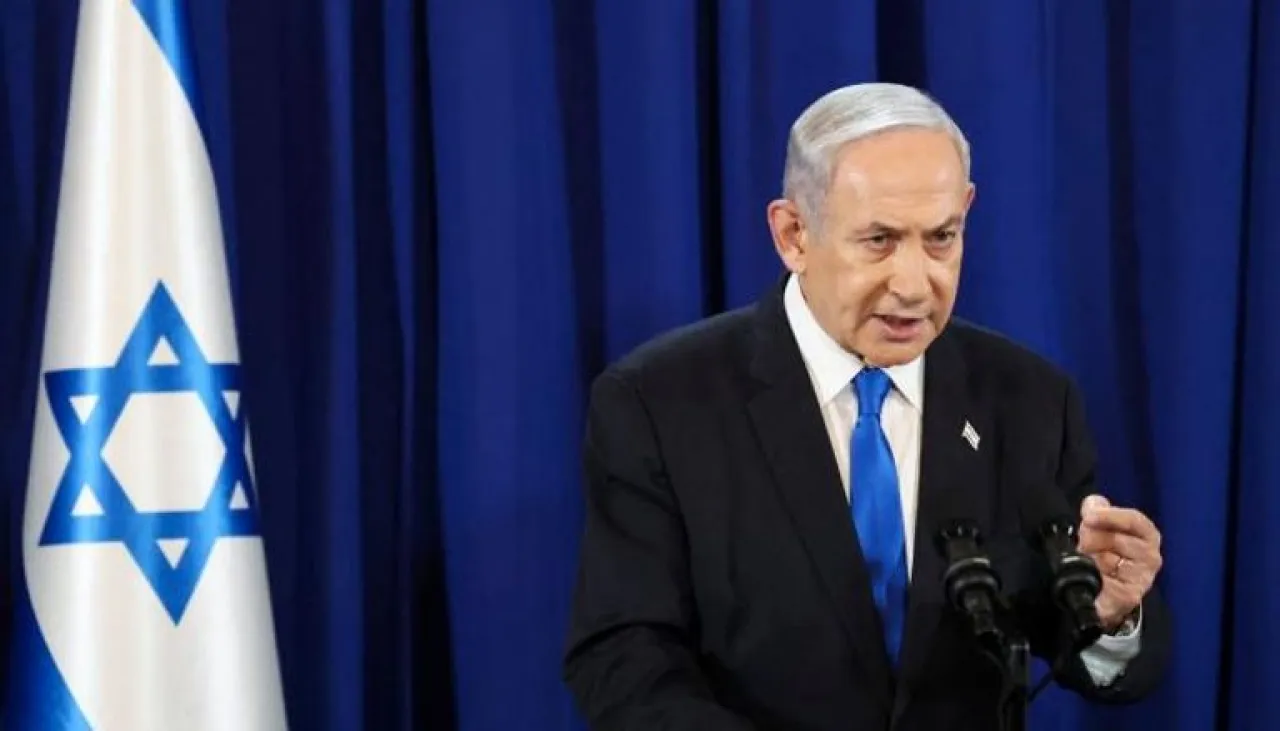
Khaberni - Netanyahu's coalition falls by two seats, stabilizing at just 50 seats.
This is according to a poll conducted by "Maariv" newspaper this week, which addressed public attitudes towards a variety of pressing issues, including the fragile ceasefire agreement with Hamas - still controlling parts of Gaza - and the restrictions imposed by the United States on military activity in the sector.
Despite the weakness of the coalition, the opposition block did not reach a majority of 61 seats this week, with the Arab parties strengthening their representation. The block has only 59 seats without the Arab parties. The weakness of the coalition block is primarily due to the return of Religious Zionism falling below the electoral threshold.
For the first time, the poll presented a scenario of a united Arab list, whereby the four Arab parties unite, and the result was an enhancement to 12 seats.
The Joint List and the Arab Movement for Renewal each secure 5 seats, and the United List also gains 5 seats.
If elections were held today, with the participation of a joint Arab list, in addition to a list combining the parties of the extreme ministers Itamar Ben-Gvir and Bezalel Smotrich, the joint Arab list would rank fourth in terms of strength, obtaining 11 seats.
In this case, the Likud party maintains its strength, remaining at 27 seats, followed by Naftali Bennett with 20 seats.
According to the poll, if elections were held today, the Likud party led by Netanyahu would be the largest party in the Knesset, at 27 seats, followed by Naftali Bennett with 21 seats.
The third largest party is the "Democrats" led by Yair Golan, with 13 seats.
Each of "Yesh Atid", "Shas", and "Yisrael Beiteinu" gains 9 seats, while "Otzma Yehudit" secures 8 seats.
According to the poll, the "Yashar" party led by Gadi Eisenkot secures 7 seats, as does "Yahadut HaTorah".
Regarding the question of who is most suitable for prime minister, Netanyahu surpassed his potential competitors for the position, earning the support of 39% of survey participants, while former Prime Minister Naftali Bennett received the backing of 37% of participants, and 21% felt neither was suitable for the position, with 3% responding "don't know".