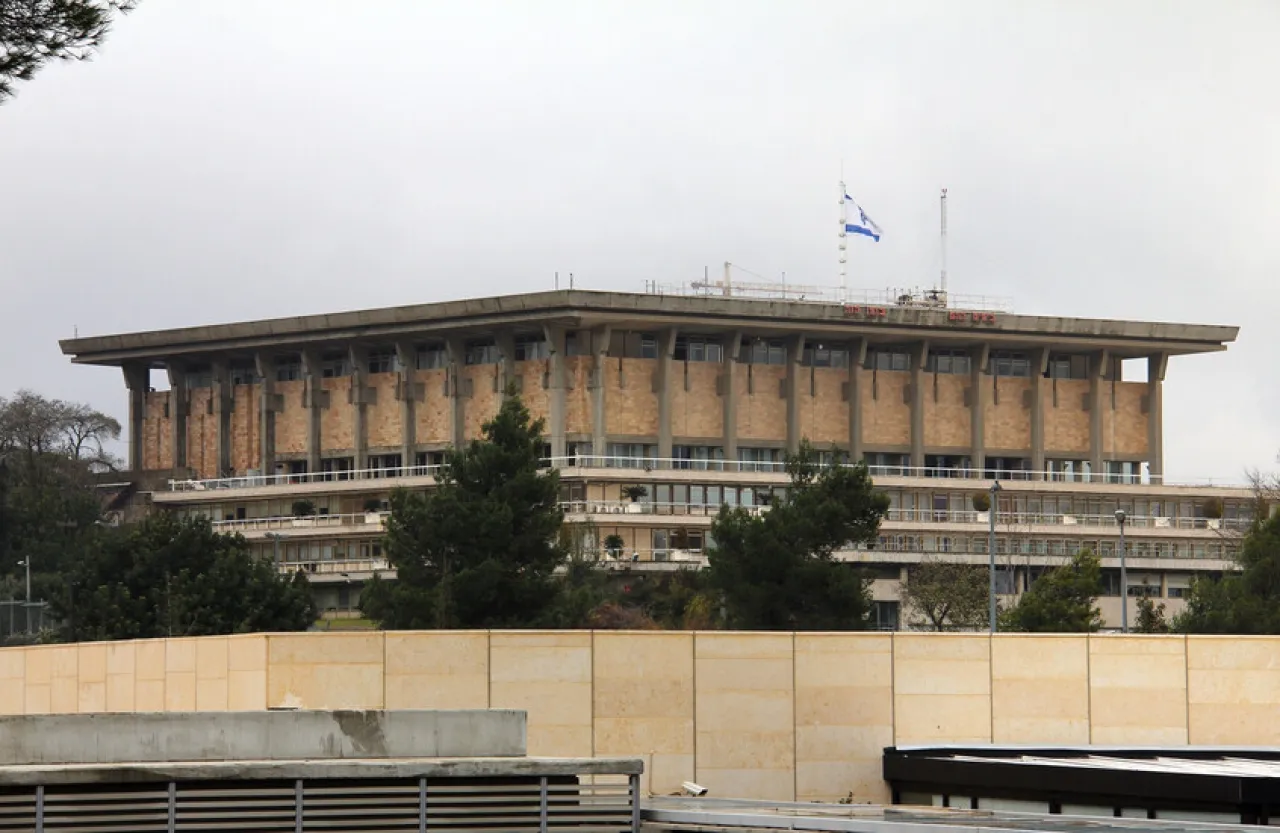
Khaberni - At the start of a stormy election year, the governing coalition in Israel faces a continuous crisis, with six governmental offices vacant without ministers, while the absence of a majority in the Knesset prohibits the approval of appointments.
According to a report published by "Yedioth Ahronoth," this exceptional situation arose following a crisis with the ultra-Orthodox (Haredi) parties regarding the military draft exemption law, which has implications for the government's performance.
In the past three months, the Ministries of Health, Interior, Labor, Welfare, Religious Services, and Jerusalem have been managed by acting ministers. However, by law, these appointments cannot be extended beyond this period. Currently, the offices are managed by the directors-general, and the coalition government is trying to persuade the ultra-Orthodox to agree to permanent appointments next week - but no agreements have been reached yet.
The governing coalition actually opened the first week of the Knesset's winter session with a series of problems that hinder its performance, and the vast majority, as mentioned, result from the postponement of the military draft exemption law.
In one week, all their legislation was withdrawn due to the lack of a majority; laws imposing sovereignty in Judea and Samaria (the West Bank) passed - despite opposition from the Likud party - and succeeded in dividing the coalition: Finance Minister Bezalel Smotrich and National Security Minister Itamar Ben Gvir voted as they pleased, and Likud member Yuli Edelstein breached discipline; and the Shas party withdrew from its coalition duties.
In addition to all the problems related to the introduction of laws, there are the six offices that are operating without a minister. Both ministers Yariv Levin and Haim Katz have served as acting ministers in these offices, but their appointment has ended as mentioned. Contrary to the solution preferred by Prime Minister Benjamin Netanyahu in the past, he can no longer appoint himself as a minister due to the Deri-Vanhasi rule, which prohibits those facing criminal charges from holding ministerial positions. Thus, Israel has reached a situation where the offices are managed by the directors-general - and it is impossible to push through procedures that require ministerial approval, such as approving regulations or appointing senior officials.
The government appointed Katz as a permanent minister in the Ministries of Social Welfare and Health - but his appointment has not reached Knesset approval due to the lack of a majority following the ultra-Orthodox boycott, who do not vote with the coalition. As for the permanent appointment of Levin in the Ministries of Interior, Religious Services, Labor, and Jerusalem, it has not been approved even in the government.
It remains unclear whether the coalition government will succeed in rallying support from the ultra-Orthodox to approve appointments next week, even though they - despite their official absence - still control the offices through directors-general they appointed and their office staff.
It should be noted that this is not the first time that an office has been left without a minister. In the alternating government at the end of 2020, the then Minister of Justice Avi Nissenkorn resigned, and after Benny Gantz was appointed acting minister for a period of three months, a minister was not appointed for some time. But this time - the scope is much larger.
The "Movement for Quality Government" appealed yesterday to Prime Minister Netanyahu, the government's legal advisor Gali Baharav-Miara, and other government officials, demanding the immediate filling of the six positions that remained without permanent ministers, after three months since the resignation of the ministers from the Shas and United Torah Judaism parties.
According to the "Movement for Quality Government," "the lack of full-time appointments for the Ministries of Health, Interior, Social Welfare, Labor, Jerusalem and the Heritage of Israel, and Religious Services, in a particularly sensitive period for the Israeli society, two years after a war that left thousands physically and mentally wounded, in addition to thousands of citizens needing assistance from the state - constitutes serious damage to the ability of these systems to function."
In this regard, lawyer Rotem Pibli Dvir, head of the legal department at the "Movement for Quality Government," stated: "This is an absurd and unprecedented situation - six central governmental offices without permanent ministers, contrary to the law. This is a double damage - to the rule of law and to the government's performance for the citizens. This situation must not be allowed to continue. We have demanded that the government immediately proceed with the appointment of permanent ministers in all positions, and present the necessary appointments for Knesset approval as soon as possible."
Knesset member Karine Elharrar from the "Yesh Atid" party also appealed to the legal advisor. She wrote: "The law does not allow the government flexibility or discretionary power in the matter of appointments. The government is obligated to appoint permanent ministers immediately upon the expiration of the three-month period, regardless of political considerations, coalition negotiations, or any other strange considerations. Continuing the operation of acting ministers beyond the designated period in the law constitutes a clear violation of the Basic Law."