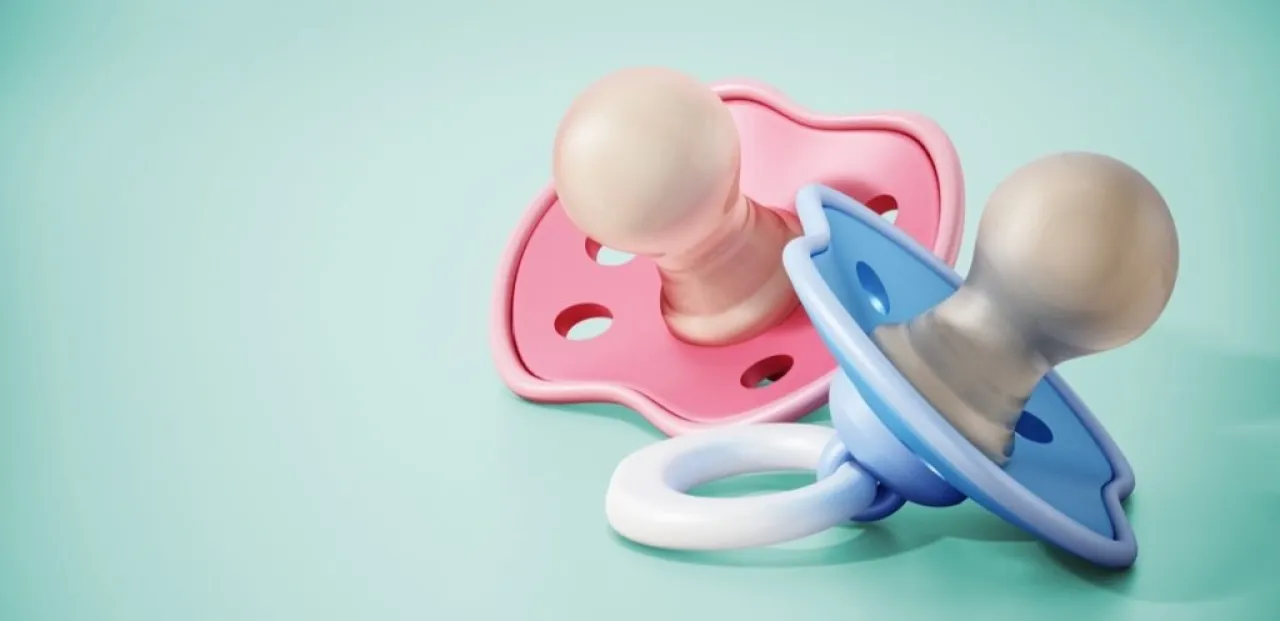
Khaberni - Bisphenol A (BPA) was found in baby pacifiers produced by three major European brands, and Bisphenol A is a synthetic chemical used in the production of plastic and is associated with impaired sexual development, obesity, and cancer.
The Czech consumer protection organization "dTest" conducted laboratory tests and published the results on their website, and the British newspaper The Guardian reported on it on October 18.
One company reported that subsequent tests did not find any Bisphenol A, while another company stated that the amount found was minimal.
The structure of Bisphenol A, abbreviated as BPA, is similar to the structure of the female hormone estrogen found in the bodies of humans and other animals.
Chloe Tubing, an activist with the Chem Trust charity working to protect humans and wildlife from harmful chemicals, said, "The health effects of Bisphenol A are extensive: breast cancer, prostate cancer, endometrial inflammation, heart disease, obesity, diabetes, immune system disorders, reproductive effects, and impacts on brain growth and behavior, including children’s behavior."
Chloe added that children are particularly at risk "because they are still in the growth phase, and their organs are very sensitive to disruption."
What Happens in a Baby’s Mouth?
Exposure to Bisphenol A at an early age or in the womb is associated with decreased sperm count and early puberty.
Chloe explained: "The problem with endocrine-disrupting chemicals is that they can operate at very low concentrations."
Researchers purchased 19 baby pacifiers from stores in the Czech Republic, Slovenia, and Hungary, and two from an online marketplace.
To simulate conditions inside a baby's mouth, they placed each pacifier in an artificial saliva solution for 30 minutes at a temperature of 37 degrees Celsius (98.6 degrees Fahrenheit). The extract obtained was analyzed to determine the Bisphenol content.
Bisphenol A was detected in 4 pacifiers, with the highest concentration being 19 micrograms per kilogram, which is a breach of the European Union limit of 10 micrograms for Bisphenol A transfer from children's pacifiers.
Hana Hofmanova, editor-in-chief of "dTest" magazine said, "Pacifiers are often one of the first products purchased by parents, and they do not expect to expose their children to hormone-disrupting chemicals from day one."
The European Union law banned the use of Bisphenol A in baby bottles completely since 2011, and this regulation was extended in 2018 to include the production of food containers and bottles for children under the age of three.