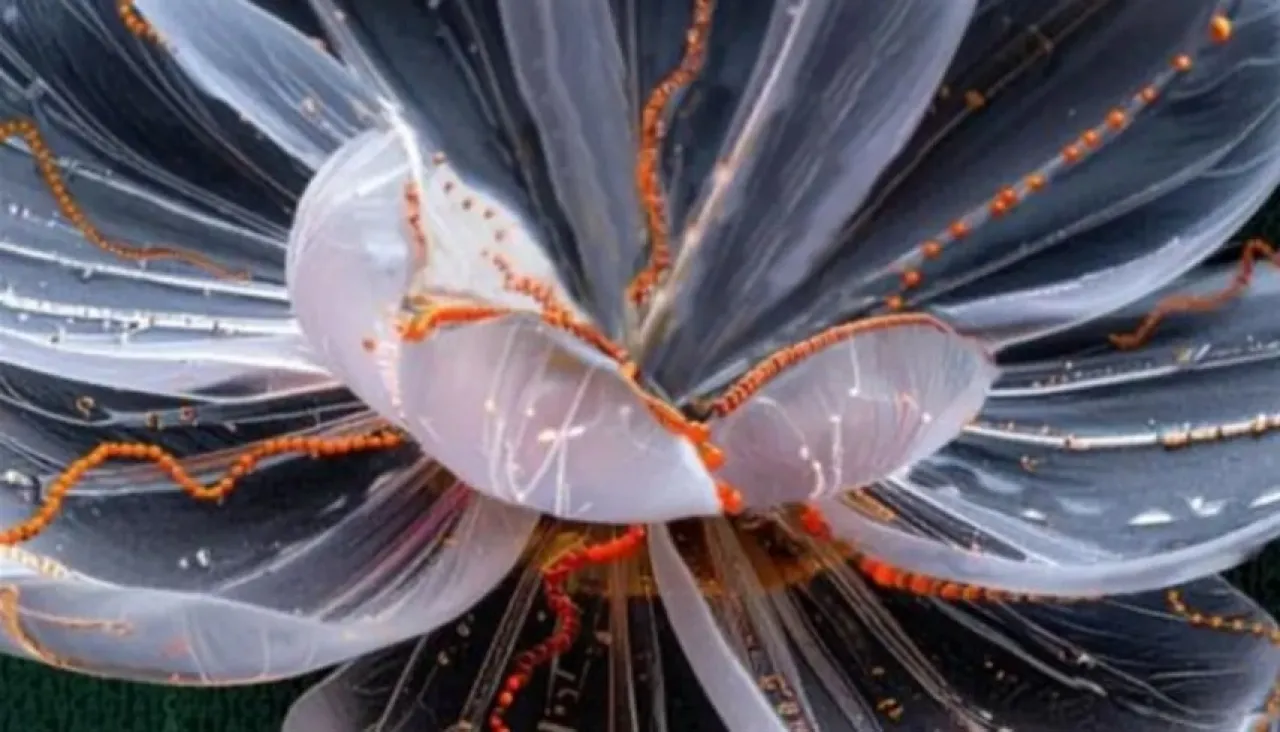
Khaberni - In an innovative merger between biology and nanotechnology, scientists at the University of North Carolina (UNC) have developed soft, microscopic robots that mimic the adaptive behavior of living organisms.
These tiny structures, shaped like flowers - called "DNA flowers" - are made from hybrid crystals that combine DNA with inorganic materials and are capable of folding and unfolding rapidly within seconds, according to reports.
According to researchers, their reversible motion makes them one of the most dynamic nanomaterials ever, opening new possibilities for quick-response systems in medicine, sensing, and smart materials.
Ronit Freeman, the director of the Freeman lab at the University of North Carolina and the lead and corresponding author of the research paper, said in a statement: "In the future, shape-changing flowers that are swallowable or implantable could be designed to deliver a precise dose of medication, perform a biopsy, or remove a blood clot."
The DNA of each flower acts as a mini control system, directing how it reacts to environmental changes such as temperature, acidity, and chemical signals.
These "flowers" can open, close, or even trigger chemical reactions depending on the surrounding conditions, allowing them to adapt and perform tasks independently.
The underlying technology works through the assembly of programmable DNA, where carefully designed DNA sequences guide nanoparticles to organize into complex structures.
These hybrid materials can change their shape reversibly when exposed to various stimuli, thanks to the predictable nature of DNA bonding and the stability provided by inorganic components such as gold or graphene oxide. According to researchers, this combination of biological programming and nanomaterials enables a new class of soft robots that can transform repeatedly without losing their structure.
In the future, these shape-shifting systems could be used in medicine for drug delivery, detoxification, or conducting precise surgical operations within the body. Alongside healthcare, they can also help in cleaning up the environment by interacting with pollutants or changing surrounding conditions.
In this project, the scientists used tiny, DNA-based materials to mimic adaptive behavior similar to natural systems, including coral movements, petal unfolding, and tissue formation in living organisms.
Their goal was to mimic the complexity of nature in synthetic systems capable of sensing and interacting with their environment - an achievement long considered a challenge at these small scales - which researchers achieved by organizing DNA strands within flower-shaped crystals to respond dynamically to changes in their surroundings.
The petals close due to the bending of DNA when the environment becomes acidic, and the structure reopens and relaxes when the conditions stabilize.
Using this reversible motion, it is possible to interact with biological tissues, initiate reactions, and transport and release chemicals.
The University of Nebraska team notes that although this technology is still in its early stages, it could be used in medicine in the future for minimally invasive biopsies or to administer customized medications.
DNA flowers can move throughout the body, detect changes in acidity surrounding tumors, and react by releasing medication or collecting samples.
These flexible materials can also be used outside the healthcare sector, such as cleaning up contaminated areas or as highly efficient data storage devices, as they can store vast amounts of digital data in a small space while consuming much less energy than current technologies.
The researchers said in a statement: "This discovery represents a major step toward materials capable of sensing their environment and responding to it, bridging the gap between living systems and machines."