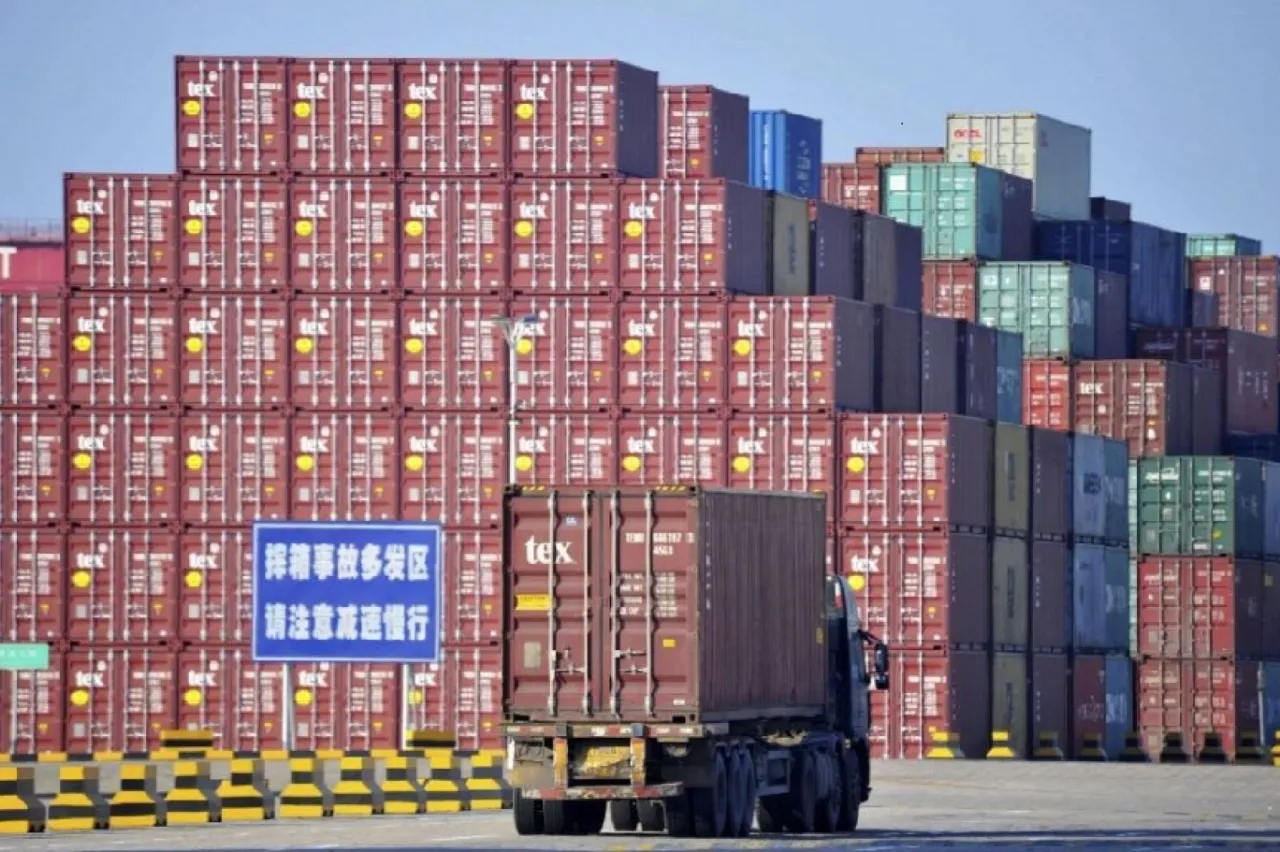
Khaberni - Chinese exports to the United States have demonstrated resilience in the face of the customs duties imposed by U.S. President Donald Trump, during a 6-month accepted trade war.
A "Bloomberg" report stated that the value of Chinese goods crossing daily to the United States is estimated at about 1 billion dollars, with an increase in quantities in September compared to the previous August.
Despite a decline in the total trade value between the two countries over the past six months, some products have recently seen an increase in exports compared to 2024, challenging the trade tensions between Beijing and Washington.
"Bloomberg" said that these developments show that the U.S. tariffs seem to have a "limited impact" on restricting what American companies import, as China's influence in key sectors, such as rare metals and electronics, makes it hard to replace, at least in the short term.
It added that this situation might change over time, especially if Trump continues to implement his repeated threats to impose additional tariffs, noting that they currently amount to 54%.
"Bloomberg" economic experts, Zhang Shu and David Kou, wrote that "China’s strong position in global supply chains grants it some leverage in negotiations with American importers in the near term."
The experts cautioned that other countries cannot quickly replace China as a supplier to the United States, adding, "Redirecting production will take time."
This reality gives Chinese President Xi Jinping more negotiating leverage, as his trade team prepares to engage in talks aimed at extending a 90-day customs duty truce, set to end in November.
During the third quarter of the year, Chinese goods worth more than 100 billion dollars reached the United States, helping Beijing maintain its economic growth pace according to its annual goals, driving its bilateral trade surplus to 67 billion dollars.
Strong demand for Chinese goods
Trump predicted on Tuesday that his upcoming meeting with his Chinese counterpart would result in a "good deal" regarding trade, but he also warned at the same time that the meeting planned to be held in South Korea next week could collapse.
The U.S. president identified rare metals, fentanyl, and soybeans as the main trade issues he intends to discuss with the Chinese side.
Despite most of China's top 10 exports to the United States declining during the last quarter, compared to the same period of the previous year, shipments of electronic cigarettes have risen, according to a "Bloomberg" analysis of Chinese customs data.
Prospering despite Trump's tariffs.. Chinese industry defies American expectations
Despite Washington's bets that U.S. tariffs would undermine China’s economy, industry indicators show ongoing prosperity confirming Beijing's resilience and the strength of its factories.
Electric bicycles also saw strong demand from the U.S. market, as Chinese companies exported more than 500 million dollars' worth during the three months ending in September, slightly up from last year. Meanwhile, exports of electrical cables increased by 87% to reach 405 million dollars.
During the quarter from July to September, Chinese companies exported about 8 billion dollars worth of smartphones, laptops, tablets, and computer components to the United States.
Although this figure is less than half of what was sold during the same period last year, it is considered a significant volume given the high levels of customs duties.
Despite the cancellation of the "de minimis" rule that allowed small parcels to enter the United States without customs duties, American consumers continue to purchase billions of dollars' worth of goods from e-commerce platforms such as "Shein" and "Temu."
Despite being subject to a 54% customs duty, Chinese data showed that about 5.4 billion dollars' worth of these small parcels have been sent to the United States since Trump's administration closed that loophole in May.
Nevertheless, it appears that China and the United States are moving towards a more modest trade relationship, as Trump seeks to revive the manufacturing sector within the United States and make repatriating vital industries a priority for his economic policies.
328 billion dollars in exports
Since the beginning of the year, Chinese exports to the United States have reached about 328 billion dollars, a level close to what it was in 2017 before the outbreak of the first trade war under Trump.
Video game hardware exports have collapsed, after companies like "Nintendo" and "Microsoft" opted to ship products from Vietnam and other countries instead of paying high tariffs imposed on shipping from China.
It also appears that American consumers are buying televisions from other sources, as the value of LCD screen exports from China to the United States decreased by 73% during the last quarter.
Despite this resilience, the damage incurred in trade between the United States and China this year exceeds what happened during Trump's first term, according to the International Monetary Fund.
The fund stated in its report this month that "the decoupling of bilateral trade relations between the United States and China appears to be happening at a faster pace compared to the shock of the tariffs imposed between 2018 and 2019."