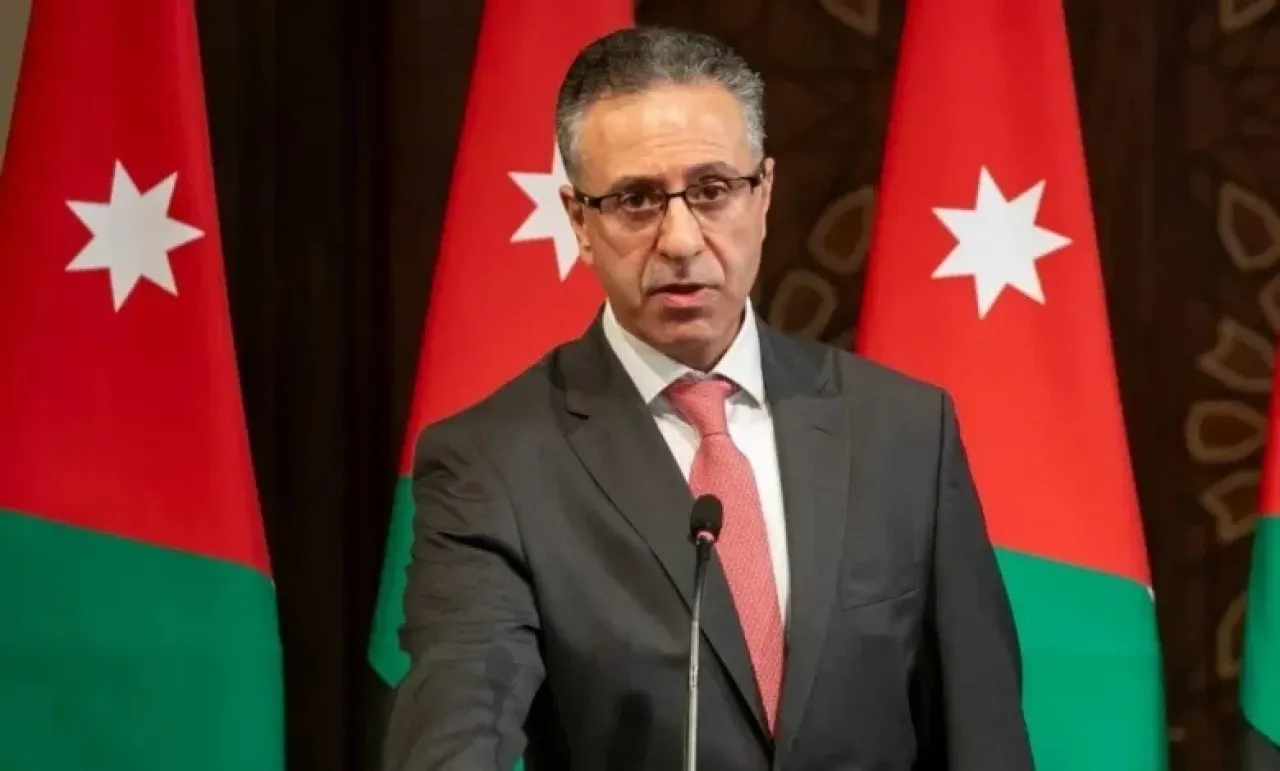
Khaberni - Minister of Industry, Trade, and Supply Yaarub Al-Qudah called on German business owners and companies to use Jordan as a gateway for investment and a main center for reconstruction projects in Syria, taking advantage of the benefits and incentives provided by the Mafraq Development Zone for investors.
In response, during his participation in the Jordanian-German business forum held by the Amman Chamber of Commerce last Tuesday evening, Minister Al-Qudah emphasized the importance of working to make Germany a main gateway for Jordanian exports to all European Union countries.
He mentioned that Jordanian exports to Syria exceeded 250 million dinars in the first half of this year, the highest level in the past thirty years, which is an increase of more than fourfold compared to the same period last year.
He stated that this growth reflects a real and growing momentum in Jordanian-Syrian economic relations and confirms that Jordan has become a pivotal economic destination in the region.
He referred to the opening of the Bab Al-Hawa crossing, which connects Syria with Turkey, in one direction for re-export purposes four weeks ago, confirming that Jordanian exports of vegetables and fruits to Europe were exceeding 500 million dollars annually before 2014, and that there are strenuous efforts underway to gradually restore these levels.
Minister Al-Qudah affirmed that the national economy is witnessing a clear recovery phase, supported by strong performance in various sectors and growing economic partnerships with friendly countries, notably Germany, indicating that the presence of the German delegation at the forum reflects the importance of economic cooperation between the two countries.
He said the partnership with Germany represents a crucial pillar to enhance economic growth and open new investment prospects, praising the robust relations between the two countries, welcoming "our friends from Germany to be future partners of the Kingdom in enhancing development and investment."
He explained that the Jordanian economy is on a steady path, noting that the economic growth rate reached about 2.8% in the first half of this year, higher than the IMF's expectations, which estimated growth at just under 2.3%, stating that expectations indicate that the Kingdom will maintain this level of growth by the end of the year and may achieve a higher rate.
Regarding Jordanian exports, Al-Qudah noted that they have risen by more than 8.5% since the beginning of this year until the end of last July, despite difficult regional conditions, pointing out that this percentage is considered high in the context of international trade and is achieved by only a few countries.
Minister of Industry mentioned that the volume of container handling at the Port of Aqaba has increased by more than 33% during this year, reflecting the revival of the transport and transit sector, which were pillars of the national economy in the eighties and nineties, emphasizing the resilience of the national economy and its ability to adapt and grow despite regional and international challenges.
Minister of Investment Dr. Tarek Abu Ghazaleh affirmed that Jordan is seeking to build a strategic partnership with Germany based on economic, scientific, and technical cooperation, noting that relations between the two countries are witnessing continuous development and promising opportunities across various sectors.
He explained that the trade balance between Jordan and Germany holds significant opportunities for improvement, stating that the investment field between the two sides is promising and expandable in the future, noting that Jordan is distinguished by having a qualified human base and high competencies, with one engineer for every forty Jordanian citizens.
Abu Ghazaleh mentioned that the German Jordanian University represents a successful model in transferring German educational and professional experience to Jordan, affirming that the Kingdom looks forward to expanding this model through the establishment of schools and training centers that enhance applied and vocational education.
He noted that Jordan has made tangible progress in the renewable energy sector, which currently represents about 29% of the total energy used, a milestone that reflects the success of national plans and the economic modernization vision launched by His Majesty King Abdullah II aiming for inclusive and sustainable growth.
Abu Ghazaleh further explained that Jordan aspires to be a safe gateway for the reconstruction of Syria and the development of Iraq, highlighting that the Kingdom's strategic location and real opportunities in the region make it an ideal destination for German companies looking to expand in the Middle East.
Minister Abu Ghazaleh announced a Jordanian-European investment conference to be held in the second quarter of next year in Amman, the first of its kind to introduce the investment opportunities in Jordan and many other countries in the region.
He said that the government is working on issuing major investment tenders next year in the transport and energy sectors, clarifying that the goal targets not only economic development but also social development through the development of areas far from major urban centers.
He confirmed that the investment environment in Jordan has become safe and attractive due to legislative and regulatory updates, noting that the amended Investment Law of 2022 grants foreign investors the same rights as Jordanian investors, and that developmental zones providing competitive advantages have been equipped.
Minister of Investment praised the support of His Highness Prince Hussein bin Abdullah II, Crown Prince, for training and vocational education programs, affirming that this orientation contributes to qualifying Jordanian youth according to market needs.
Minister Abu Ghazaleh mentioned that the Ministry of Investment is currently updating the national investment map, which is set to be launched before the end of this year, to include projects and investment opportunities in various sectors, emphasizing that Jordan today balances attracting foreign investment and supporting local investors, believing that local success stories are what encourage foreign investors.
For his part, Chairman of the Chamber of Commerce of Jordan, Alain Khalil Al-Haj Tawfiq, confirmed that the forum will be a new beginning for the relationship between the Kingdom and Germany, which are connected through strong relationships in various fields, established by His Majesty King Abdullah II.
He said: "Germany is a friend of Jordan, and there are ties and cooperation between private sector institutions in both countries, hence we hope this will contribute to enhancing Jordanian exports to the German market, which are still modest, and likewise investments," emphasizing the need for the upcoming phase to start a different economic beginning between the two sides.
Al-Haj Tawfiq confirmed that it is planned to establish a joint Jordanian-German business council between the Jordan Chamber of Commerce and the Arab-German Chamber of Commerce and Industry, which will be the cornerstone in developing the economic relations of the two countries.
He pointed out that there is an intention to organize a visit by a Jordanian economic delegation to the capital Berlin and several German cities in the upcoming months, with the aim of presenting the available investment opportunities in the Kingdom, and exploring the opportunities through which to develop the countries' trade relations.
He called on German business owners and companies to make the Kingdom a center for trade and reconstruction projects in Syria, emphasizing the importance of the German Embassy in Jordan being a point of contact between the private sectors of the two countries.
Al-Haj Tawfiq, who also holds the position of the third vice-chairman of the Arab-German Chamber of Commerce and Industry on the Arab side, expressed his hope that there will be many success stories of Jordanian-German partnerships in the near future, similar to the German University in Madaba, and that the Kingdom will receive a portion of German investments in strategic sectors intended by Jordan for implementation.
On his part, the chairman of the Arab-German Chamber of Commerce and Industry, Olaf Hoffman, confirmed that Jordan has the qualifications to be a regional center for European companies, praising the vision of His Majesty King Abdullah II, which seeks to build a stable economic environment based on young and educated competencies.
He said: "What Germany has in its capacity to build real partnerships, opens the field to enhance economic cooperation with Jordan," confirming: "We have seen in Jordan an encouraging business environment and a stimulating tax and customs system, making it an ideal launch point for German companies to explore the markets of the region."
He added that the vision of His Majesty King Abdullah II focuses on empowering youth and building a distinguished base of competencies, explaining that the understanding between the Jordanian and German sides has reached a high level over the past years, enabling both sides to manage major projects and follow up on their implementation successfully.
He talked about his company's experience in Jordan, stating: "We have been in Jordan for more than 20 years, and we have implemented major projects such as the port and the water network, which were among the most advanced projects at the time, and still stand as a model to be emulated in the region."
Hoffman pointed out that Germany, despite the economic challenges it faces as the third largest exporting country globally, is able to withstand thanks to new partnerships it seeks to expand with countries in the region, with Jordan being at the forefront.
He said: "Over many years, we have not only provided equipment and products, but also built trust and relationships based on mutual respect, and we in Germany need Jordan, just as Jordan needs Germany, and this partnership today has become an economic and strategic necessity for both sides."
He mentioned that the visit provides participants with an opportunity for direct contact with Jordanian companies, and its program focuses on exploring business and investment opportunities in a variety of sectors, including energy and water management, infrastructure, construction, logistics, transportation, and industrial development.
It is mentioned that the Arab-German Chamber of Commerce and Industry was founded in 1976 with the aim of building economic cooperation bridges between Germany and the Arab countries.
The president of the German Jordanian University, Alaa Al-Halhouli, presented during the forum, attended by the German Ambassador to the Kingdom Dr. Bertram von Moltke, and the General Secretary of the Arab-German Chamber of Commerce and Industry Abdulaziz Al-Mukhlafi, the university's journey, which was founded 20 years ago, and has today partnerships with many universities, and around 5,000 German companies to provide training and employment opportunities for its students, emphasizing that the university's philosophy focuses on investment and human development.