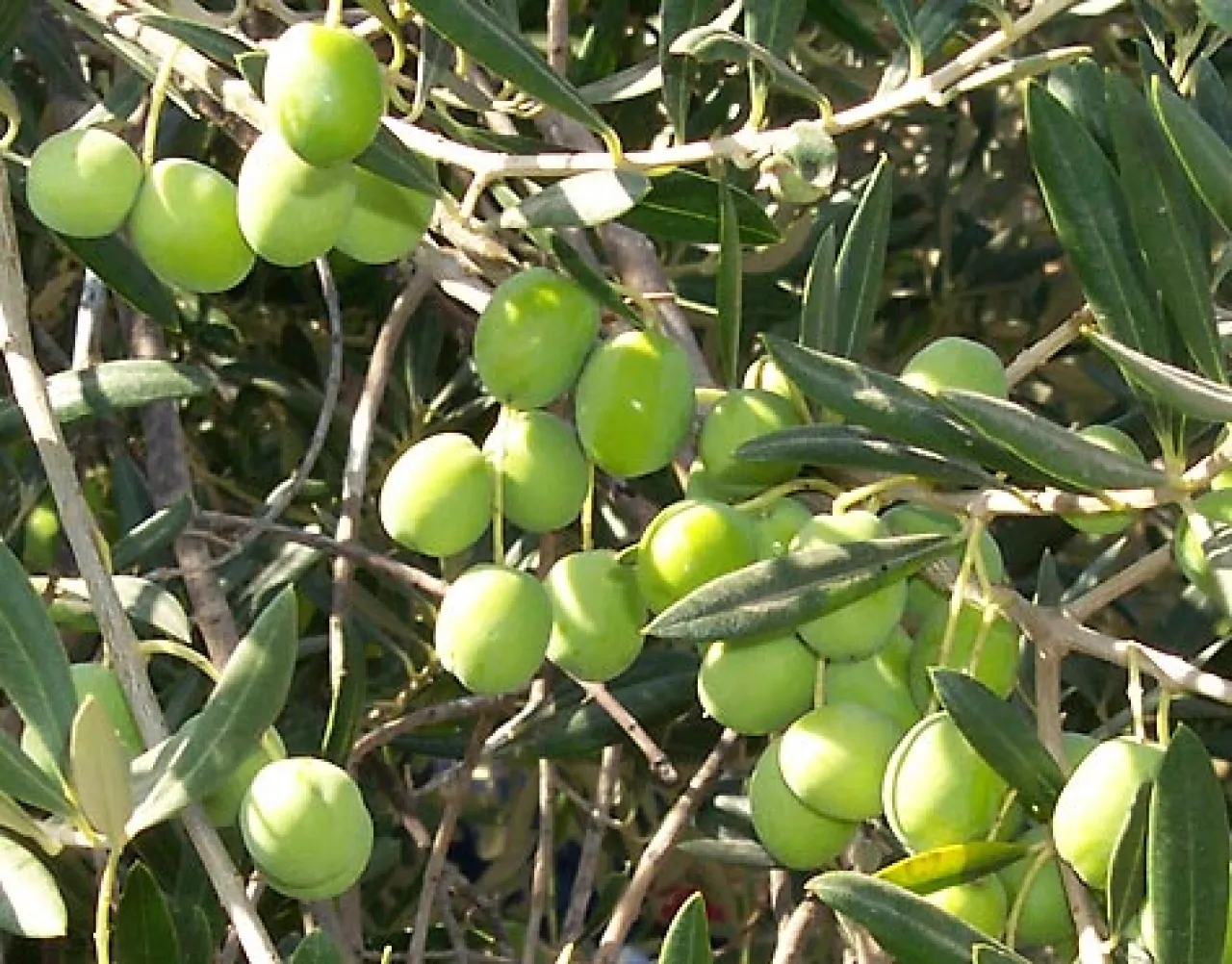
Khaberni - The Jordanian Iftaa Department has explained the conditions and rulings regarding olive Zakat.
Firstly: The obligation of Zakat on olives:
Zakat is obligatory on olives according to the Hanafi and Maliki schools, it is the old opinion of Shafi'i, and a narration from the Hanbalis; because its yield can be stored; thus, it resembles dates and raisins. Al-Mawardi said: "As for olives, Imam Shafi'i had two opinions regarding making Zakat obligatory: the first -which is his old opinion- is that Zakat is due. Malik also said this, according to the verse: (It is He who produces gardens with trellises and without, and dates and tilth with produce of all kinds, and olives and pomegranates, similar and different. Eat of its fruit when it yields and give its due on the day of its harvest) An’am/141" Al-Hawi (3/505-506).
Secondly: The minimum amount (Nisab) for olive Zakat:
The minimum amount of olives for which Zakat is due is five Wasq according to the majority, contrary to Abu Hanifa’s position on crops and fruits. If the olives are less than that, no Zakat is due. If they are five Wasq or more, Zakat is obligatory. The evidence for this is the hadith from the Messenger of Allah, peace be upon him, who said: (No charity is due on less than five Wasq) narrated by Bukhari and Muslim, and the wording is from Bukhari. A Wasq equals sixty Sa'a.
The minimum amount for olive Zakat equals (611) kg, as mentioned in "The Legal Measures" by Sheikh Muhammad Najm Al-Din Al-Kurdi (p/201), and in "Guidance for the Seekers" by His Eminence Dr. Nuh Al-Qudat, may Allah have mercy on him.
The consideration here is the weight of the olives, not the oil, as Al-Nawawi, may Allah have mercy on him, said: "If we go by the old opinion that Zakat is obligatory on olives... the Nisab is considered as olives, not oil. This is the doctrine, as decisively stated by Judge Hussein and the majority, with Imam Al-Haramayn conveying a consensus among the colleagues on this." Refer to "Al-Majmoo" (5/454).
Thirdly: The amount of Zakat due on olives:
The required Zakat is one-tenth if the olives are irrigated by rainwater, and a half of a tenth if they are irrigated artifically, i.e., at the owner's expense, whether the produce is in the form of oil or olives. This is according to the saying of the Messenger of Allah, peace be upon him: (For what the sky and springs water or comes from sediment, a tenth is due, and what is watered artificially, a half a tenth) narrated by Bukhari.
Fourthly: It is better to pay Zakat in oil form:
Imam Shafi'i, may Allah be pleased with him, said: "If olives are given, it is permissible; because it is a form of storage. He said: And I prefer to give a tenth in oil; because it is the result of its storage." Al-Nawawi mentioned this in "Al-Majmoo" (5/ 434) then he said, may Allah have mercy on him: "The most correct view among the colleagues—and it is his text in the old—that he has the option whether to give oil or olives, and the oil is preferable, as he explicitly stated."
Fifthly: Olive Zakat is the responsibility of the owner when selling the fruit on the tree:
Selling olives on the tree is not permissible until their ripeness and fruit solidity appears. Zakat in this case is solely the responsibility of the owner; because Zakat is due on the olives once the fruit sets, and it has set with the owner. Al-Shirbini said: "Zakat is due upon the appearance of the fruit's ripeness; as it is then a complete fruit." Refer to "Mughni Al-Muhtaj" (4/461).
Then, if the owner sells the olives after their ripeness appears, it is obligatory to exclude the amount of Zakat from the deal or to notify the buyer about it to avoid dispute.
Sixthly: The ruling on exchanging olives for oil:
Exchanging olives for oil is not permitted; in these dealings, cash must be involved to avoid Riba; as olives are the origin of the oil, and exchanging the same type of foodstuff with a differential is not allowed. Al-Shirazi, may Allah have mercy on him, said: "It is not permissible to sell the original for its juice, like sesame for its oil, and grapes for its juice; because once the original is pressed, it diminishes compared to the juice it is sold for." Refer to "Al-Muhadhab" (2/37). Imam Al-Mawardi also reasoned, may Allah have mercy on him, that they are of the same type and there is no parity between them as in "Al-Hawi" (5/243), and ignorance of parity as the reality of disparity.
Seventhly: It is permissible to pay olive Zakat in cash:
It is preferable and better to give Zakat from the same type of the entitled wealth, yet it is allowable to pay it in cash for the ease of people and to meet the needs of the poor, as is the Hanafi doctrine. It is stated in "Al-Ikhtiyar for explaining the chosen" (1/102): "It is permissible in it -i.e., in Zakat- to pay the value."
Eighthly: The costs of olive pressing are not deducted from Zakat:
The costs incurred on the olives should not be deducted from the Zakat amount; rather, Zakat should be paid from the total yield, as stated by Al-Khatib Al-Shirbini: "The expense of drying, filtering, pruning, threshing, and transportation among others -which require expenses- are on the owner, not from the Zakat money." Refer to "Mughni Al-Muhtaj" (4/461).
The basis for this is that Sharia has differentiated the amount of Zakat based on irrigation costs; it made the obligatory a half of a tenth in case of paid irrigation expenses. If the entire agriculture costs were deducted, such differentiation in the obligatory Zakat amount wouldn't exist. Either Zakat is given from the yield of olives before pressing, or from the net oil after pressing, and the pressing fee is not deducted from it. And Allah knows best.