Khaberni - In the near future, according to the ideas of artificial intelligence expert Andrew Ng, every industry will be affected by artificial intelligence, and those who understand and implement it first will be in a position of strength, and this is precisely what we are experiencing in 2025, where artificial intelligence is no longer just a passing technology, but has become an entirely new class of technology that redefines how businesses are managed and how humans interact with machines.
From automating tedious routine tasks to opening up completely new horizons, artificial intelligence is pushing the world towards the fourth industrial revolution, where everything is based on efficiency, scalability, and above all, smart decision-making.
In this article, we review ten of the most prominent applications of artificial intelligence for 2025, and we reveal how this technology can change the rules of the game not just in the business world, but in every aspect of our lives.
The Ten Applications of Artificial Intelligence in 2025
- Vaccine Development
The rapid development of COVID-19 vaccines involved several key factors. Years of research on messenger RNA (mRNA), tremendous political will, and a significant influx of funds.
But to reduce the timeline from 15 years to just 12 months, scientists also relied on artificial intelligence tools, which assisted in everything from interpreting the genome to cleansing clinical trial data.
Timothy Endy, head of the Coalition for Epidemic Preparedness Innovations (CEPI), says, "We could have a design for a new vaccine within a few days." This program aims to develop and deploy a new vaccine within 100 days, and Endy adds, "I believe we are on the verge of reaching this goal."
- Human-Machine Relationships
Human-machine relationships have become commonplace, with millions of people turning to AI-powered chatbots to perform roles blending friend, therapist, and romantic partner.
One role-playing platform using artificial intelligence, Character.AI, now has 20 million active users monthly, half of whom are female, and the other half were born after 1997.
Kate Devlin, a professor at King's College London, says, "For many people, it's entertaining pleasure they benefit greatly from." She sees the companionship of artificial intelligence as beneficial as long as people understand that it is not a sentient being, but she warns of exploiting vulnerable groups, such as children or those with psychological issues.
- Wildlife Monitoring
To monitor wildlife, scientists use a network of motion-activated cameras in remote areas, but sorting through the large volume of images captured by these cameras can take several weeks to find important scenes.
Here comes the role of "Wildlife Insights," which emerged from a collaboration between the World Wildlife Fund (WWF) and Google, scanning millions of images and identifying animals with an accuracy of up to 99.4%.
This way, researchers can save their time and effort to focus on "more important tasks," according to Abby Hymaier, head of the WWF program.
In March, the tool was launched as an open source, trained on 65 million images, allowing scientists to conserve the environment anywhere it was used.
Education
As educational institutions strive to understand and regulate the use of artificial intelligence, its adoption has become widespread within schools and universities.
In July, educators' unions in the United States partnered with OpenAI, Microsoft, and Anthropic as part of an initiative aiming to train 400,000 teachers on using the technology over the next five years.
Simultaneously, OpenAI announced a partnership with the government of India in August to distribute its technology across schools nationwide, reflecting the global expansion of artificial intelligence in education.
In this context, Rose Luckin, a professor at University College London with deep expertise in artificial intelligence and education, explains that the widespread use of this technology by students has disrupted systems that were already struggling to prepare them for the future.
Nevertheless, Luckin sees these transformations as harboring new opportunities, but she emphasizes the need for regulation and understanding the limits of artificial intelligence to protect vulnerable groups.
- Circular Recycling
More than 350 million tons of plastic waste are produced annually, but enzymes designed by artificial intelligence can convert plastics back into the chemical compounds they were made from.
According to Jacob Nathan, founder and manager of Epoch Biodesign, "This opens up endless possibilities for recycling all materials that are currently sent to landfills or incinerated."
The company has designed enzymes for the three main types of plastic using machine learning, and its first production facility is expected to be able to handle 150 tons of waste annually.
- Medical Diagnosis
Artificial intelligence tools have become a fundamental part of global healthcare systems, aiding in the diagnosis of strokes, cancer, and other medical conditions.
For example, Qure.ai uses artificial intelligence to interpret diagnostic images such as X-rays and ultrasounds, and its system is applied in more than 4,500 locations worldwide. Similarly, Viz.ai's algorithms are used in over 1,800 hospitals in the United States and Europe.
In a similar vein, artificial intelligence systems also prove highly beneficial as clinical companions. In a trial conducted by Penda Health and OpenAI, the system helped reduce medical diagnostic errors by 16%, reflecting significant potential for improving global healthcare.
- Children's Games
Artificial intelligence toys are an emerging and rapidly growing market, where companies like Curio offer AI-stuffed dolls that converse with children in age-appropriate language, while Miko 3 is designed as an interactive robot that helps children learn and explore.
In June, OpenAI entered into a partnership with toy company Mattel, with the first joint product expected to be announced soon.
In this context, An Sophie Serre, Executive Director of the Everyone AI initiative, warns of the impact of toys on critical stages of children's development if necessary controls are not in place.
She emphasized that "standards, guidelines, and proactive communication with designing companies are crucial, because once the little bear is under the Christmas tree, it becomes very difficult to return."
- Earth Mapping
In July, Google announced an artificial intelligence system acting as a "virtual satellite," collecting visual, thermal, radar, and climate data to characterize terrestrial and coastal waters with high accuracy.
Christopher Brown, a senior research engineer at Google DeepMind, explains, "The availability of the unified dataset provides a consistent understanding of the planet globally for scientists and researchers."
These highly efficient maps, currently used by over 50 entities including governments, companies, non-profit organizations, and academics, perform a wide range of tasks, from mapping ecosystems and supply chains to analyzing environmental changes over time.
Brown expresses optimism that removing barriers to accessing this data could lead to an "explosion in Earth sciences."
- Factory Automation
While industrial robots have been part of production lines since the 1930s, they are now equipped with smart brains that enable them to make decisions and optimize their performance independently.
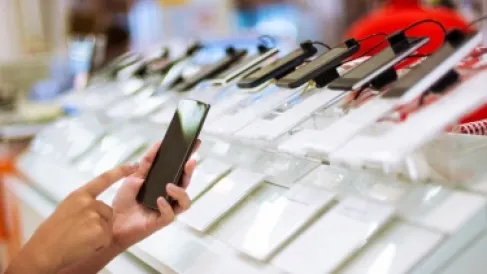
For instance, Xiaomi now operates what is known as the "dark factory" in Beijing, an automated factory that can be operated with low lighting, producing a flagship smartphone every six seconds with only a few technicians supervising.
Also, Siemens leads in developing industrial assistants powered by artificial intelligence, helping engineers to guide robots using natural language and automatically detect mechanical issues, increasing efficiency by up to 30%, according to Peter Kurt, Chief Technology and Strategy Officer.
Kurt adds that the impact of artificial intelligence in the future largely depends on transforming the industrial world: "After all, it represents the majority of the economy."
- Autonomous Military Aircraft
Previously, losing a signal, often due to advanced jamming, meant a drone would crash. However, during "Operation Spider Network" in Ukraine, artificial intelligence took over when some of the 117 aircraft stopped functioning, according to the Ukrainian security service.
Mykhailo Fedorov, Minister of Digital Transformation in Ukraine and leader of the Brave1 initiative, states, "This operation, which destroyed 12 Russian bombers, is the most clear example of artificial intelligence capabilities in the battlefield."
Fedorov adds that current aircraft can track pre-determined targets, while future models will move towards more autonomy.
With all these promising applications of artificial intelligence, there remain fundamental challenges to consider, such as protecting privacy, avoiding excessive reliance on technology, and reducing potential errors. Understanding these risks and dealing with them will be key to maximizing the benefits of artificial intelligence in the future.