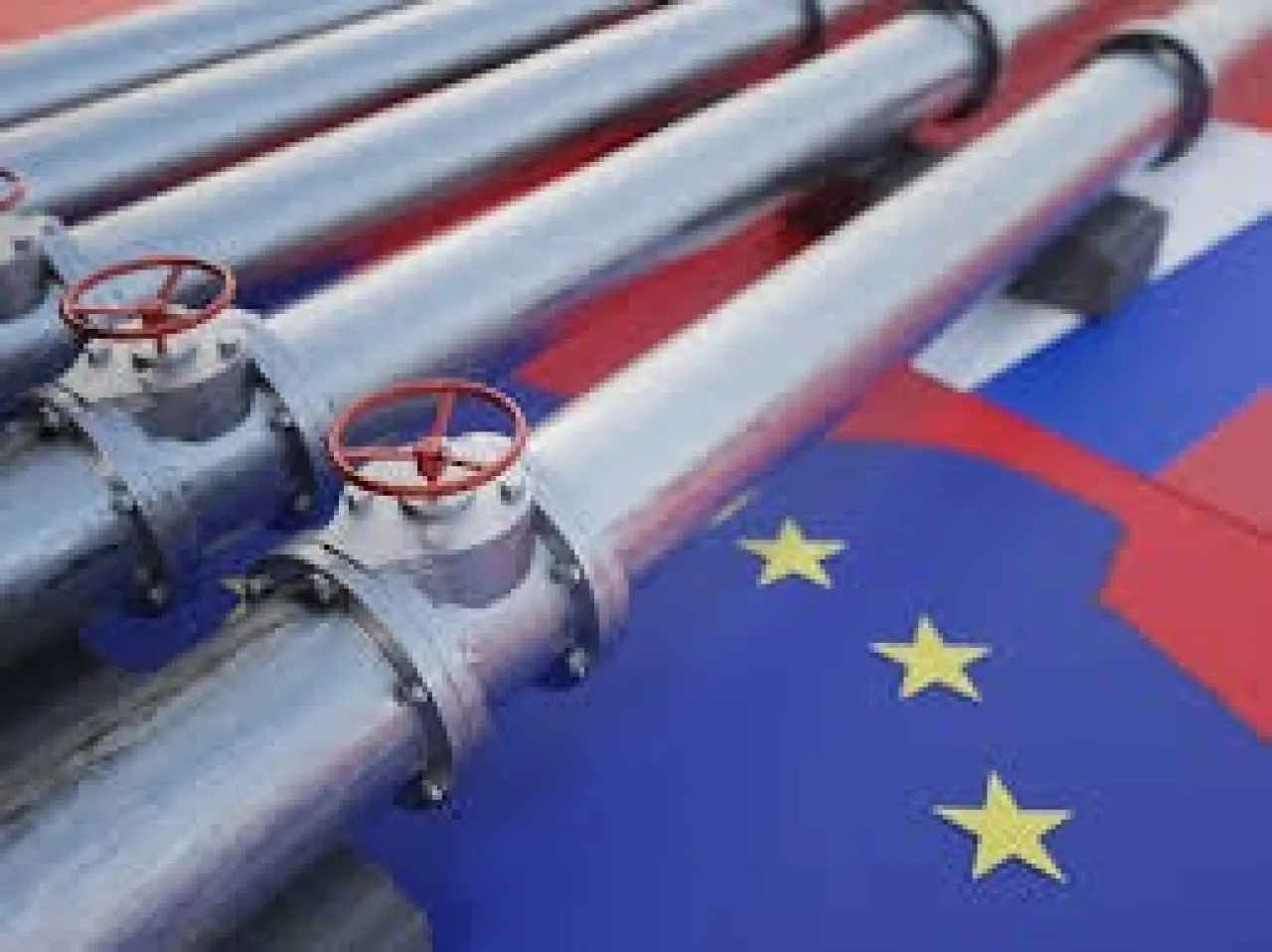
Khaberni - On Monday, the Council of the European Union ratified a ban on Russian natural gas imports, in a step considered a fundamental pillar within a roadmap aimed at ending European dependence on Russian energy after Moscow used gas as a "political weapon" and repeatedly caused disturbances that significantly impacted the European energy market.
The proposed regulation introduces a legally binding gradual ban on the importation of Russian gas, both via pipelines and liquefied natural gas, with the complete ban to be enforced from January 1, 2028.
The council maintained this deadline, considering the agreement as an ambitious signal of the Union's commitment to ending dependence on Russian gas, and to enhancing an independent and secure European energy market.
Lars Ougard, the Danish Minister for Climate, Energy, and Utilities, who presides over the current Council of Energy, said: "An energy-independent Europe is a stronger and safer Europe. We have worked hard over the past years to eliminate Russian gas and oil from Europe, but we have not yet reached the goal."
The council confirmed that the importation of Russian gas will be banned from January 1, 2026, while maintaining a limited transitional period for contracts signed before June 17, 2025.
According to the agreement, short-term contracts signed before this date can continue until June 17, 2026, while long-term contracts may extend until January 1, 2028.
It was also specified that existing contracts can only be amended for limited operational purposes, provided that they do not lead to an increase in imported quantities, with some flexibility granted to landlocked countries affected by changes in supply routes.
The new regulation mandates all member states to submit national plans for diversifying gas sources, including the actions to be taken and potential challenges in the transition to non-Russian alternatives. Countries proving that they no longer receive any direct or indirect imports of Russian gas will be exempted from this commitment.