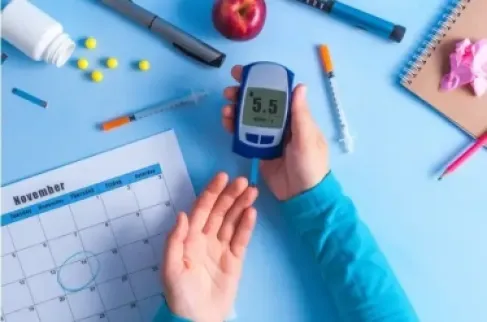
Khaberni - As we age, our bodies start sending silent signals that are not visible to the naked eye, but can be clearly detected in just one drop of blood. While many people turn to smart devices and apps to track health indicators, blood testing remains the simplest and most accurate way to monitor vital changes inside the body especially after the age of forty, when some vital functions begin to gradually decline.
Experts affirm that these five basic tests can make a real difference in life quality and prevention of modern diseases.
Cholesterol Test.. Balancing Fats is the Key to Heart Health
Cholesterol is not always the enemy as often thought, but is a necessary element for repairing body tissues, yet the danger lies in the imbalance between its types:
The "good" cholesterol (HDL), which is produced by the liver and helps in cleaning the arteries,
and the "bad" cholesterol (LDL), which if accumulated, leads to clogged blood vessels and increases the risk of heart disease.
The National Health Service (NHS) recommends maintaining an HDL level of 1.2 mg/dl or higher, and an LDL level below 3 mg/dl. After forty, the body's natural ability to get rid of harmful fats decreases, therefore, it is advisable to engage in aerobic exercise, consume fiber-rich foods like oats, beans, and apples, alongside unsaturated fats like nuts and oily fish. The test is simple and can be done in clinics or at home using commercially available test kits.
Thyroid Test.. The Tiny Engine That Regulates Body Energy
The small thyroid gland located at the front of the neck, controls many vital processes such as metabolism, body temperature, and heart rate.
Its imbalance, whether by increased or decreased secretion of its hormones (T3 and T4), can lead to weight gain, fatigue, and mood swings.
Studies indicate that about 10% of people suffer from thyroid deficiency, and the rate increases among women over sixty to about 20%.
Regular testing helps detect imbalance early, and the condition can be managed through dietary adjustments and a healthy lifestyle, or by consulting an endocrinologist to determine the appropriate treatment.
Testosterone Test.. Vital Hormone for Men and Women
Though many think that testosterone is only important for men, it is also crucial for women's health, affecting energy, mood, and muscle mass. Testosterone begins to gradually decrease from the age of 35 to 40, with men losing about 1% annually, while women start losing it from their thirties. A deficiency in testosterone leads to fatigue, decreased sexual desire, and reduced self-confidence.
The ideal range for hormone level varies from person to person, but the general rule is to feel a dip in cognitive or physical performance when levels drop below 15 nanomoles/litre in men.
Consulting a specialist doctor helps determine the cause and develop a safe treatment plan, which sometimes includes dietary adjustments or monitored hormonal support. Vitamin D test: The Absent Sunlight, in countries with little sun exposure, like the UK, Vitamin D deficiency is one of the most common problems, as estimates suggest that 85% of people have low levels of it.
Vitamin D is essential for bone health, immunity, and muscle function, and with aging, the skin's ability to produce it decreases, losing up to 50% by the age of eighty. The NHS recommends taking vitamin D supplements throughout the winter months or year-round for those not exposed to sufficient sunlight, and its level can be easily measured in the blood, while moderate daily doses of supplements are safe and effective for most people.
Glycated Hemoglobin (HbA1c) Test.. A Window on Metabolism
Although not mentioned in the original article, most experts agree that the glycated hemoglobin (HbA1c) test is essential after forty, as it shows the average blood sugar level over the past three months.
This test helps early detection of insulin resistance or pre-diabetes, allowing quick intervention with diet or physical activity before the condition progresses to chronic disease.
When we reach forty, caring about health is not a luxury, but a necessity for living with awareness and a better quality of life. Mirrors or scales may not tell you what is happening inside your body, but a blood test does so accurately. Regularly undergoing these five tests is an investment in your future age as in this case, knowledge is not just power, but prevention from easily avoidable diseases.