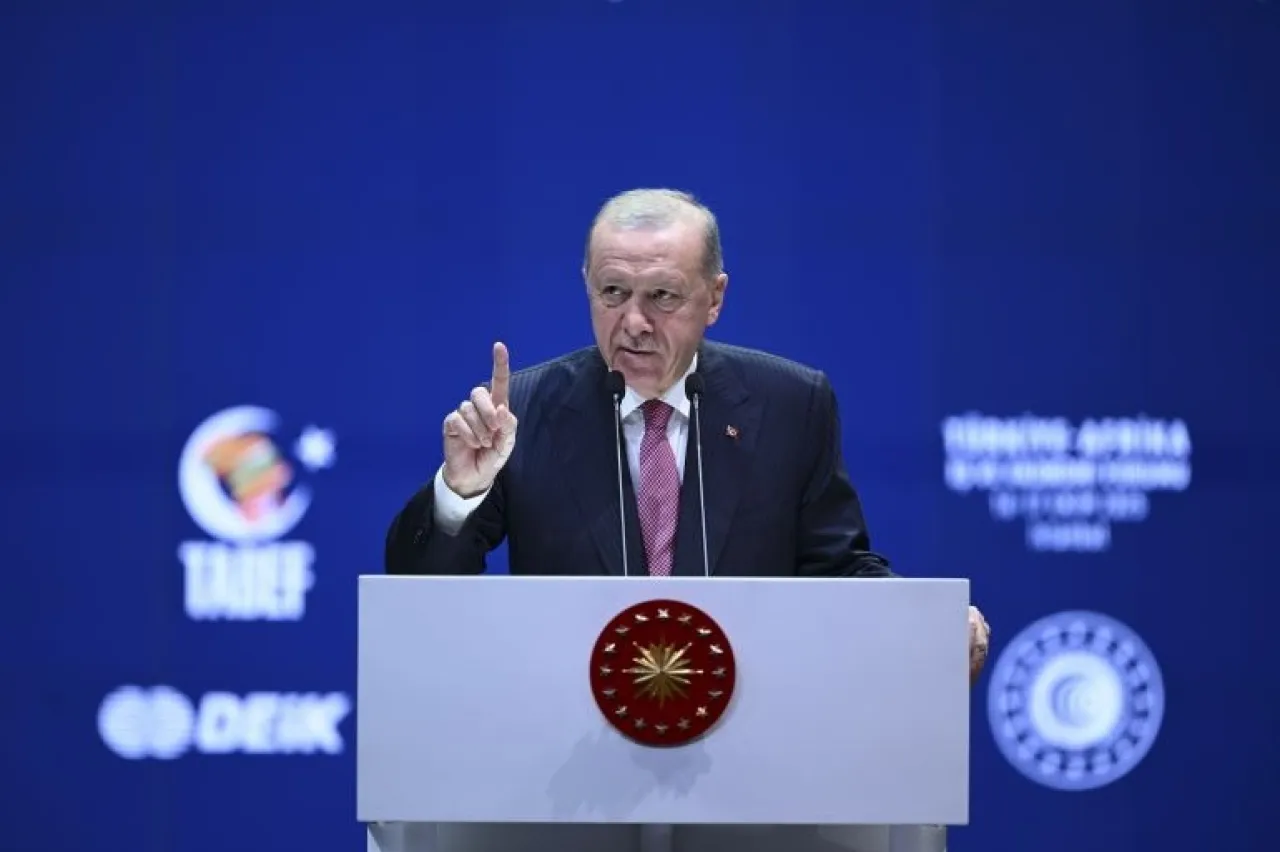
Khaberni - According to Yedioth Ahronoth today, Saturday, researchers at the Israeli Institute for National Security Studies have warned that the role of Turkish President Recep Tayyip Erdogan in Gaza in the coming period "could turn into a nightmare for Israel."
The newspaper report states that Israel has strongly rejected involving Turkey in any negotiations or arrangements concerning Gaza since the beginning of the war, especially after Erdogan described Israeli Prime Minister Benjamin Netanyahu as the "Hitler of our age" and accused Israel of genocide.
The report sees that the scene has changed in the last weeks, and Turkey has become a central part of the negotiations leading to the ceasefire agreement.
The two Turkish affairs scholars interviewed by the paper, Rami Daniel and Galia Lindenstrauss, believe that Turkey's participation came under an American umbrella, but that the Turkish discourse towards Israel has not changed, but instead has intensified.
Lindenstrauss says that U.S. President Donald Trump sees Erdogan as "the leader capable of restoring order to the Middle East," which has led him to bet on him in executing the "day after" plan in Gaza, benefiting from the good relationship between Ankara and Washington at this stage.
She adds that this gamble raises wide concerns in Israel, as "involving Turkey in post-war arrangements is a very troubling development for Israel, because it is an openly and behaviorally hostile actor, and because its presence in Gaza contradicts fundamental Israeli interests."
Lindenstrauss also states that "Turkey possesses military and organizational capabilities that make it an effective actor in any monitoring or peacekeeping force, but this is exactly what makes it a potential danger, as the mere presence of Turkish troops near Israeli forces opens the door to incidents that could ignite a diplomatic or military crisis," referring to Israeli frictions with the UNIFIL peacekeeping force in Lebanon.
According to the researcher, Trump, who prefers "managing the Middle East through the relations of strong leaders," has given Erdogan what he has wanted for a long time: legitimacy to return to Gaza as a primary player, despite being barred from doing so since the Mavi Marmara incident in 2010.
According to Lindenstrauss, Ankara views its intervention in Gaza as a "historic opportunity" to regain its status in the region after years of isolation, and to demonstrate its capacity to influence central Arab issues, especially the Palestinian issue, which it has politically invested in for two decades.
Researcher Rami Daniel describes Turkey's entry into the negotiations as a "decisive shift," explaining that Turkey was not part of the mediation initially, but persisted in becoming a main player in the end.
Daniel notes that "over the past years, Turkey has injected large amounts of aid into Gaza, and tried through Erdogan's anti-Israel rhetoric to lead an Islamic axis supportive of the Palestinians, but it has not succeeded in translating this into actual influence until this moment."
The Israeli researcher sees that the Turkish president "found in Trump's plan a golden opportunity to prove his regional role," noting a "change in the rules of the game that puts a price on Israel, because Erdogan has not changed his political stance on the Islamic Resistance Movement (Hamas), but will work to maintain its political legitimacy, which will make moving to the second phase of the agreement more difficult."
Strategic Nightmare
As Daniel mentions, from the first day of the war, Erdogan dreamed of a role in Gaza, and today he is achieving it, aiming to make it as large and influential as possible. Meanwhile, Israel sees the Turkish dream as a "strategic nightmare."
He adds that "the Israeli security establishment fears that the Turkish presence in any form of control or monitoring might restrict the freedom of the army's actions, and potentially lead to a direct confrontation in case of a field incident."
Apart from the security risks, there is also a political dimension: according to Daniel, Ankara leans towards granting Hamas a status in any future settlement, and opposes the complete disarmament or exclusion of Hamas from managing Gaza, while Israel, Egypt, and the UAE push in the completely opposite direction.
Daniel argues that "most countries in the region today are closer to the Israeli stance than to the Turkish one and do not wish to see Hamas remain strong," noting that Turkey is the exception, although it is strong now, the situation could turn against it later if the balance of power changes.
In contrast, Lindenstrauss highlights the debate within Israel on the extent of the role that can be allowed for Turkey in Gaza, saying that the idea of Turkish forces in Gaza is "very troubling, and it would be better for Israel to limit any Turkish military intervention as much as possible."
Two Fronts of Influence
The Israeli concern is not limited to Gaza alone. As the Israeli researcher mentions, the rise of the Turkish role in Syria in recent years and the relative decline of Iranian influence there, make Turkey "the rising regional player" that might intersect with Israel in more than one arena.
Lindenstrauss explains that Turkey was previously mainly interested in northern Syria, while Israel focused on the south, but the change in the field equation after the fall of the ousted Syrian president Bashar al-Assad has made Turkey a power with broader interests, now perceiving Israel as a potential obstacle to its new influence.
For this reason, she says, a hotline was activated between the Turkish and Israeli militaries to avoid aerial incidents in Syrian skies, indicating the fragility of the relationship between the two sides despite intertwined security interests.
Lindenstrauss also points out that Turkish media close to the government refers to what it calls a "diplomatic victory," as Erdogan has reasserted himself as a defender of the Palestinian cause and a partner in ceasefire arrangements, after years of marginalization.
However, she conveys from Israeli observers that the Turkish government is using the Gaza file to repair its image among Arab and Muslim streets and improve its standing in the competition with Iran for influence in the region. She also sees it as an opportunity to prove its merit to Washington as a "disciplined player" that can balance American and Arab interests.
The researcher confirms that Israel sees this strategy as "double-faced," as while Turkey presents itself as a partner to the United States in peacemaking, at the same time, it attacks Israel violently in its domestic discourse, and continues to embrace Hamas politically and medially.
According to the Israeli researchers, Turkey will seek to establish its presence in the sector through monitoring teams or participation in reconstruction projects, which would grant it long-term influence that Israel cannot easily accept. Lindenstrauss warns that "any small incident between the armies in Gaza could turn into a major diplomatic crisis."