Khaberni - Iran announced on Saturday that it is no longer bound by the "restrictions" associated with its nuclear program as the term of an international agreement concluded ten years ago has expired.
After years of negotiation, this agreement was concluded between Iran and the major powers (the United States, China, Russia, France, Germany, and the United Kingdom), which allowed limiting Tehran's nuclear activities in exchange for lifting stringent economic sanctions that had been imposed by the Security Council.
The expiration date of the agreement was set for October 18, 2025, ten years after the United Nations ratified the text under resolution 2231.
Despite repeated Iranian denials, Western countries and Israel suspect that Iran is developing nuclear weapons.
The Iranian Foreign Ministry said in a statement that "all measures (mentioned in the agreement) including restrictions on the Iranian nuclear program and related mechanisms, are considered expired," confirming "Iran's firm commitment to diplomacy".
The agreement sets a cap for Iranian uranium enrichment at 3.67% and stipulates strict oversight of Tehran's nuclear activities by the International Atomic Energy Agency.
- The American Withdrawal -
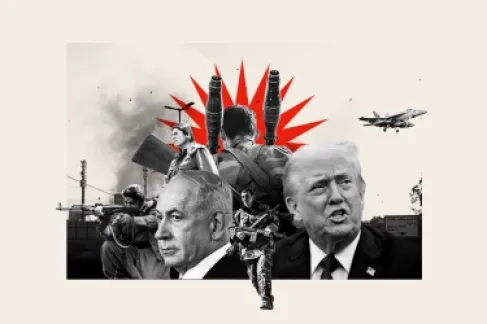
However, Washington withdrew from it in 2018 during the first term of President Donald Trump, and reimposed harsh sanctions.
In response, a year later Tehran began gradually retreating from the fundamental commitments under the agreement, especially in uranium enrichment levels.
The International Atomic Energy Agency reports that Iran is the only non-nuclear-armed state that enriches uranium at levels up to 60%, which is close to the 90% necessary for creating a nuclear weapon.
Tehran completely suspended its cooperation with the International Atomic Energy Agency in July after a 12-day war erupted following an unprecedented Israeli bombardment targeting specifically Iranian nuclear facilities. Iran responded by launching rockets and drones toward Israel.
The United States also carried out strikes on some nuclear facilities in Iran during that war.
This war ended rounds of indirect talks that began in April between the United States and Iran concerning the nuclear program.
At the initiative of France, the United Kingdom, and Germany, the United Nations reimposed sanctions on Iran at the end of September that had been lifted ten years earlier.
The Iranian Foreign Minister Abbas Araqchi stated in a message to the United Nations on Saturday that the expiration of the nuclear agreement's timeline renders the sanctions "null and void as if they never existed".
- "Irresponsible Actions" -
The three European countries blame Iran for its lack of cooperation with the International Atomic Energy Agency and demand the resumption of negotiations with the United States.
The Iranian Foreign Ministry added on Saturday that "Iran's efforts to resume dialogue (with the International Agency) that led to the Cairo agreement, were undermined by the irresponsible actions of the three European countries".
The ministry referred to an agreement concluded in September between Tehran and the International Energy Agency to define frameworks for resuming cooperation.
It continued, "Iran firmly confirms its commitment to diplomacy".
Iran's nuclear program has long poisoned its relations with Western countries.
Iran denies that it seeks to possess nuclear weapons but emphasizes its right to develop a nuclear program for civilian purposes, especially for electricity production.