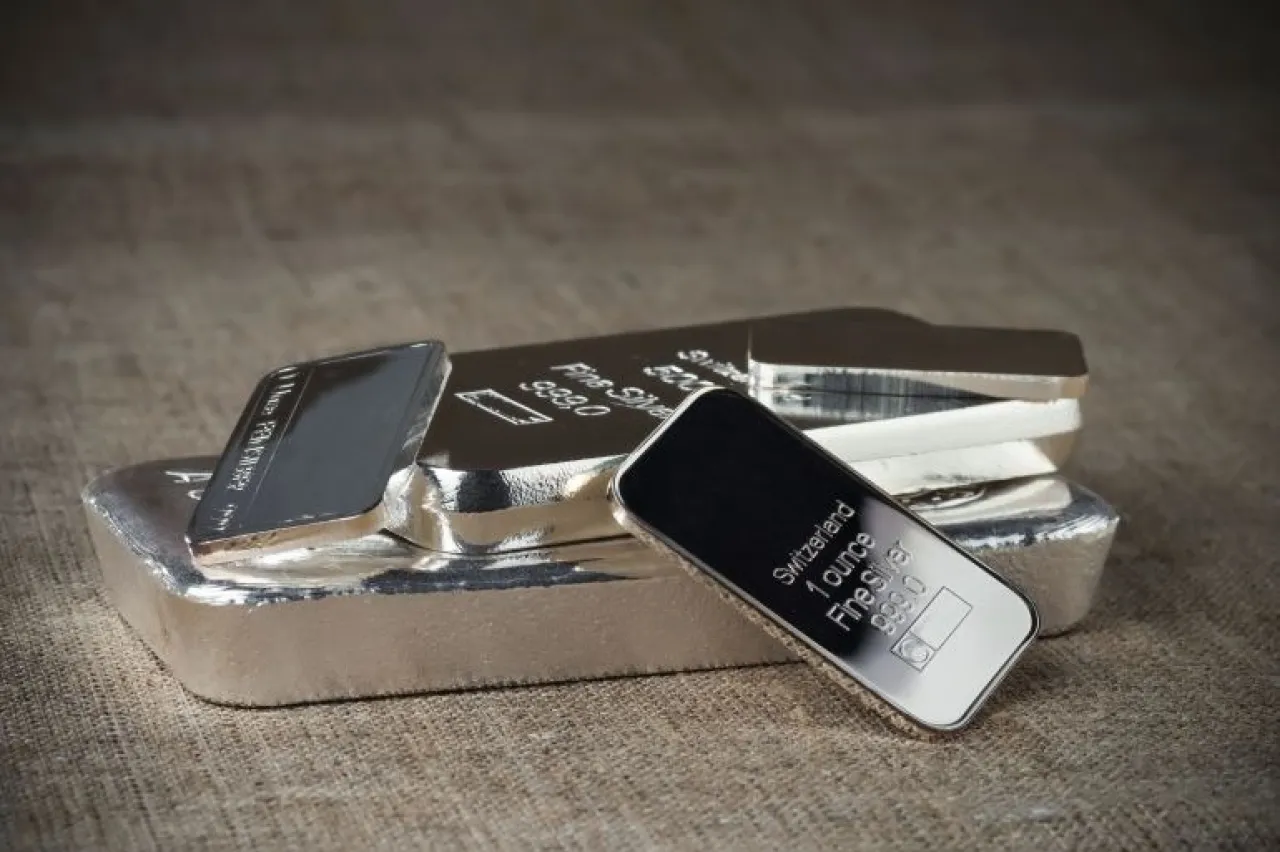
Khaberni - Amid rapid global changes and economic and geopolitical confusion, there has been an increased inclination towards hedge assets, primarily gold and silver. In the case of silver specifically, a supply and demand imbalance has created a strong wave that pushed prices to surpass $50 per ounce by mid-October 2025, breaking historical resistance levels dating back to the early 1980s.
In this report, the most pressing questions about silver are posed: Where does it stand now? What is its historical context? Who are the major producers? And what factors have driven its prices to this strong rise?
Where does silver stand now, and its historical context
Silver has risen by about 70% this year, surpassing the $50 per ounce threshold to trade around $52 per ounce by mid-October 2025, which is the highest level since the 1980s.
Historically, silver surpassed $40 in 1980 for one month before falling to $3.51 in 1993, then it returned above $40 in 2011 for two months followed by a sharp decline, with a brief return above $40 two months later, before it touched the bottom at $11.735 in 2020.
The conditions of each price cycle differ according to monetary policies, demand structure, and geopolitical developments, therefore the present cannot be literally measured against the past. The current rise above $50 is driven by a mix of the hedging trend towards safe assets and the expanding technical industrial demand, as explained in the following details.
Where is silver produced?
The global production of silver was about 25,000 tons in 2024.
The ranking of the top producers was as follows:
Mexico: 6300 tons (about 25%).
China: 3300 tons (13%).
Peru: 3100 tons (12%).
Poland: 1300 tons (5%).
Bolivia: 1300 tons (5%).
Russia: 1200 tons (4.8%).
Chile: 1200 tons (4.8%).
The United States: 1100 tons (4.4%).
Australia: 1000 tons (4%).
Kazakhstan: 1000 tons (4%).
Argentina: 800 tons (3.2%).
India: 800 tons (3.2%).
Sweden: 400 tons (1.6%).
Canada: 300 tons (1.2%).
Other countries: about 2,100 tons (8%).
In total, Latin America accounts for about 51% of the global supply (from Mexico, Peru, Bolivia, Chile, and Argentina).
Why is the supply slow to respond?
In most mines, silver is not mined as a primary target, but as a byproduct of extracting lead, zinc, copper, and sometimes gold ores, and it is recovered during crushing, concentrating, and smelting operations. Therefore, any increase in supplies is linked to the production plans of these base metals and their conditions, not solely to the price of silver.
Why silver prices are rising and how the current scene differs from the past?
The current situation is more complex than any previous cycle, as the world is experiencing a new blend of rapid technological development and intertwined economic and political factors influencing the flows and stocks. Conversely, the supply remains slow to respond due to restrictions from the cycles of basic sectors, their investments, regulatory, and logistical constraints.
Therefore, it is not correct to measure the present against the past or project the results of old cycles onto the new reality, since the current drivers are broader and more entangled, giving silver structural support that is different and making the current market reading by past standards misleading in the picture.
Below are the main reasons that led to the rise of silver, with clarification of the core differences between the current situation and previous cycles.
1. Economic and geopolitical risks
The global macro environment supports the demand for precious metals due to worsening debts, the erosion of currencies' purchasing power, and weak real returns, alongside the centrality banks' leaning towards monetary easing.
Historically, when real returns decrease, investors turn towards hedge assets, primarily gold and silver. It is evident from a simple comparison: what was worth $35 per ounce in the 1930s exceeds $4,000 today, meaning that the dollar has lost over 99% of its purchasing power against gold over time.
Simultaneously, trade imbalances, customs tariffs exacerbate, and with the rise of geopolitical tensions, trust in paper assets declines, all factors raising the safety premium and bolstering the demand for metals in an extended hedging cycle.
2. Supply challenges linked to base metals
Since silver is mostly produced as a byproduct of mining lead, zinc, and copper, its supply follows these metals rather than its direct price. Any disruption in the production of those metals—whether due to regulatory restrictions, slow environmental licensing, tax changes, labor strikes, equipment shortages, export restrictions, sanctions, security tensions, or climate crises—immediately reflects on the pace of silver production.
This nature makes the supply response slow even with improved market appetite, causing a scarcity in the metal ready for delivery.
3. Legal, logistical, and market factors increase the demand for silver
This section reviews the legal and logistical reasons that have raised the demand for silver and affected its trading and prices.
• Customs tariffs and Article 232
Customs tariffs are fees imposed on imports. Amidst the ongoing trade war, the United States has activated Article 232 of the American Trade Law, which allows the administration to impose fees or restrictions on imports if deemed a national security threat, and these provisions include essential metals like silver.
On August 26, 2025, silver was included in the draft list of "critical metals" issued by the United States Geological Survey, along with copper, lead, potash, silicon, and rhenium. This inclusion does not automatically mean the imposition of fees under Article 232, but it increases the likelihood of later use of国的èlescurity tools, as it shows silver being considered a critical material for supply chains.
The most significant executive action in 2025 was on copper; Presidental Decree No. 10962 was issued on July 30, 2025, imposing a 50% tariff on a range of semi-manufactured copper imports starting August 1. No definitional decision has yet been enforced on silver, but these developments have increased market sensitivity and affected the metal flows and timings.
• The legal reflection on logistics.. Timing and shipping race
Merely anticipating new customs decisions pushes dealers to rush silver shipments to the United States before the import terms change, reducing stock outside America and making the market highly sensitive to any clearance or shipping delay.
In a tight market, a one-day delay can cost a lot. Thus, transatlantic air shipments of large bullions—a costly option usually used for gold—have appeared to leverage the price difference and meet immediate demand.
• Financing bottlenecks and premiums between London and New York
Lease rates for silver, that is, renting physical ounces for a brief period with a commitment to return the same quantity later, have risen to about 35%, the highest recorded level, indicating that positions are paying exceptional premiums to secure the actual metal.
The metal is typically rented out by bullion banks, funds, and refiners, while it is leased by those needing immediate delivery, such as mints, industrial companies, traders, and banks to fulfill urgent obligations.
This coincided with a more than 100% jump in the cost of overnight borrowing in London, highlighting short-term financing bottlenecks. In spot pricing, London's auction price exceeded $50 per ounce (for the first time since 1897), and the difference with New York shifted to an immediate premium of about $3 above future contracts, a direct signal of material scarcity and liquidity shortages in the spot market.
• Re-positioning between vaults and transatlantic traffic
The premium intensity in London has prompted increased withdrawals from COMEX vaults in New York to send the metal to London, with estimates indicating the transfer of between 15 and 30 million ounces, in the largest daily withdrawal in more than four years. The goal was to address the immediate scarcity in London despite the high transportation costs.
• Contraction of liquidatable stock
London's inventories have fallen by about a third since mid-2021, while the available to liquify—which is the part held by major banks to feed daily liquidity—has dropped to around 200 million ounces only, about 75% less than the peak that exceeded 850 million ounces in mid-2019.
This contraction explains the rise in premiums and tightening delivery terms.
• Scarcity in sales channels and fluctuations driven by Indian demand
Indicators of shortages appear in multiple markets and products:
The Royal Canadian Mint recorded outages in 100-ounce bars with waiting periods of 3 to 4 months, and an almost complete absence of 10-ounce bars.
Rand Refinery in South Africa announced the depletion of silver Krugerrands for weeks.
Perth Mint in Australia stopped selling its silver products during peak times.
As well as delays in delivering kilo bars by global traders, a shortage in some platforms, and some suppliers' inability to meet delivery dates.
.parallelly, India witnessed a sudden increase in demand converting imports from Hong Kong during the Golden Week holiday, prompting an Indian traded fund to temporarily suspend subscriptions due to local shortages and some traders failing to deliver.
This widespread proliferation of outages, coupled with the bursts of Indian demand, reflects a structural shortage that raises premiums and tightens delivery terms, keeping the difference between spot and futures intact.
Current silver prices are rising due to a mix of legal signals (the draft inclusion in critical metals and the potential activation of national security tools, with a precedent tariff on copper), logistical obstacles (shipping and clearance delays), and market pressures (rising borrowing costs to 35%, and the contraction of available for liquification to 200 million ounces after a peak of 850 million).
These factors keep the spot market under pressure and widen the gap between spot and futures, making an upward trend likely as long as demand growth outpaces supply response.
4. Industrial demand for silver
Industrial demand for silver is accelerating due to the shift towards clean energy and digitization, and the requirements for reliability and safety in various sectors.
Electronics and electricity:
Silver is used in printed circuit boards, conductive inks, conductive films, high-reliability switches, and systems for tracking through radio waves and 5G networks and the Internet of Things, reducing loss and increasing efficiency. The demand reached about 456.6 million ounces last year with a growth of nearly 4%ly.
Solar energy (photovoltaic cells):
Silver is used as a conductive ink that is printed on the silicon cell core to collect electrons and transfer current efficiently. The consumption reached about 197.6 million ounces in 2024—a record level—with a density approaching 20 kilograms per installed megawatt.
Automobile industry:
Silver is used in contact points and circuits that control propulsion, comfort, and media systems within vehicles. Its high conductivity and stability under heat and vibration enhance reliability, especially in electric vehicles with higher currents. The current consumption exceeds 60 million ounces annually with estimates reaching 90 million with deeper electrification and the spread of charging infrastructure.
Chemical industries:
Silver acts as a catalyst for producing ethylene oxide and formaldehyde, which enter into plastics, adhesives, textiles, and car parts, with most of the silver being recoverable after operation. Ethylene oxide production alone consumes about 10 million ounces annually.
Solder and metal joining alloys:
Used in solder wires that form strong, corrosion-resistant, and heat-resistant joints in plumbing, cooling, and air-conditioning work and radiator parts without melting the original pieces. After reducing lead in Europe since 2006, tin/silver/copper alloys with a silver content of about 45% have spread.
Medical field and infection control:
Silver coatings and dressings on medical instruments, catheters, and prosthetics help limit bacterial growth, as silver ions disrupt them with a good safety record at recommended doses, making it a supportive element in infection control programs in high-risk environments.
Water purification:
Silver is used in filters and treatment systems to prevent bacteria and algae formation inside pipes and tanks, and its ions work with oxygen as a strong disinfectant in hospitals, public water networks, and swimming pools.
Photography:
The specialized use of silver halide films continues in diagnostic applications such as X-rays and some high-color-resolution artistic and cinematic works, a small but ongoing sector within the overall industrial demand.
Conclusion
The current rise in silver prices is not a speculative wave but a result of a mix of the hedging demand for safe assets and the increasing industrial and technological demand.
With the rise of gold, silver has become a less costly alternative for hedging, while the supply response quickly restricts because the metal is mostly produced as a byproduct of other metals.
Despite price fluctuations, the structural trend remains upward, supported by the expanding daily uses of silver and its dual role as an industrial metal and a means to preserve value.
The most important question remains: How will the current structural imbalances in the global financial and economic systems, with the increasing industrial and hedging demand, reflect on the prices of silver and metals in the coming period?