Khaberni - Cats have surrounded humans since ancient times and have become their companions in the countryside, cities, and almost everywhere.
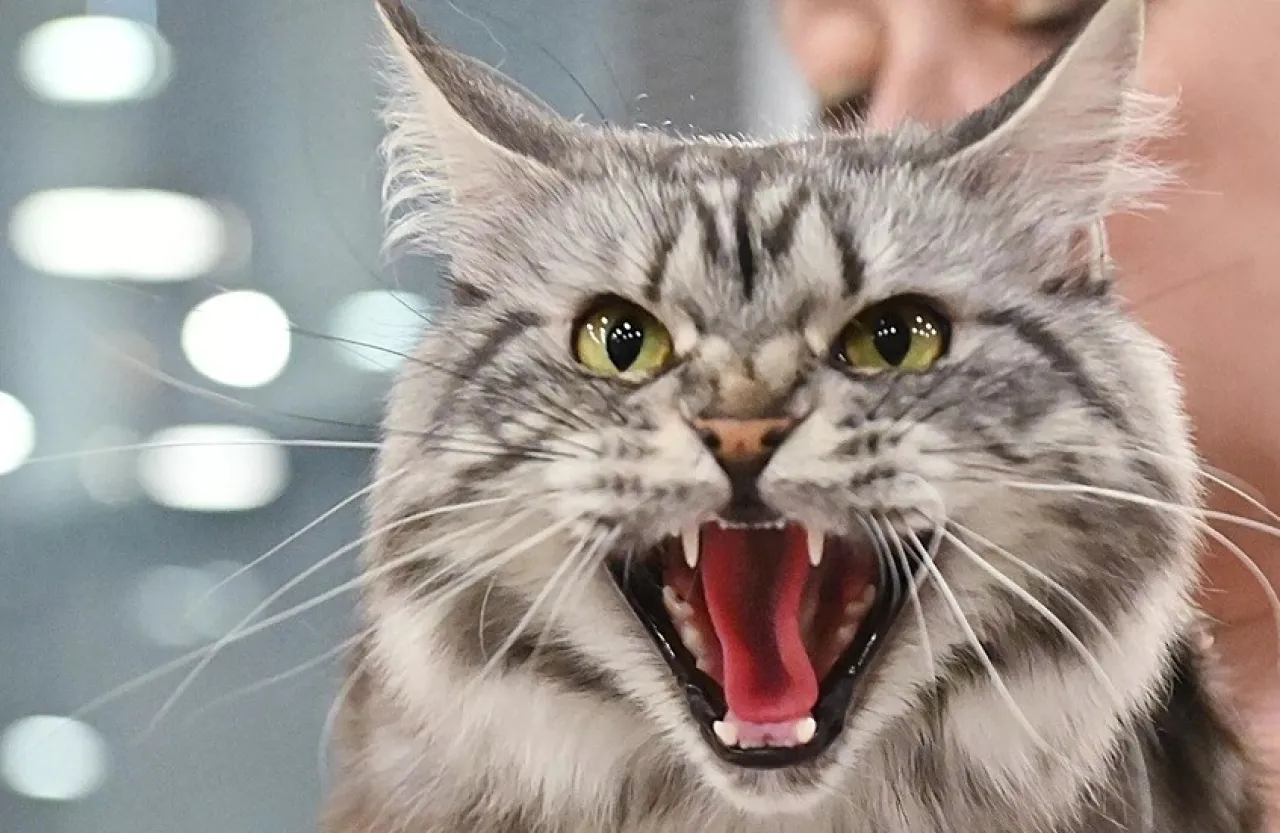
They rub against their legs, wagging their tails and staring with their bright, vivid eyes, seeking affection and attention.
Cats have entered human lives and have now become more than any other pets, their companions at their homes, streets, alleys, and squares. They are seen everywhere and their presence bothers no one, but is rather enjoyed by many, especially children.
Cats can be closely known through ancient myths. Cats had a special place in various civilizations.
They were embodied in many myths with various forms, characters, and meanings ranging from sanctification and connection with magic, supernatural powers, and divine symbols on one hand, and demonic aspects on the other.
In ancient Egypt, cats were not just pets, but were sacred creatures symbolizing luxury and protection.
One of the most striking myths in ancient Egyptian civilization is linked to the goddess "Bastet" who was depicted as a woman with the head of a cat.
This "cat" woman represented femininity, motherhood, and fertility. Moreover, she was entrusted with protecting homes and families from evil spirits, and her character was also associated with love, music, dance, and joy.
In the time of the Pharaohs in Egypt, hundreds of cats lived in temples dedicated to the goddess "Bastet." There, they roamed freely and lived in luxury. Visitors would offer food to these cats as a sacrifice to the goddess, and after their death, they were mummified and buried beside these temples.
In the Chinese civilization, a myth about the cat goddess "Li Shou" appeared, and she was known to protect crops and chase away evil spirits.
The role of cats was indeed vital for Chinese farmers as they helped them protect their grain stores and crops from rodents.
The Chinese myth about "Li Shou" mentioned that she could talk, and it was supposed that cats under her command would rule the new world of gods, i.e., earthly life. However, despite their magical abilities, the cats frankly told the gods that they preferred sleeping and playing and were not interested in managing the world. As a result, the reign on Earth was handed over to humans so that cats could devote themselves to living and sleeping peacefully.
In Japanese folklore, there exists "Maneki Neko," represented by a statue of a cheerful cat. The myth says that "Maneki Neko" once saved the life of the Japanese emperor when she raised her paw and beckoned him to the temple.
The emperor heeded the gesture and walked towards the cat. Just moments later, lightning struck the spot where the emperor had been standing before he moved. Since that moment when the cat saved the emperor's life, it has been highly respected.
Currently, the statue of the cat "Maneki Neko" in modern Japan is a symbol of good luck and welfare.
Statues of this cat can be seen in restaurants, shops, and offices. They appear waving their paw in happiness and bliss, bringing their owners good luck and bliss.
Cats also hold an important place in the Scandinavian region. In the culture of this region, "Freya," who is one of the strongest goddesses in their mythology is depicted, symbolizing love, beauty, and fertility. The myth pictures her on a chariot drawn by two large cats.
The two cats in the myth serve the goddess of love and beauty, and at the same time, symbolize independence, strength, and protection.
It is also worth noting the role of cats in Europe during the Middle Ages.
At that time, cats were often associated with magic and witchcraft. It was believed that witches could transform into cats or that cats could be their companions assisting them in magical deeds.
Pet cats still have a presence in our contemporary world. The significance of this pet and close friend of humans since ancient times is shown by dedicating a World Cat Day celebrated on October 16th each year.
There is another World Cat Day celebrated on August 8th sponsored by the International Fund for Animal Welfare. All this indicates the status, importance, uniqueness, and beneficial presence of cats.
Source: RT