Khaberni -
The Islamic finance market managed to handle assets worth $5.5 trillion in 2024, with projections indicating it could reach $7.5 trillion by 2028. This principled ethical world has mostly stayed away from the fast-moving cryptocurrency space. This has started to change, as the industry, valued at $3.87 trillion, is its latest frontier.
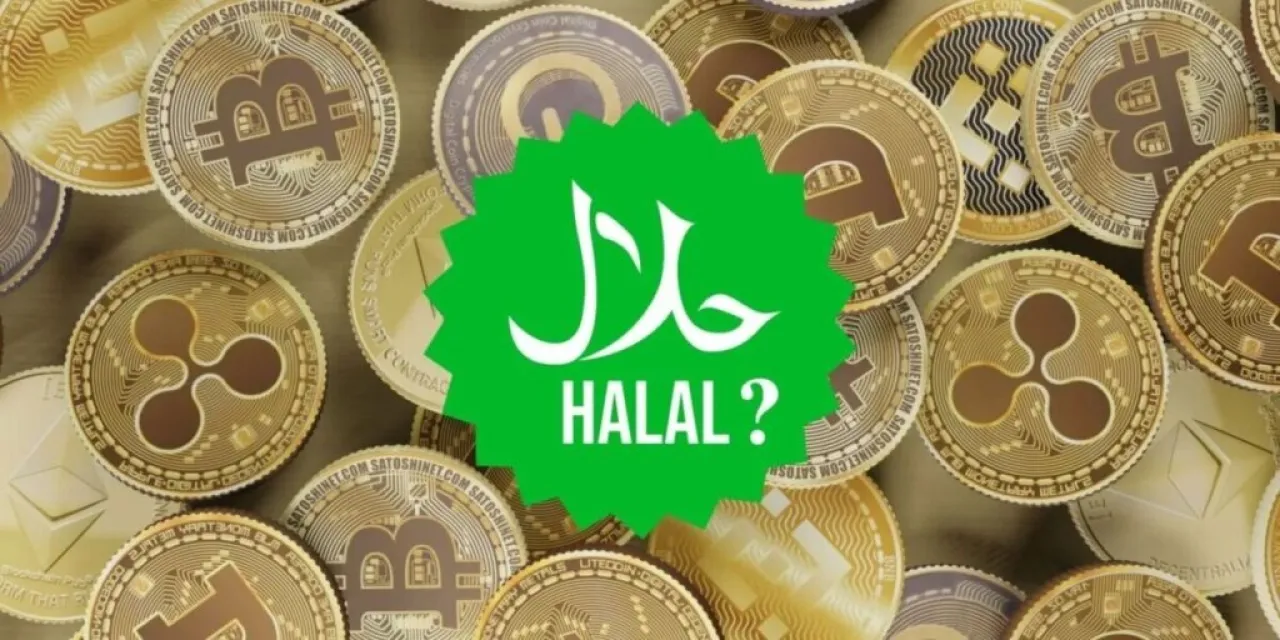
This intersection is no longer just talk now. The launch of certified halal products like Binance's new Sharia Earn platform is building a real and compliant bridge between these two huge markets and sparking a new kind of blockchain innovation. CEO of Binance, Richard Tang, commented on the product launch, saying: “Our new product Shariah Earn provides opportunities for earning money in accordance with Islamic Sharia, enabling the global Islamic community to participate in cryptocurrencies confidently."
Building the Bridge Between Blockchain and Islamic Finance
But cryptocurrencies must comply with the basic rules of Islamic Sharia to engage Islamic finance investors. Thus, no interest (usury) and no excessive uncertainty (gharar) are allowed. Gambling is also prohibited. This is not an easy task—it requires a mix of technological innovation, intelligent regulation, and support from financial institutions.
On the technological side, things are already moving. Smart contracts are now being built to operate agreements that align with Sharia principles, automating compliance and maintaining transparency. Take mortgage, for example. Its underlying mechanisms are completely rethought according to Islamic guidelines. It is no longer treated as a loan with interest.
Instead, Sharia-compliant staking identifies the user’s locked assets as a deposit guarantee to help validate network transactions. Rewards are not for lending—they are payments for the service of maintaining blockchain security.
This is the principle behind Sharia Earn, where Sharia scholars scrutinize each staking mechanism. For BNB, rewards come directly from the yields on the blockchain for the locked-up products. For ETH and SOL, users receive liquid staking tokens – WBETH and BNSOL – representing their assets and growing in value from Halal staking activities while completely avoiding interest-based models. To ensure compliance, Amanie Advisors, a Sharia consultancy, reviews all projects every three months to eliminate any non-compliant activities like gambling or protocols involved in interest-based decentralized finance.
But growth depends on having the right regulations. To truly bridge Islamic finance and cryptocurrencies, clear and consistent rules are essential in key markets from the GCC to Indonesia, Pakistan, and Malaysia. The UAE is already showing how this can be done. Regulators there have established organized protection funds for digital asset innovation, giving companies a supervised space to test and launch products like tokenized sukuk.
This clear regulatory path now encourages major players to participate. Traditional banks and financial technologies are actively looking into issuing their digital assets that comply with Islamic Sharia. Abu Dhabi Islamic Bank (ADIB) is an example. It launched the Smart Sukuk platform allowing individual investors to purchase sukuk for just $1,000, far below the usual minimum of $200,000. This digital fragmentation of Islamic bonds is a strong example of how traditional financial instruments are brought onto blockchain technology, making them more liquid and accessible to more people.
The Future of Halal Cryptocurrencies Is Not Far Off
All this progress in technology, regulation, and institutional adoption points to one thing: the future of Sharia-compliant cryptocurrencies is no longer a distant idea. The work being done today paves the way for more sophisticated financial instruments that blend the principles of Islamic finance with the speed of blockchain technology.
Imagine digital sukuk backed by real assets like real estate, fragmented, and traded on-chain. This would provide more transparency and liquidity than ever before. We could also see stablecoins backed by sukuk, creating a stable currency compliant with Islamic Sharia for the digital economy.
The launch of certified halal products shows that this future is already starting to emerge. By creating accessible, compliant, and transparent tools, the industry is finally opening its doors to a huge market of Muslim investors who are underserved.
Ting clarified what Sharia Earn means for continued inclusivity and global growth, "Our mission has always been to create an inclusive and transparent trading environment. With this product, we are empowering the Islamic community and investors interested in Islamic Sharia to participate in one of the most exciting financial revolutions of our time. This is more than just a product—it’s a move toward a more principled and equitable digital economy that promotes financial freedom for everyone."
When you look at the fundamental ideas of Islamic finance, the overlap with the digital asset space seems less like a coincidence and more like a natural fit. Transparency, fairness, and shared prosperity align well with both markets—becoming more than just another way to grow assets for millions of investors. It's a way to participate in the future of finance without leaving their values behind.