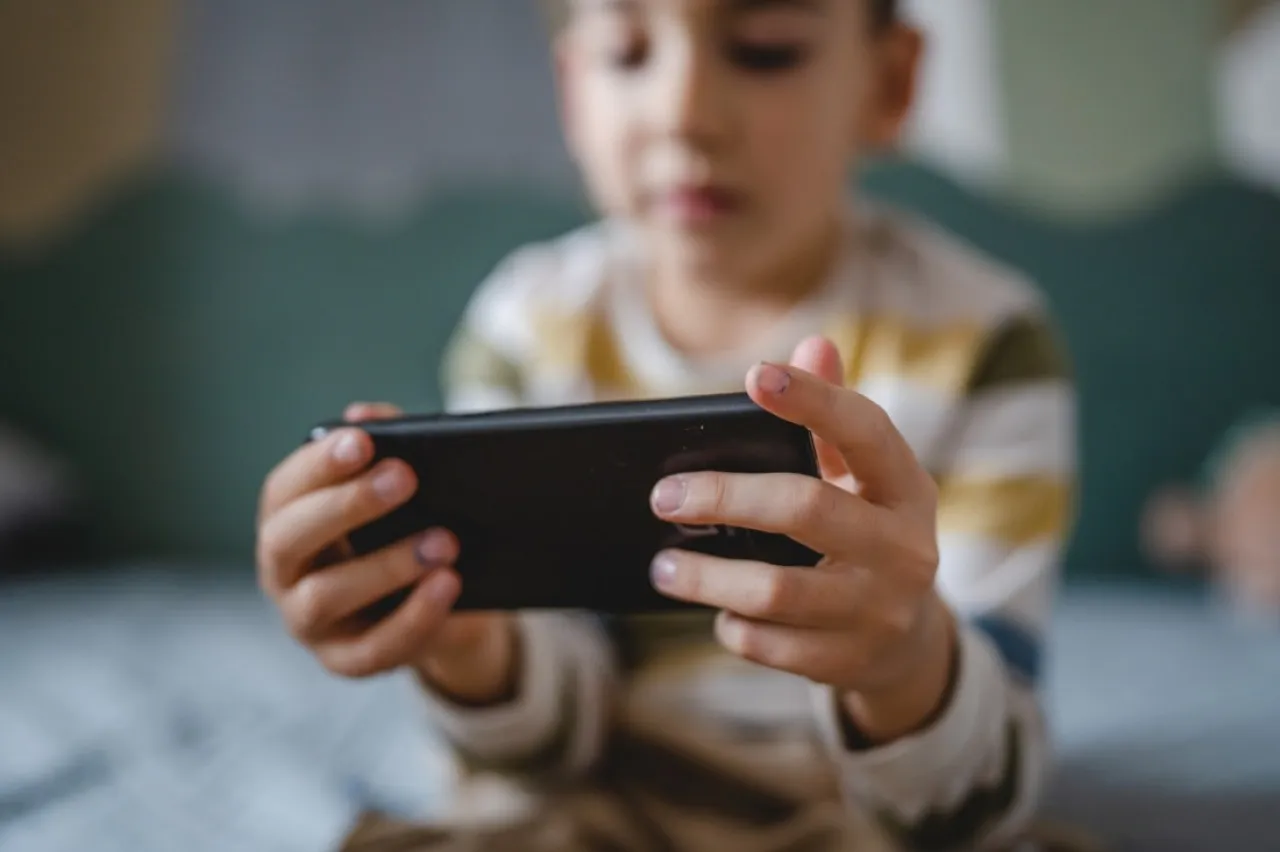
Khaberni - New research suggests that social media does not only provide the latest "memes" (Memes) for children, but may actually interfere with their mental capabilities.
In detail, a study from the University of California in San Francisco found that children who spend more time on apps score lower on reading, vocabulary, and memory tests. The longer they browse, the lower their performance.
Researchers looked at data from more than 6,000 children aged 9 to 11, who are participating in the long-term "Adolescent Brain Cognitive Development" (ABCD) study, which tracks the use of social media sites among other factors.
The children were divided into three groups based on how their social media habits developed over time:
-
The first group used little to no social media.
-
The second group started with low usage but reached about one hour daily by age 13.
-
The third group spent three or more hours daily on the sites by this age.
Each group underwent a series of cognitive tests at the beginning of the ABCD study and again in early adolescence.
Researchers found that children who spent about one hour daily on social media scored one or two points lower on reading and memory tests compared to those who did not browse at all. Those who were glued to the apps for three hours or more, scored up to five points lower.
Dr. Sanjeev Kothare, Director of Pediatric Neurology at Cohen Children's Medical Center of Northwell Health, who was not involved in the research, told the "New York Post": "It is interesting to note that both groups that use social media, whether low or high, suffered from this poor academic performance."
Kothare suspects the problem has two sides: children might use social media during class, reducing their focus, or they might stay up late browsing, which makes them deprived of sleep and lethargic the next day.
It is not just about the total time in front of the screen. The study found that the effects were specific to social media sites.
Kothare explained that general screen time, like watching TV, is more passive. Although it still requires attention, it allows for multitasking, adding, "You can do two things at the same time, keep an eye and an ear on the screen and do something else."
But social media is a different story," Kothare said, "It's much more active," noting that children interact directly with the content, which requires more attention from the brain.
As a result, he added, "They do not have enough cognitive capacity or memory to focus on academic performance." He continued, explaining, "So, in general, these teenagers' engagement in social media is harmful. They should be doing more constructive things for their academic and school performance during study hours, and also, if possible, after study hours."
The benefits of logging off social media go far beyond academics.
In 2023, the U.S. Surgeon General issued a warning that social media could harm the mental health of children and teenagers.
The report indicates that excessive use could affect brain areas related to emotion, potentially influencing impulse control and social behavior, with an increased risk of depression, anxiety, and low self-esteem.
With growing concerns, an increasing number of schools across the country are stepping up efforts to limit technology in the classroom.
This year, New York City introduced a "bell to bell" ban on the use of smartphones across all public and private schools from kindergarten through grade twelve across the city.
Despite the controversy this policy stirred, it seems to be paying off. One teacher told the "New York Post" that it is "the best thing to happen to schools and students."
Currently, experts like Kothare urge parents to join this effort at home by setting limits on their children's use of social media outside study hours, explaining, "The 'golden carrot' approach of positive reinforcement for good behavior always works. Give them an incentive to reduce engagement in social media and to pay more attention to their studies by offering them rewards on weekends."
He suggested this might mean allowing them to watch a movie, giving them extra time to play sports, or serving their favorite meal, adding, "I believe that positive reinforcement of good behavior is the way to convince these children to stay away from social media."