Khaberni - Over two years before its fall, the regime of the ousted Syrian President Bashar al-Assad carried out a secret operation to move thousands of bodies from one of Syria's largest known mass graves to a secret location, over an hour's drive into the remote desert, according to an investigation conducted by Reuters.
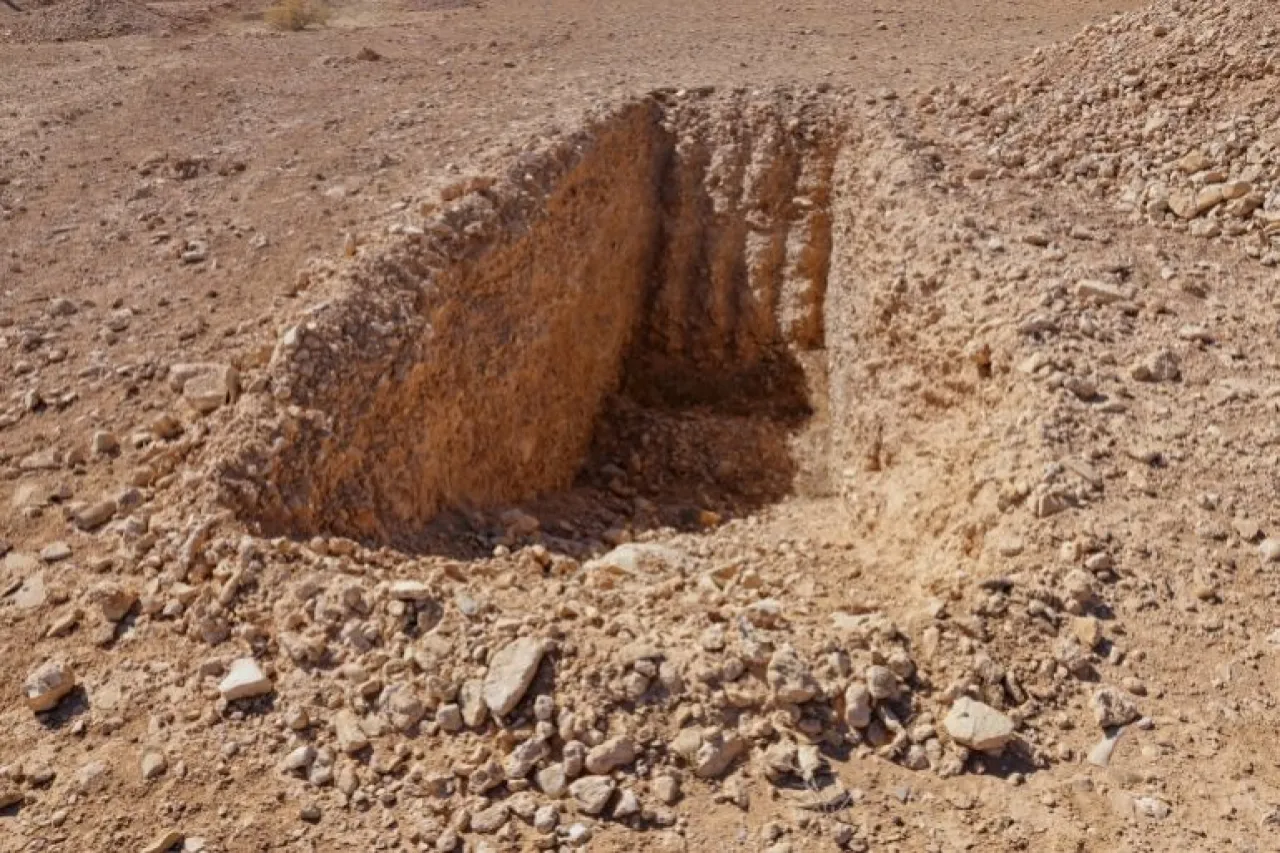
According to the investigation, the Assad-era army, between 2019 and 2021, transferred thousands of bodies of detainees who died under torture from a mass grave in Qutaifa and dug a second massive pit in the desert outside the town of Ad Dumayr.
The operation of transferring the bodies from Qutaifa to another secret site dozens of kilometers away was called "Operation Transfer the Earth".
Witnesses said that the purpose of the operation was to cover up the crimes of Assad's government and help in improving its image.
Reuters did not disclose the exact location of the grave in its investigation to minimize the possibility of intruders tampering with it, stating that it would soon release a special report detailing how Assad's government carried out the secret operation and how journalists uncovered it.
A Massive Grave
Reuters discovered that the mass grave located in the Ad Dumayr desert contains at least 34 trenches, each two kilometers long, making it one of the widest mass graves dug during the years of the Syrian revolution and the regime's oppressive response.
The accounts of witnesses and dimensions of the new site indicate the possibility of tens of thousands of people being buried there.
The Assad government began burying the dead in Qutaifa around 2012, with the outbreak of armed confrontations between the regime and its opponents.
Witnesses told Reuters that the mass grave contained bodies of soldiers and prisoners who died in Assad's prisons and military hospitals.
Years of Transport
In 2014, a Syrian human rights activist published images from local media revealing the existence and general location of the Qutaifa cemetery on the outskirts of Damascus. Its precise location was determined a few years later through court testimonies and other media reports.
Witnesses involved in the operation said that from February 2019 to April 2021, six to eight trucks loaded with dirt and human remains would move from Qutaifa to the Ad Dumayr site in the desert approximately four nights each week.
Reuters could not confirm whether bodies from other locations also reached the secret site and found no documents referring to the "Operation Transfer the Earth" or the mass graves in general.
All those who participated directly in the operation clearly remember the foul smell, among them two drivers, three car repair technicians, a bulldozer driver, and a former officer from Assad's Republican Guard who participated from the beginning.
Concealing the Evidence
The former officer from the Republican Guard said that the idea of moving thousands of bodies came in late 2018 when Assad thought he was nearing victory in the Syrian war.
The officer added that Assad hoped to regain international recognition after being marginalized for years due to sanctions and accusations of brutality.
Reuters reported that military leaders told the drivers that the purpose of the operation was to cleanse the Qutaifa mass grave and conceal evidence of mass killings.
Drivers and car repair technicians who participated in the operation of moving bodies reported that disclosing information about the secret operation meant certain death.
One of the drivers emphasized that "No one can defy the orders, otherwise you yourself end up in the pit."
By the time Assad's regime fell on December 8th last year, all 16 trenches previously documented by Reuters in Qutaifa had been emptied.
Uncertain Fate for Thousands
Syrian human rights organizations say that over 160,000 people disappeared under the vast security apparatus of the ousted Syrian president, and it is believed they are buried in dozens of mass graves he ordered dug.
Organized excavation and DNA analysis could provide details about what these individuals endured, alleviating one of the most painful events in Syria's history.
However, due to a lack of resources in Syria, even well-known mass graves are often unprotected and unexcavated.
The country's new leaders have not yet issued any documents related to the individuals buried there, despite ongoing demands from the families of the missing.
Need for Rehabilitation
Mohamed Reda Jalakh, head of the National Body for the Missing (governmental), said the challenge lies in dealing with a large number of missing people that could reach tens of thousands.
He continued, "The need today is for trained specialists because we are dealing with a scientific file that requires forensic and genetic fingerprint specialists, and this requires time to build such expertise."
Commenting on the findings of the Reuters report, Mohamed Al-Abdallah, executive director of the Syrian Center for Justice and Accountability, an organization concerned with tracking the missing and investigating war crimes, stated that the random transport of bodies from Qutaifa to Ad Dumayr was catastrophic for the families of the deceased.
He added, "Compiling these bodies together so that the remains can be completely returned to the families will be extremely complex," describing the creation of the Missing Persons Committee as a positive step by the new government.
He further mentioned that while the committee enjoys political support, it still lacks the necessary resources and experts.