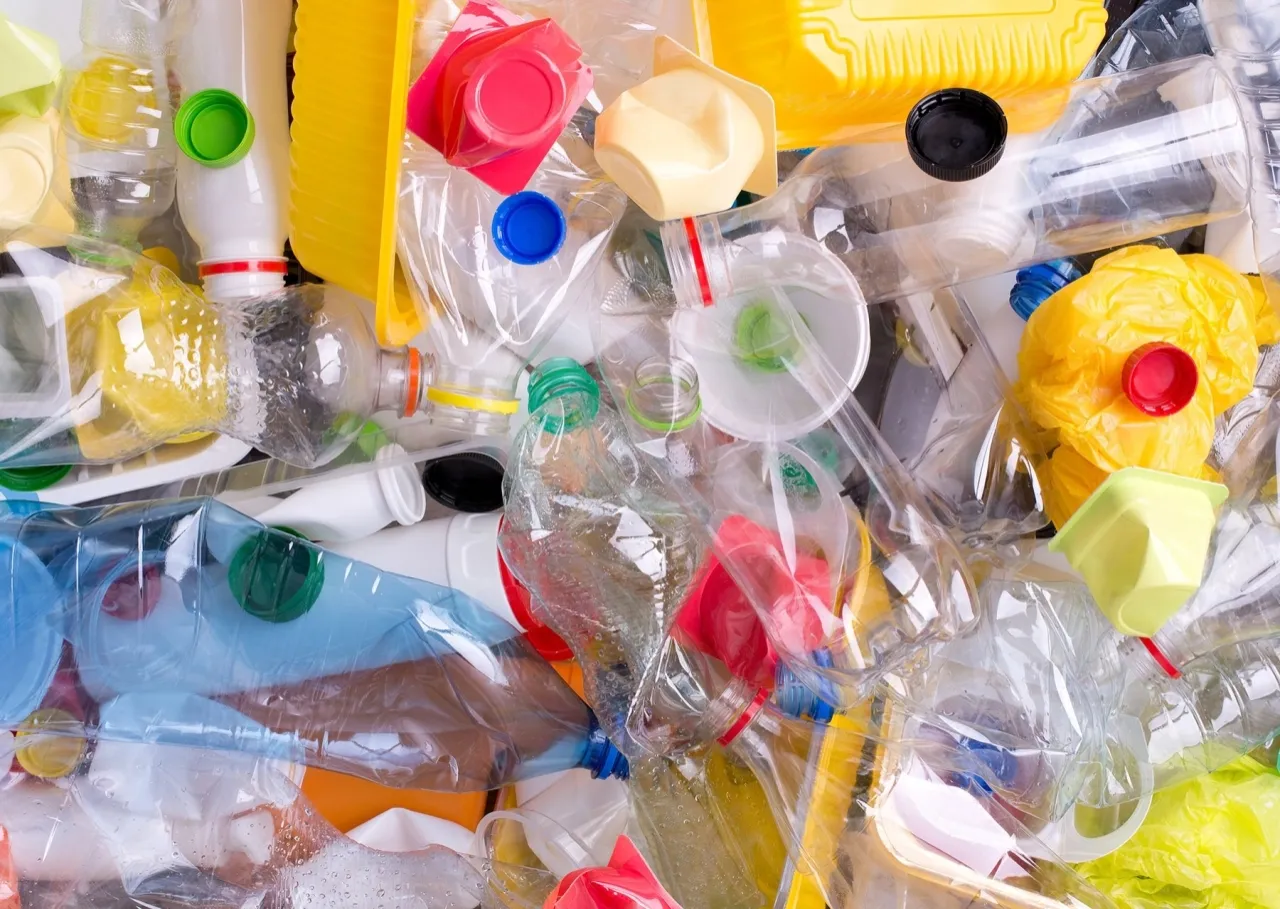
Khaberni - The government is focused on reducing plastic waste by 5,000 tons as part of a project implemented over 5 years with funding estimated at $5 million.
The project, funded by the Global Environmental Facility and implemented by the Ministry of Environment in cooperation with the United Nations Development Programme, aims to reduce health and environmental risks by reducing plastic waste amounts, particularly single-use plastics, decreasing the release of unintentional persistent organic pollutants associated with them, and transitioning to more sustainable business models in the food and beverage packaging sector.
According to the project details, launched yesterday, the project components will reduce the release of 0.625 grams-equivalent per year of unintentional persistent organic pollutants and avoid approximately 17,000 tons of greenhouse gas emissions.
The project relies on developing sustainable business models that support a transition to a circular economy, reducing the environmental and health impacts of plastic waste.
The project is based on 5 main components, including adopting enabling policies and institutional arrangements to enhance the regulatory framework focused on limiting the use, manufacture, and import of single-use plastic packaging.
The second component primarily involves engaging the private sector in terms of direct intervention impacts and expectations related to reducing plastic waste generation.
Among those targeted in this component are the Jordan Chamber of Industry, Jordan Hotel Associations, Jordanian restaurants, General Association of Foodstuff Traders, Royal Society for the Conservation of Nature, as well as stores and retailers, including supermarket chains in the food and beverage sector, food and beverage manufacturers and importers, the packaging industry, consumers, consumer associations, and environmental non-governmental organizations, to reduce the production of single-use plastic waste by replacing their products with non-plastic or more sustainable multi-use plastic materials.
In the third component of the project, financial resources will be mobilized through leveraging existing financing programs and expanding their scope to include initiatives in the sustainable packaging sector, or creating new financing mechanisms supported by local banks. The project will also explore financial incentives to reduce the costs of establishing businesses in the sustainable packaging sector, according to the project details.
Through the fourth component, two main initiatives will be implemented. The first aims to establish a national information point for the exchange and dissemination of information related to sustainable initiatives and the state of plastic pollution, contributing to the global platform for circular plastic solutions. The second involves putting in place effective measures to promote behavior change towards using reusable packaging and avoiding single-use plastics, significantly impacting long-term market demand.
The project, as a translation of the vision based on building true partnerships between the public and private sectors and business support organizations as a fundamental pillar to achieve the transition to a circular economy, is according to the Minister of Environment, Dr. Ayman Sulaiman.
Sulaiman emphasized that achieving this comes with supporting and enhancing the regulatory framework focused on restricting the use, manufacture, and import of single-use plastic packaging, and supporting and developing the capabilities and empowerment of small and medium enterprises to adopt more sustainable packaging production practices.
This vision will be implemented, according to him, by involving the plastic industries sector in implementing pilot projects aimed at transitioning to environmentally friendly non-plastic alternatives, or more sustainable multi-use plastics.
He stressed, during the launch ceremony of the project titled "Circular Solutions to Plastic Pollution in Jordan" yesterday, on enhancing networking and cooperation among stakeholders in this vital sector at both the local and international levels.
This will be translated, according to him, by establishing a platform for exchanging experiences and disseminating information related to sustainable initiatives and the reality of plastic pollution in partner countries involved in implementing this project, to be available for local utilization.
The project will be implemented in cooperation with: the Ministry of Industry and Trade, Standards and Metrology Organization, Food and Drug Administration, Chambers of Industry and Commerce, Jordan Restaurant and Hotel Associations, and the Plastic Industries Association.
The Resident Representative of the United Nations Development Programme, Randa Abu Al-Hassan, affirmed that launching a new project is a confirmation of Jordan's solid commitment to transitioning to a more sustainable future, balancing economic growth demands with preserving the environment and natural resources.
Abu Al-Hassan added, "Addressing plastic pollution has become not only an environmental issue but also a developmental, economic, and health issue. With this project, we aim with the authorities to turn the challenge into an opportunity to stimulate innovation, develop new industries, create green jobs, and build sustainable environmental awareness in the local community."