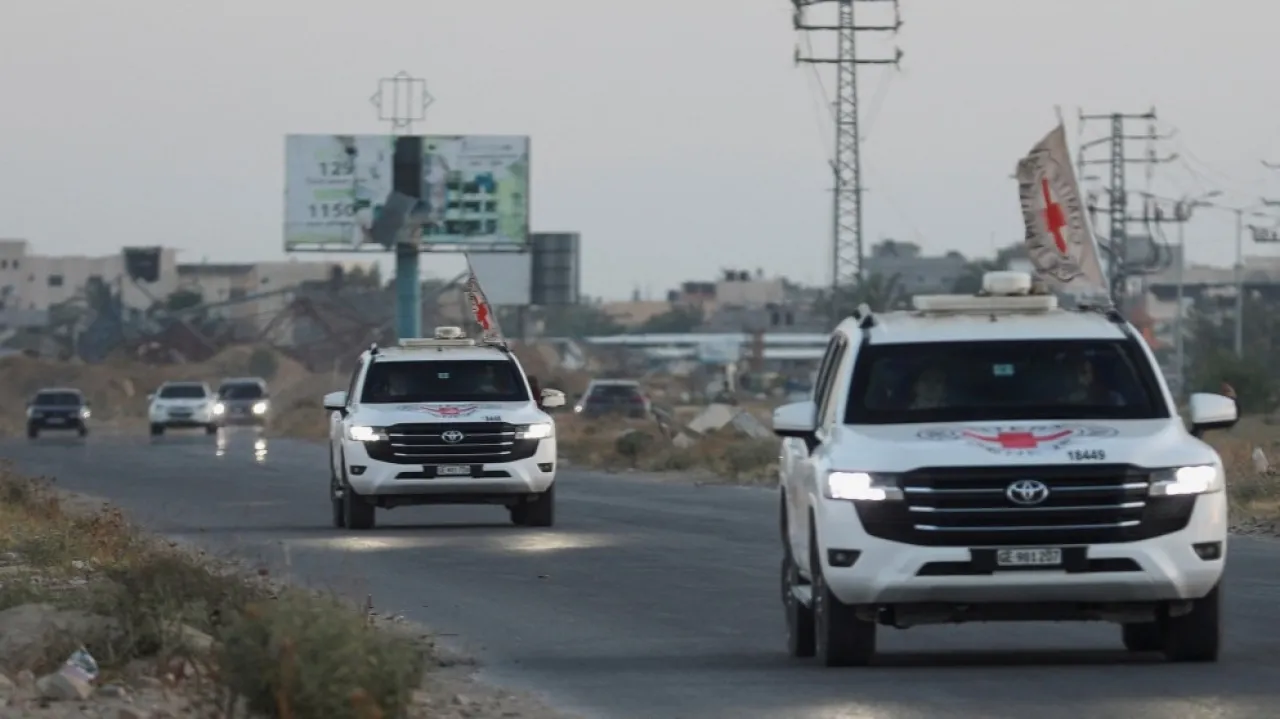
Khaberni - The Israeli occupation army said Tuesday that the Red Cross is on its way to a meeting point in northern Gaza Strip to take the bodies of deceased detainees.
The army did not disclose the number of bodies the Red Cross is set to receive.
An official involved in the process of delivering the bodies of the Israeli detainees said that Hamas notified the mediators of its intention to start transferring the bodies of four detainees at 10:00 PM local time (19:00 GMT) on Tuesday.
This development comes at a time when regional and international efforts continue to implement the first phase of the proposed peace plan to end the two-year war in Gaza Strip.
Earlier today, the Israeli occupation authorities announced that the Rafah border crossing between Gaza and Egypt will remain closed until at least Wednesday, indicating a reduction in the flow of aid to the sector as a means of pressure on Hamas to hand over the bodies.
Israeli officials indicated that some of the detainees were killed due to Israeli bombing on Gaza Strip, without disclosing the circumstances of death or the identities of the victims.
The delivery process is part of the terms of the peace plan of U.S. President Donald Trump, which includes 20 items to achieve a comprehensive cessation of war, most notably the introduction and distribution of humanitarian aid in Gaza Strip through the United Nations, the Red Cross, and neutral international bodies.
In a practical step to implement the plan, last Sunday, trucks carrying humanitarian aid began entering Gaza through the Rafah land crossing from the Egyptian side to the Kerem Shalom crossing, in an indication of improved coordination of relief efforts.
The "Sharm El-Sheikh Peace Summit," held in Sharm El-Sheikh, Egypt on Monday, affirmed the importance of cooperation between all international parties; to ensure the implementation of the agreement terms, including a comprehensive ceasefire, completion of the exchange of detainees and prisoners, withdrawal of Israeli forces from the sector, as well as ensuring the continuous and safe flow of humanitarian aid.