Khaberni - Today’s press tour discusses what was considered a "victory" or "historic day" following the ceasefire agreement in Gaza and the release of the remaining 20 Israeli hostages held by Hamas.
We start the tour from The Independent, whose editorial is titled "A Victory Lap for Trump but the Beginning of the End for Netanyahu."
The newspaper stated that "the most important event on the historic day" was the release of the hostages, and not the speech by U.S. President Donald Trump in front of the Israeli parliament (Knesset) or the "fawning performance" of Israeli Prime Minister Benjamin Netanyahu.
However, the newspaper stated that mentioning this fact "does not diminish" Trump’s diplomatic efforts, which were "a decisive factor" in achieving the ceasefire, the release of hostages, the exchange of prisoners and detainees, and hopes for a broader peace, the newspaper expressed.
It added, "The U.S. president is entitled to what has been widely described as a victory lap, but it also requires a balanced view of what could be considered, at best, the first day of the beginning of an end to a decades-long conflict."
The paper continued, "This war could have ended more than a year ago if Netanyahu truly wanted it to end, and if Joe Biden (the former U.S. President) had forced him to do so."
In this context, the newspaper said, "Biden has long emphasized that he supports Israel and was serious about it, while Trump’s support was more conditional on Israel following America’s requests."
As for Netanyahu, the newspaper thought it was "not his desire and far from his calculations, to end up with his supposed ally Trump launching a plan that implicitly aimed at a two-state solution and the establishment of an independent Palestinian state."
It added, "No one should be grateful" to Netanyahu.
For his personal political purposes and to avoid returning to an Israeli courtroom to face corruption charges, it was convenient for Netanyahu for the war against Hamas to continue indefinitely - although it actually included bombing and starving Palestinian civilians," the paper stated.
The paper said, "The peace plan imposed by Trump on Israel is largely the result of Netanyahu’s disastrous actions."
It added, "Israel became diplomatically isolated, and its behavior in the war has become unbearable for the Gulf states, so much so that the U.S. president had no choice but to demand the Israeli leader to stop."
Trump's peace plan "aims for all of Israel's neighbors to recognize it by expanding the Abraham Accords, and an implicit solution to the Israeli-Palestinian issue based on two states, and the reconstruction of Gaza," according to the newspaper.
However, the newspaper noted that previous efforts to achieve peace in the Middle East "evaporated after a promising start," and said that Trump's plan might be "another false dawn," as "there is still much to be agreed upon, and the issue of disarming Hamas is one of the main issues still needing resolution."
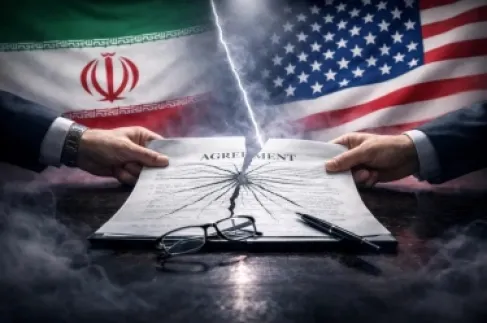
Peace Efforts with Iran
In the context of the U.S. president's plan, The Telegraph titled its editorial "Even if Trump Does Not Achieve Peace, the Release of the Hostages Is a Victory."
The newspaper described the day the hostages were released as "exceptional" for Trump and Israel.
It pointed out that it was a "wonderful moment" for Trump who "was cheered by the crowds in Tel Aviv and was being prepared by the Knesset to be received as an unmatched hero, but especially for the families of the hostages who survived despite being in prison for 738 days."
Further, the newspaper said, "Anyone who thought Israel was isolated and terrified because of the international condemnation for its actions in Gaza would have been surprised by the confidence and optimism shown in the Knesset."
It noted that Netanyahu "was praised even though his handling of the crisis did not enjoy wide support" in Israel.
In this regard, the paper mentioned that "the leader of the Israeli opposition, Yair Lapid, attacked the weekly demonstrators against Israel in cities like London, saying they had been deceived into believing there was a genocide and deliberate starvation of Palestinians."
The newspaper cited Trump's statements about Iran, the only major player not involved in yesterday's events, when he said: "It has been permanently prevented from developing a nuclear weapon." The paper mentioned Trump’s statement that reaching a peace agreement with Tehran would be wonderful, and hinted that he would try to do that soon.
The newspaper thought that Trump's statement that this is the dawn of a new Middle East "is premature," based on history, but said that Trump, after the effort he has made, has the right to hope for it, as it described.
In Sharm el-Sheikh in Egypt, "Trump wanted to revive the Abraham Accords, that is, permanent peace between the Arab countries and Israel, but what all this means for the Palestinians is unclear," the newspaper reported.
What are the chances of reviving the two-state solution?
Israeli Prime Minister Benjamin Netanyahu stands in front of a map of the Gaza Strip during a press conference in Jerusalem on September 4, 2024.
In The Washington Post, writer Max Boot posed a question: "Why won’t the ceasefire in Gaza lead to enduring peace?"
At the beginning of his article, the writer asked, "Is it a historic dawn for a new Middle East or just another ceasefire in the Arab-Jewish conflict that has lasted for more than 100 years?"
He saw that "all indications point to there being nothing definitive about peace in Gaza."
Turning a ceasefire into lasting peace requires "sacrifices" that neither Israeli Prime Minister Benjamin Netanyahu nor Hamas leader Khalil al-Hayya "seem ready to make," according to the writer.
He noted that the end of the war "represents an opportunity" to revive the two-state solution.
Trump's peace plan "slightly opens the door to the establishment of a Palestinian state – it talks about creating conditions for a reliable path towards Palestinian self-determination and state-building," the writer said, but he said, "It seems that Israel and Hamas are determined to close this door."
He saw that the first condition for progress towards lasting peace is the disarmament of Hamas. However, he said that the Palestinian movement, instead of giving up its weapons, has reemerged to affirm its control over parts of the Gaza Strip that are no longer under Israeli occupation, according to the writer.
Though Hamas has suffered severe losses during the war – which included most of its leaders and veteran fighters – its numbers in Gaza are still estimated to be around 15,000 members, the writer mentioned.
He saw this as a "major dilemma for the implementation of the rest of Trump’s peace plan," and said that Arab countries "will not send peacekeeping forces if they have to face Hamas, and neither Israel nor the United States would allow the flow of reconstruction funds if Hamas were to seize it, as it did in the past."
After Egypt, Qatar, and Turkey did "impressive work" in pressuring Hamas to accept the ceasefire and release the hostages, the writer questioned "whether these countries would succeed in persuading the movement to give up its weapons?"
He saw that if these countries do not succeed, "Gaza is likely to remain a Mogadishu on the Mediterranean, and Trump’s grand vision for its reconstruction will not be realized." He added that "the Palestinians will miss the opportunity to achieve prosperity and ultimately lose the chance to gain sovereignty."
On the other hand, "Netanyahu is determined to hinder the two-state solution," according to the writer.
He added: "While the war was raging, Netanyahu’s right-wing government did everything except officially annex to establish Israeli control over the West Bank ... It could have carried out an official annexation if Trump had not stopped it," according to the writer.
He warned of Israeli steps that might lead to preventing the establishment of a Palestinian state, including "building housing units in the West Bank, deploying Israeli forces to 3 main Palestinian refugee camps, and a limited effort to stop settler violence from expelling 3,000 Palestinians from their lands."
He noted that "Netanyahu's government is working to deprive the Palestinian Authority of tax money and undermine it in every possible way," although Trump's plan includes a vision in which the Authority governs Gaza later on.