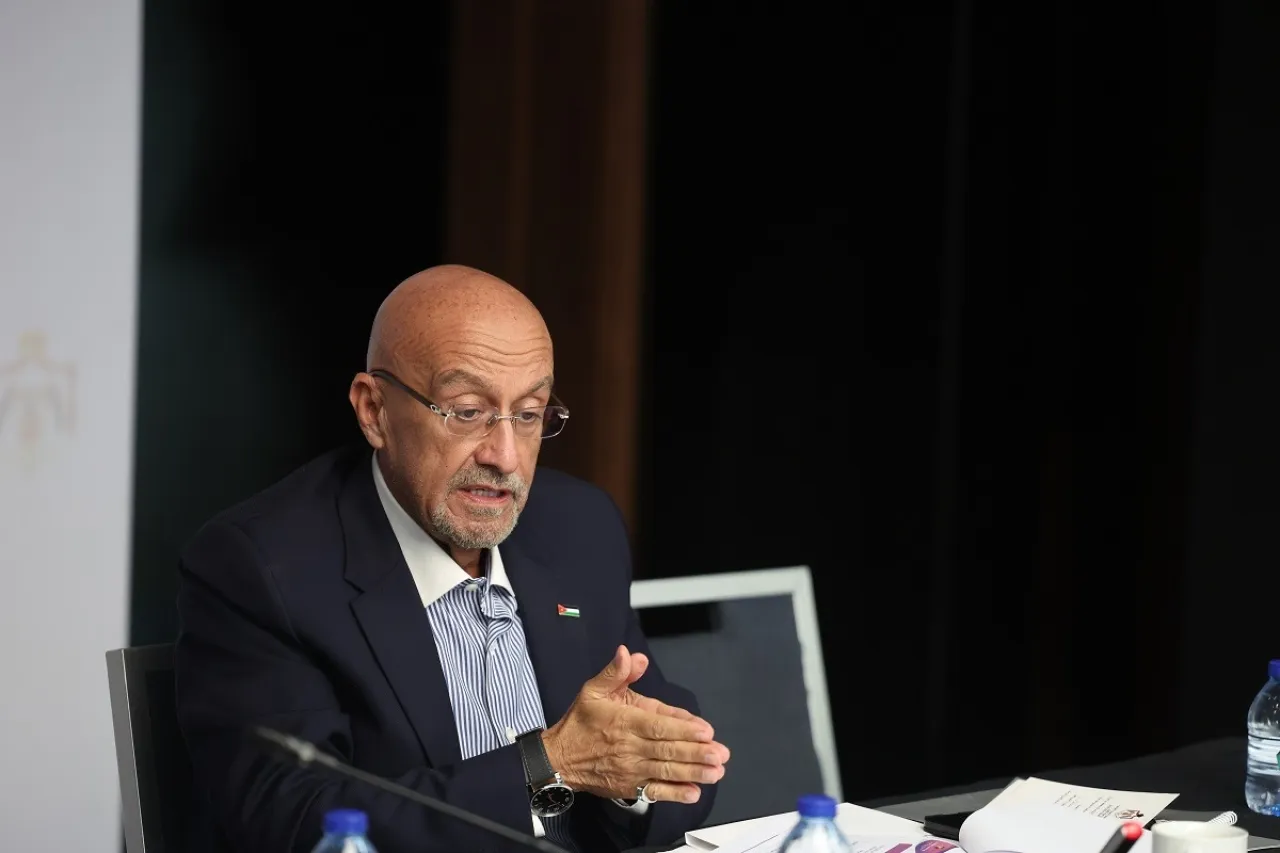
Khaberni - Water and Irrigation Minister, Engineer Raed Abu Al-Saud, presented Jordan's water vision for the United Nations 2026 conference, through his participation in the "Eighth Cairo Water Week" in a ministerial-level work session titled "The Arab Vision towards the UN Water Conference 2026: Investing in the Water Sector".
According to the ministry's statement today, Tuesday, Abu Al-Saud showcased during the session the water sector investments to enhance resilience against unique global challenges, noting that despite the challenges, 98 percent of citizens receive high-quality water services, and about 68 percent receive sanitation services.
He explained that the water sector in Jordan receives significant support, as numerous vital projects have been implemented to ensure the sustainability of scarce water resources and to secure the prosperity of various sectors especially agriculture, industry, and tourism, highlighting the importance of developing a unified strategy to find solutions amid accelerating climate changes and their impact on countries, and expanding the use of non-traditional sources and the adoption of water footprint in agricultural production in the Arab region due to its importance in water conservation.
He stated that the efficiency of production has been enhanced, and sustainable agricultural policies and the reduction of environmental impacts from fertilizers and pesticides have been supported through the calculation of the grey water footprint, working towards its reduction and improving agricultural trade and comparing water use efficiency among countries, encouraging the import of goods with low water footprint, in addition to adapting to climate change by providing accurate data to assess water risks and planning to cope with drought periods or resource shortages and enhancing the role of the private sector in implementing integrated water management projects.
He referred to Jordan's strategic project that will ensure sustainable water solutions for drinking and the utilization of treated water in agriculture and industry, with an additional 200-250 million cubic meters, among other projects currently underway and planned for the upcoming period, valued at up to 2.4 billion dinars.
Participating in the ministerial-level work session were the Egyptian Minister of Water Resources and Irrigation, Dr. Hani Sweilam, the Iraqi Minister of Water Resources, Engineer Aoun Diab, the Senegalese Minister of Water and Sanitation, Dr. Cheikh Tidiane Diye, and Dr. Ziad Al Khayyat from ESCWA.
On his part, Diab pointed to the drought wave currently experienced by Iraq, the likes of which have not been recorded for 90 years, in addition to the decrease in water inflows from neighboring countries, which has impacted the water supply especially in the center and south of the country.
For his part, Tidiane Diye emphasized the importance of investing in water facilities, as it is an investment in peace, referring to his country's efforts in implementing several projects.
On his side, Dr. Sweilam presented Egypt’s vision for investing in water sustainability, affirming that achieving water security cannot be separated from achieving financial sustainability and the ability to adapt to climate changes.
He emphasized the importance of providing a joint Arab vision for the United Nations conference, which clearly expresses the Arab priorities to ensure fair access to climate finance and development and increase support for adaptation in water-scarce areas and promote cooperation to mobilize public and private investments.
Al Khayyat praised Jordan’s leading experience in the field of wastewater treatment, turning it into successful investment opportunities and benefiting from 90 percent of it in agricultural practices that generate income for local communities.