Khaberni - Today, Tuesday, the Family Healthcare Institute (one of the King Hussein Foundation's institutes), presents important information about uterine fibroids that grow in or on the uterus walls to the readers.
The institute's newsletter explains the nature of these tumors, their types, prevalence, possible causes of their appearance, symptoms, diagnostic procedures, and treatment methods.
What are uterine fibroids?
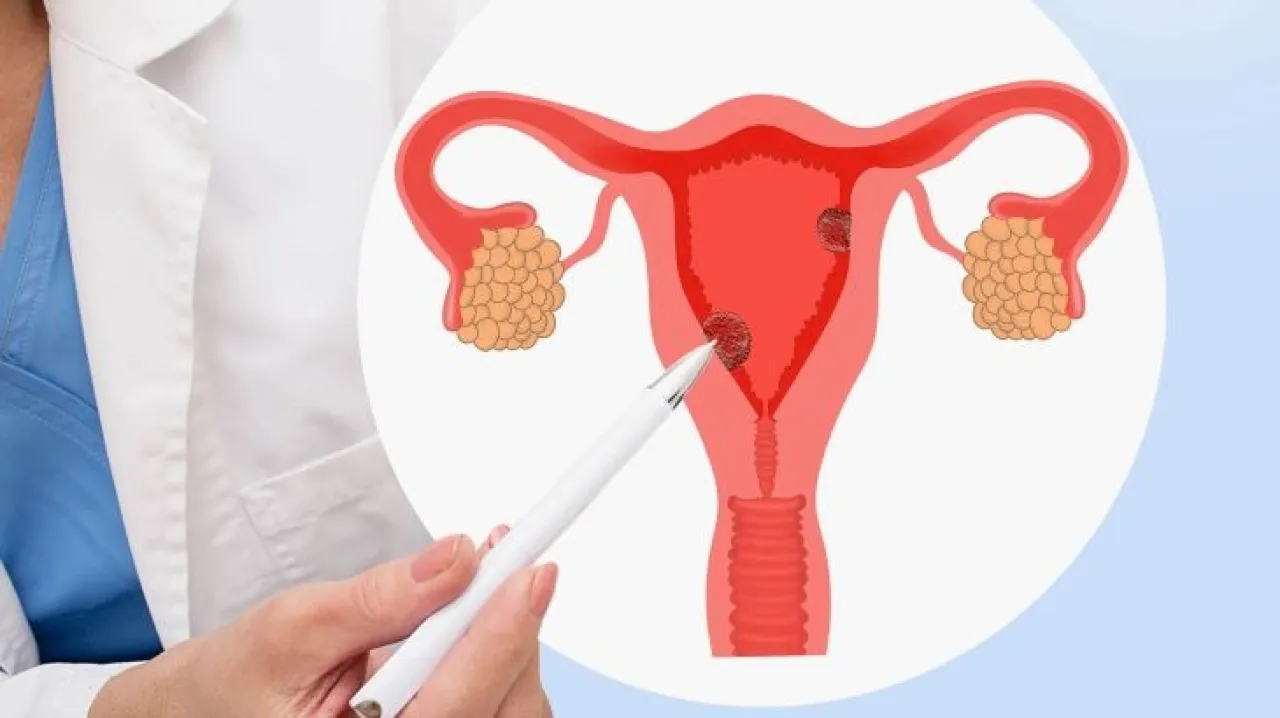
Uterine fibroids are non-cancerous tumors that grow in/on the uterus wall, also known as leiomyomas or smooth muscle tumors. These tumors are among the most common benign tumors in women of childbearing age. They can be solitary or multiple and vary in size from a few millimeters to over 20 centimeters.
Types of uterine fibroids..
There are various types of uterine fibroids depending on their location and how they attach to the uterus. Specific types of fibroids include:
- Intramural fibroids: These are embedded within the uterine muscle wall and are the most common.
- Submucosal fibroids: These grow under the inner lining of the uterus.
- Subserosal fibroids: These grow under the outer lining of the uterus and may expand to fill the pelvis.
- Pedunculated fibroids: This type is less common, where the tumors are attached to the uterus by a stem or neck. They are often described as mushroom-like because they have a stem and a wider top.
Are uterine fibroids common?
Uterine fibroids are a very common type of non-cancerous growth. Estimates suggest that about 40% to 80% of people with a uterus may develop fibroids, typically occurring among those aged 30 to 50 years. Those who have not experienced menstruation usually do not develop fibroids, and they are less common after menopause.
Causes and risk factors..
The exact cause of fibroids is unknown, but hormones such as estrogen and progesterone are believed to play a role in their growth. Risk factors associated with an increased likelihood of developing fibroids include:
- Age: The likelihood increases among women of childbearing age and decreases after menopause.
- Family history: Having a family history of fibroids increases the likelihood.
- Obesity: Increased weight may be associated with higher levels of estrogen, which promotes tumor growth.
- Race: Women of African descent are more prone to fibroids.
- Childbirth: Women who have not given birth may be more susceptible.
Symptoms..
Symptoms vary from woman to woman and may include:
- Excessive bleeding during menstrual periods: This can lead to anemia.
- Pain in the pelvis or lower back: This can be continuous or intermittent.
- Frequent urination: Due to the pressure of the tumors on the bladder.
- Pain during intercourse: Especially if the tumors are near the cervix.
- Abdominal swelling: Can resemble pregnancy in some cases.
- Fertility issues: Tumors can affect the ability to conceive.
Diagnosis..
Fibroids are diagnosed through:
- Clinical examination: Includes physical exams and medical history.
- Ultrasound (sonar): To determine the size and location of the tumors.
- Magnetic resonance imaging (MRI): Provides detailed information about the tumor.
- Hysteroscopy: To view the tumors inside the uterine cavity.
- Laparoscopy: To assess the tumors in the outer layers of the uterus.
Treatment..
Treatment options depend on the size of the tumors, symptoms, and desire to have children. Options include:
1 - Medication
- Hormonal medications: Such as birth control pills or hormonal IUDs to reduce bleeding.
- Anti-progesterone medications: Such as mifepristone to reduce the size of the tumors.
- Directed hormone therapy: Such as GnRH agonists to temporarily reduce the size of the tumors.
2 - Non-surgical procedures..
- Uterine artery embolization: A procedure aimed at reducing the size of the tumors by cutting off their blood supply.
- Magnetic resonance-guided focused ultrasound: A non-surgical technique that uses sound waves to destroy the tumors.
3 - Surgery..
- Myomectomy: Removal of tumors while preserving the uterus, suitable for women who wish to have children.
- Hysterectomy: Complete removal of the uterus, considered the definitive treatment.