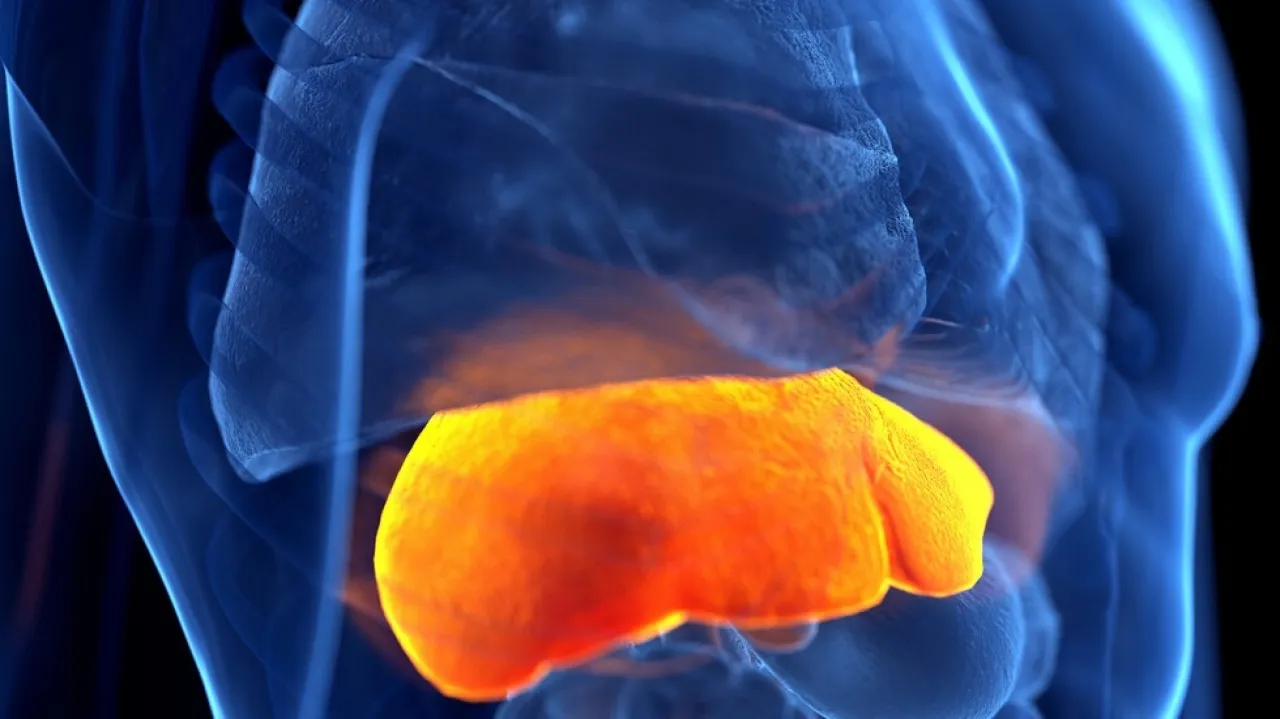
Khaberni - Chinese scientists achieved a historic milestone in interspecies organ transplantation, after successfully implanting a genetically modified pig liver in a living patient.
This experiment is considered the first of its kind and represents an important step towards developing alternatives to human organs and alleviating the organ shortage crisis.
Earlier this year, the medical team conducted a similar experiment on a clinically dead patient, where a genetically modified liver was implanted to reduce the risk of the body rejecting the organ.
However, the new experiment expanded to an unprecedented level by performing the transplantation on a living patient suffering from advanced liver diseases.
The patient, a 71-year-old man, was diagnosed with liver cancer and advanced fibrosis, and was not eligible for a liver transplant or partial organ removal.
The medical team performed the liver transplant, "genetically modified ten times", using an organ taken from a genetically modified mini "Dianan" pig to decrease the risk of immune rejection.
The first month after the operation was initially successful, as the transplanted liver functioned efficiently without clear signs of rejection.
However, serious complications later occurred, including an immune reaction that led to damage to the vascular endothelium. On the 38th day, the team was forced to remove the transplanted liver.
Despite the doctors' efforts, including the use of drugs and special procedures to remove harmful agents from the blood, the patient later suffered from gastrointestinal bleeding episodes and died on the 171st day after surgery.
Dr. Peicheng Sun, one of the study's authors from the First Hospital of Anhui Medical University, said: "This experiment proves that a genetically modified pig liver can function in a human for a long period. It is an important step, but it also highlights the remaining challenges, especially the problems of clotting and immune complications that must be overcome."
The field of interspecies organ transplantation is one of the most prominent emerging medical fields, and scientists hope it will provide an alternative to human organs, especially with the continuous increase in global transplant waiting lists.
Dr. Heiner Wedemeyer, a professor at the Hanover Medical School and associate editor of the Journal of Liver Medicine, said: "This report marks a milestone in liver transplant medicine, proving that a genetically modified pig liver is capable of performing major liver functions, but it also highlights the biological and ethical challenges that must be addressed."
The medical community hopes that this experiment will open new avenues for treating acute liver failure and liver cancer, which may change the future of organ transplantation and alleviate the human organ shortage crisis.