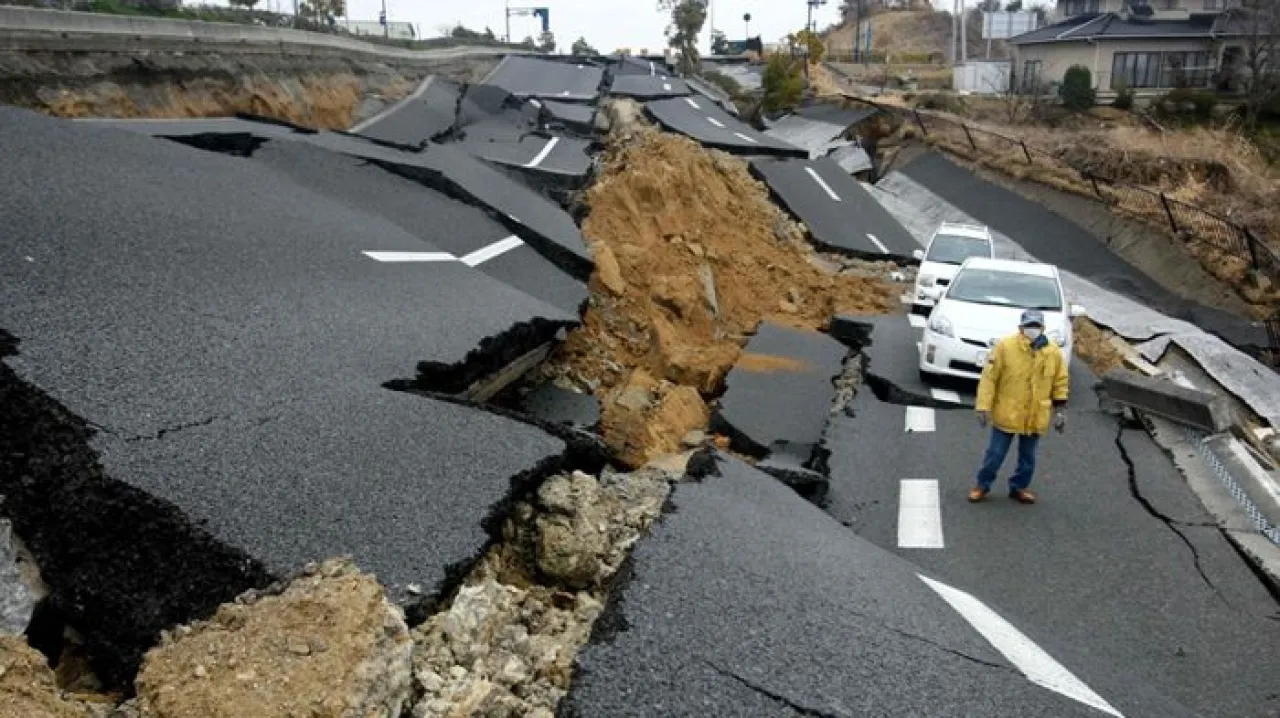
Khaberni - A minor earthquake shook the city of Califatria in the state of California, USA, in the early hours of the morning on January 1, 2008.
It measured only -0.53 on the Richter scale, weaker than the vibration of a passing truck, and went unfelt by anyone. Despite its small size, scientists accurately detected it, thanks to artificial intelligence.
Artificial intelligence has completely transformed the field of seismology, as it now allows for the automatic and rapid detection of very small earthquakes, a task that previously required human analysts and specialized equipment, according to a report published by "arstechnica" and reviewed by "Alarabiya Business".
Kyle Bradley, one of the authors of the Earthquake Insights newsletter, said: "Adopting these technologies is like putting on glasses for the first time... suddenly you see the small details you couldn't see before."
From wave analysis to deep learning
Earthquake monitoring in the past relied on human analysts reading data from vibration measuring devices (seismometers), then traditional algorithms appeared that allowed for partial automation of this task.
But the problem has always been with small earthquakes, which get lost amid the daily noise in cities.
Here is where artificial intelligence plays a role, especially a model called Earthquake Transformer developed by researchers at Stanford University in 2020.
This model relies on the same ideas used in image or sound recognition, but instead of analyzing pixels, it analyzes ground vibrations over time.
This model can distinguish different types of seismic waves (P and S), and determine the moment of their onset with extreme precision.
Thanks to these models, monitoring devices are now capable of detecting a larger number of small earthquakes, many times more than what was previously detected.
Joe Burns, Professor of Geology at the University of Texas, said: "It has been a real revolution... but it is a revolution that is still ongoing."
This technology has contributed to creating accurate maps of the earth's interior and volcanoes. In 2022, researchers from Hawaii used artificial intelligence data to confirm the existence of a hidden magma channel linking Mauna Loa volcano and the deep Pahala area, a discovery that has long been debated among scientists.
Earthquake prediction
Despite the huge success in monitoring and analysis, predicting earthquakes before they occur remains elusive.
Artificial intelligence is currently used to improve understanding of patterns of seismic activity, but it has not yet reached the stage of being able to predict the timing of the next earthquake accurately.
Scientists believe that this step is only the beginning, as just as deep learning technologies have changed the way images and speech are understood, they may soon open the door to a new generation of early warning systems for earthquakes.