Khaberni - The United Nations High Commissioner for Refugees expects a decrease in the number of Syrian refugees residing in Jordan, to about 415 thousand refugees by the end of this year, amid ongoing political and security developments in Syria.
It indicates that the number will continue to decline to about 290,000 registered refugees by the end of 2026, according to Al-Ghad.
At the beginning of this year, the Commission had expected approximately 200,000 Syrian refugees to return to their country during this year, which has actually been achieved by mid-year, according to its official data.
These figures coincide with the results of the enhanced regional survey on the perceptions and intentions of Syrian refugees regarding return, issued in September, which showed that 80% of Syrian refugees expressed their desire to return to their country someday, in line with the results of the rapid regional intentions survey issued in February of the same year.
Continuing Concerns
However, the survey results showed a decline in the percentage of those intending to return within just one year, falling from
40% to 22% among Syrian refugees residing in Jordan, reflecting ongoing concerns about internal conditions in Syria and the difficulty of achieving a safe and sustainable return.
Although the Commission does not encourage mass or large-scale returns, it continues to support and assist refugees who wish to voluntarily return, to ensure that such returns are safe, dignified, and sustainable.
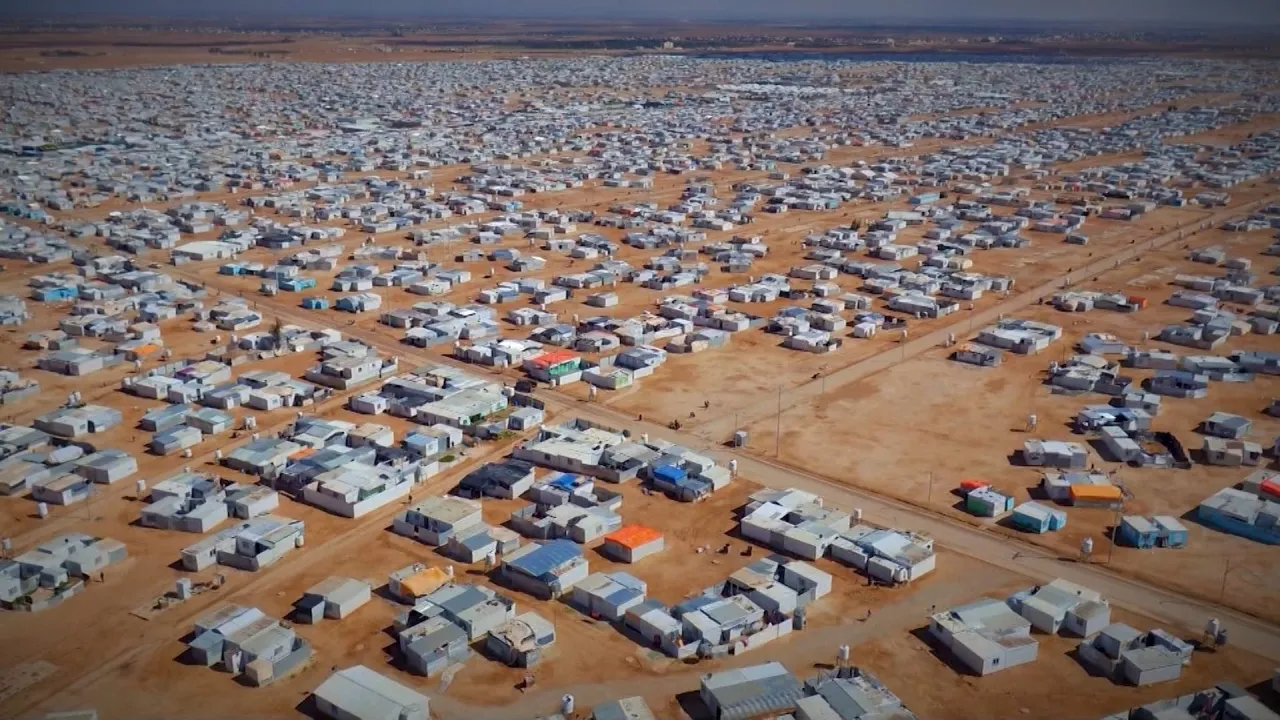
The Commission expects that 92% of the refugees in Jordan will remain predominantly Syrians, with 8% from other nationalities. It is also expected that the distribution of refugees residing in camps and outside them will remain stable, with about 18% of them living in camps, while the majority live outside them.
Despite this relative stability in numbers and distribution, refugees in Jordan still face increasing challenges, especially with the reduction in the amount of aid and services provided due to the shift in international funding priorities and pressures on the public budget. The Commission warns that the continuation of this situation could threaten the gains made in previous years in terms of protecting refugees and supporting host communities.
According to the Commission's strategy for 2026, while refugees have long benefited from access to national systems for education and healthcare, and to some extent the labor market, however, the cost of medical services and education remains barriers to many of them, and continuing access to these services requires sustainable financial support from development actors.
Decline in Service Availability
While many refugees have found ways to achieve a modest level of self-reliance in Jordan, recent economic shocks have significantly impacted refugee families. The sharp decrease in humanitarian aid funding has led to a decrease in food aid, multi-purpose cash assistance, and a general decline in service availability, contributing to increased vulnerability.
The social and economic survey conducted by the Commission in 2024 indicated an increase in the severe poverty faced by refugees of various nationalities, challenges in the areas of health, shelter, food security, debt levels, income, child labor, and gender inequality. Concerningly, the poverty rate reached 67%.
Changes in 2024 in the access of Syrian refugees to the labor market reduced legal employment opportunities, exposing them to exploitation and negative coping mechanisms. Continued decline in services in 2025 has put additional pressure on refugee families, sometimes forcing them to make difficult choices in prioritizing their expenses.
The absence of national legislation related to asylum, and tight control over the entry of forcibly displaced persons into the territory and access to the right to asylum, require a focus on fundamental protection issues. The Cabinet decision of 2019, detailing the procedures for issuing visas to citizens of many countries, including refugee-producing countries, restricts access to asylum and services, particularly for refugees and asylum seekers of non-Syrian nationalities.
The Commission continues to prioritize registration, identity management, and documentation, in close cooperation with the Jordanian government. Measures have been taken to improve access to birth registration services and other protections, including the management of urgent child protection cases and survivors of gender-based violence. Refugees residing in camps must apply for permission to temporarily leave the camp, including for family visits or work. Refugees who leave the camps without official permission face restrictions on their access to services and support.
The Commission's plan notes that the general protection environment in Jordan is favorable for refugee children, where the government continues to make significant efforts to enhance protection systems, yet children are still vulnerable to risks such as mistreatment, neglect, marriage, and labor—often due to negative coping mechanisms driven by social and economic pressures.
Similarly, gender-based violence can affect individuals within refugee communities. Despite the existence of legal frameworks to prosecute perpetrators, implementation challenges, including due to reporting barriers, often hinder survivors' access to comprehensive protection and support.
The Commission confirmed that the needs for resettlement are very high, with more than 32,500 refugees in Jordan expected to need resettlement. However, given the limited quotas for resettlement and complementary pathways, the priority will focus on refugees of all nationalities with urgent protection needs. The Commission will continue working with its partners to raise awareness of other available safe and regular migration pathways to third countries, enhance access to them, and support refugees in obtaining sustainable solutions.
The Commission's strategy in Jordan is based on two strategic priorities: the first is facilitating sustainable return to Syria, where the Commission in Jordan works to enhance its efforts to facilitate safe, dignified, and timely voluntary return, in line with international standards. The second is protecting refugees who still remain in Jordan where the Commission continues its programs related to protection and assistance for refugees still in Jordan.