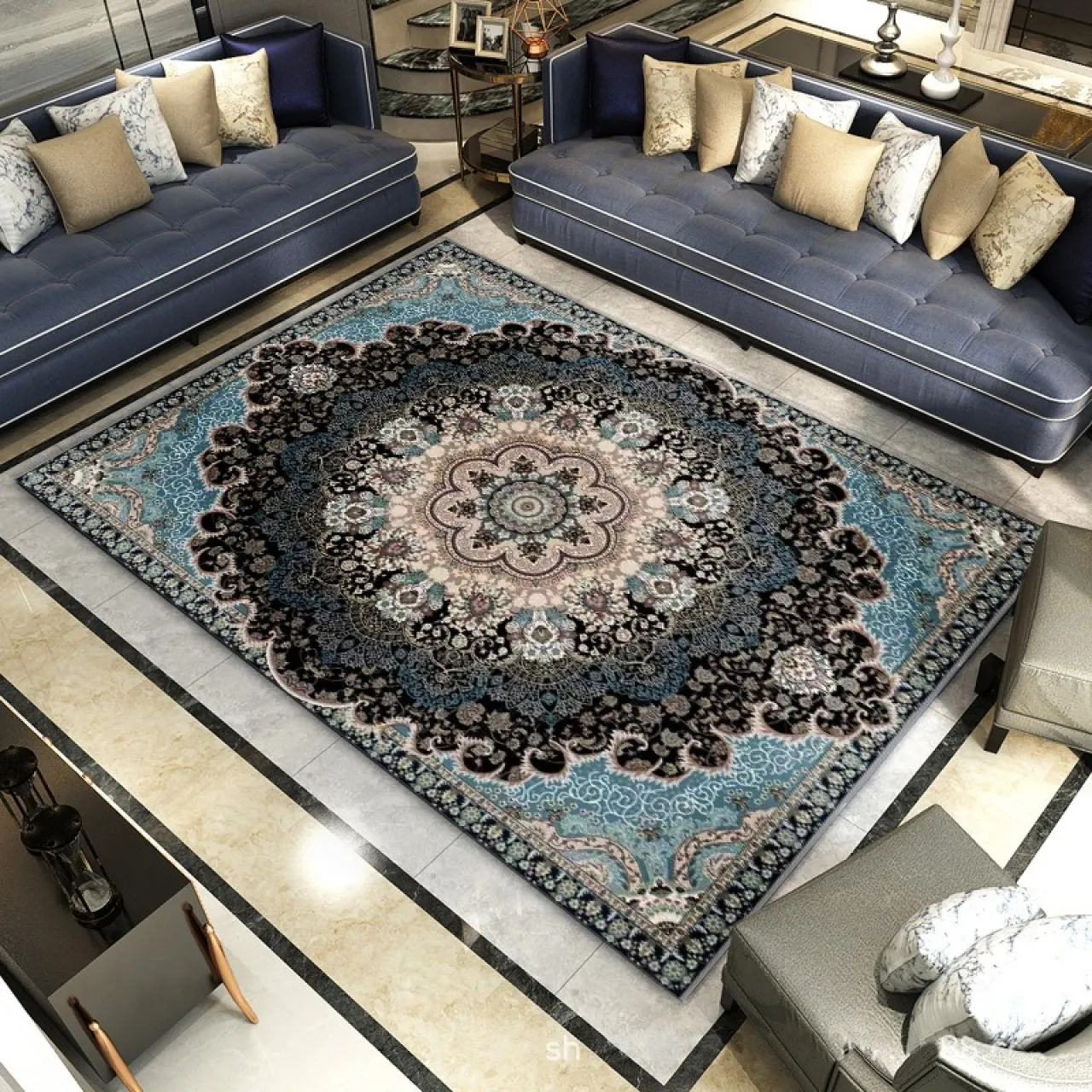
Khaberni - A rug is a floor canvas that adds aesthetics to the home decor; it defines a specific area, prints it with a unique "personal" touch, and gathers every element and content of the room it resides in together, in a way that no other element can do. When it comes to the living room rug, there are many rules to follow to make the appearance of this often-used family room — witness to conversations, emotions, and sweet moments — look its best. For every reader who intends to buy a new rug for their living room, here's a helpful guide in the following lines. Knowing the rules of proper rug placement in the living room ensures a balance of comfort, elegance, and fittingness - the key to making the space look attractive.
10 Guidelines for Distributing a Rug in the Living Room
1. One of the key rules in coordinating living room decor is how to place the rug, which should be large enough to have at least the front legs of the furniture, especially the sofa and chairs, on it. As for the sectional sofa, all of its legs should rest on the rug. To achieve a coordinated look, ensure the rug extends at least 15 to 20 centimeters beyond the edges of the sofa.
2. For a spacious living room, choose a round rug to soften the angular lines of the sofa. Always make sure there is enough space in front of the sofa to place a coffee table.
3. In an L-shaped living room, use the rug to mirror the shape of the couch, defining the seating area.
4. Remember that selecting a small rug for the living room isn’t appropriate, but if you do like one, you can always place it on top of a suitably-sized jute or sisal rug.
5. Do not place the rug too close to the walls in the living room, as this could make the space seem small and inconsistent. The rule related to distancing the rug at least 24 inches from the walls in spacious living rooms, and 18 inches at minimum in a small living room, should be observed.
6. There's no harm in distributing more than one rug in the living room, thus defining different areas for sitting, watching TV, and working from home... with the stipulation that each rug be wide enough to accommodate the furniture legs.
7. The rug should extend beyond the coffee table, providing a soft surface for the feet while watching TV.
8. In a small living room, placing the rug tightly can enhance the spaciousness of the area. Choose a rug size that allows for consistent floor borders around all edges, typically between 15 and 20 centimeters. Arrange the rug to define the main seating area, with at least the front legs of the furniture on it. Consider using a light-colored rug to enhance the feeling of a larger space. For extremely narrow living rooms, a round rug can add a touch of softness to the area and create a feeling of flow.
9. In a living room with a fireplace, consider the latter a focal point in the decor, and arrange the rug in a way that complements the fireplace and does not compete with it. In large living rooms, use the rug to define a conversation area opposite the fireplace, leaving a free space between the rug and the fireplace to create a safe and visually appealing transition.
10. It is possible to use a rug to cover the entire floor of the living room entirely, or you can place the rug in the center of the room if your furniture is away from the walls.
Following the above guidelines will help create a balanced, stylish, and well-thought-out living space.
Should I Choose a Rug, a Mat, or a Carpet for the Living Room Floor?
A rug (or carpet) provides full coverage of the living room floor, offering a permanent solution, as rugs are usually larger and more ornate, used to define specific areas within the room or to add an aesthetic touch to the decor, such as noise isolation. Rugs are available in various sizes, materials, and designs. A mat is smaller and more practical, used at a home's entrance, in the kitchen, or the bathroom, designed for specific purposes like trapping dirt, cushioning, or preventing slips. The cost of rugs is higher compared to mats and carpets, but there are budget-friendly options up to luxurious, high-design pieces. Carpets, meanwhile, offer more flexibility and are easier to change, especially if the homeowner has children or pets under her roof. Generally, natural rug materials like wool, jute, or sisal are fantastic options, helping to design a practical living room that lasts long. Synthetic or machine-made rugs are also great options and reasonably priced.
Decor Tips
When choosing an affordable rug for your living room, keep these tips in mind:
• Choose durable materials like polypropylene for rugs placed in any busy area of the home.
• Opt for neutral rug colors, as these match with various interior design styles.
• Consider layering smaller rugs for a modern and economical appearance.
• Don't buy a single small rug as it may make the room look disconnected.
• Don't forget to use a rug pad, even with cheaper rugs, to prevent slipping.
Remember that a carefully chosen and affordably priced rug can significantly improve the appearance of your living room without straining your budget.