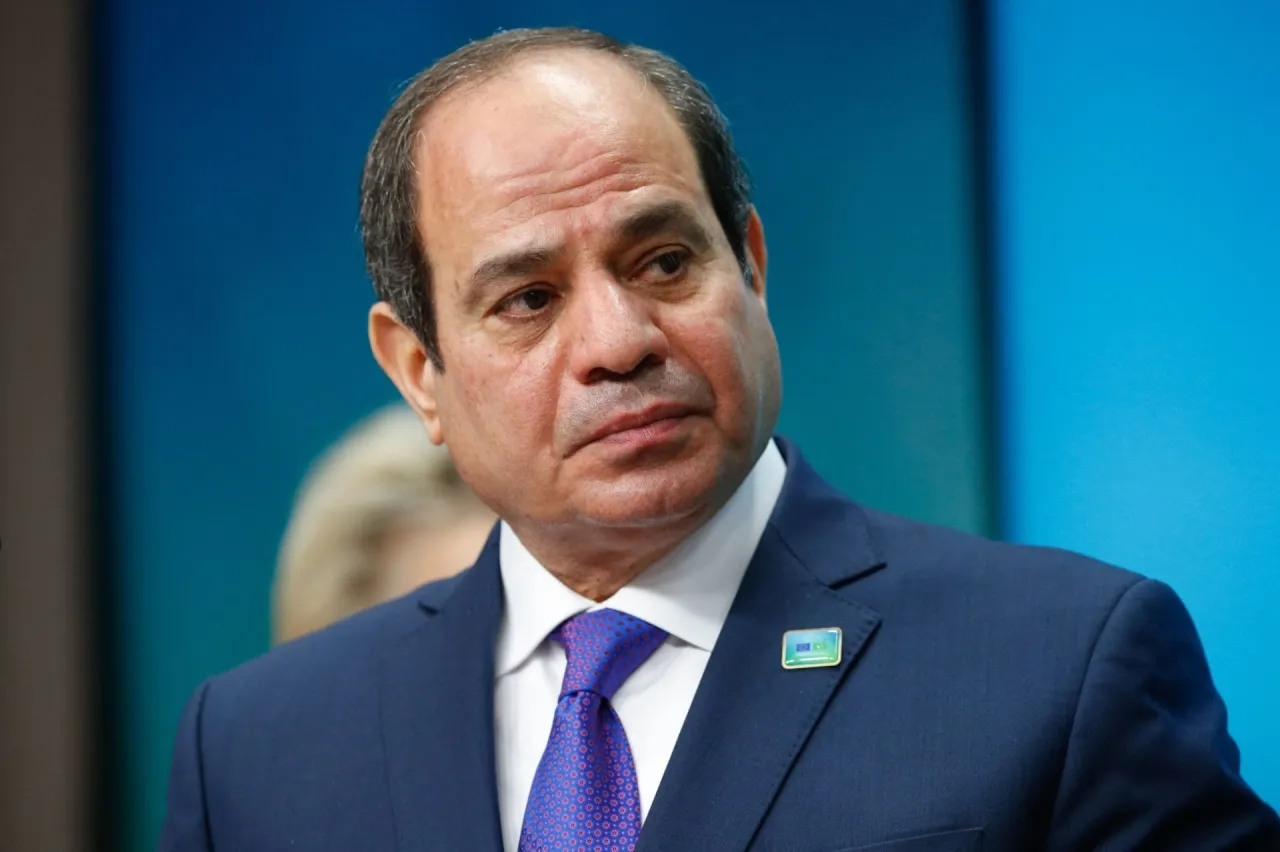
Khaberni - Egyptian President Abdel Fattah El-Sisi emphasized today, Sunday, that Egypt will not stand idly by in the face of the irresponsible approach from Ethiopia, and it will take all necessary measures to protect its interests and water security.
El-Sisi said, in a recorded speech delivered at the opening of the eighth session of the Cairo Water Week today, that water protection is a matter of fate and is no longer a local or regional affair, firmly rejecting any unilateral actions taken on the Nile River. He added that Egypt has followed a fair diplomatic path with the Ethiopian dam, noting that "Ethiopia's undisciplined management of the dam has harmed the downstream countries".
El-Sisi clarified that Egypt faces major challenges in the water file, as water is an existential issue, affecting the lives of more than 100 million citizens, who depend by more than 98%, on a single source, originating from outside its borders, which is the Nile River. He pointed out that "Egypt believes unshakably that international rivers were not created to be borders that separate nations, but are lifeblood arteries that pulse with integration, and bridges of cooperation that connect peoples and unite destinies." El-Sisi said, "Water security is not a luxury, and sustainable development is not an option, but both are inherent rights, protected only through a fair partnership based on international law, embodying the spirit of mutual benefit, elevating the principle of avoiding harm, and acknowledging that the right to benefit is always coupled with the duty to respect rights."
From this standpoint; Egypt clearly and firmly announces its categorical rejection of any unilateral actions taken on the Nile River that ignore norms and international agreements, threaten the interests of the basin's peoples, and undermine the foundations of justice and stability," he explained. Development is not a privilege for a specific country, but a collective responsibility of all the river's peoples, a right protected by cooperation, not by isolation," he pointed out, noting that Egypt has pursued over 14 years of exhausting negotiations with the Ethiopian side, a fair diplomatic course characterized by wisdom and solidity, earnestly seeking to reach a binding legal agreement concerning the Ethiopian dam that considers everyone's interests and achieves a balance between rights and duties. El-Sisi affirmed that "these efforts were met with obstinacy that can only be explained by the absence of political will, and a quest to impose a fait accompli, driven by narrow political considerations, far from the actual needs of development, apart from false claims of unilateral sovereignty over the Nile, while the established truth is that the Nile is a shared property of all its nations, a collective resource that cannot be monopolized."
He noted that "a few days have passed since the inauguration of the Ethiopian dam, and the evidence has actually proven the validity of our demands for the necessity of having a legally binding agreement for its parties to regulate the operation of this dam," noting that "in the past few days, Ethiopia, through its undisciplined management of the dam, has caused damage to the downstream countries, due to the irregular flows, which were discharged without any notification or coordination with the downstream countries."