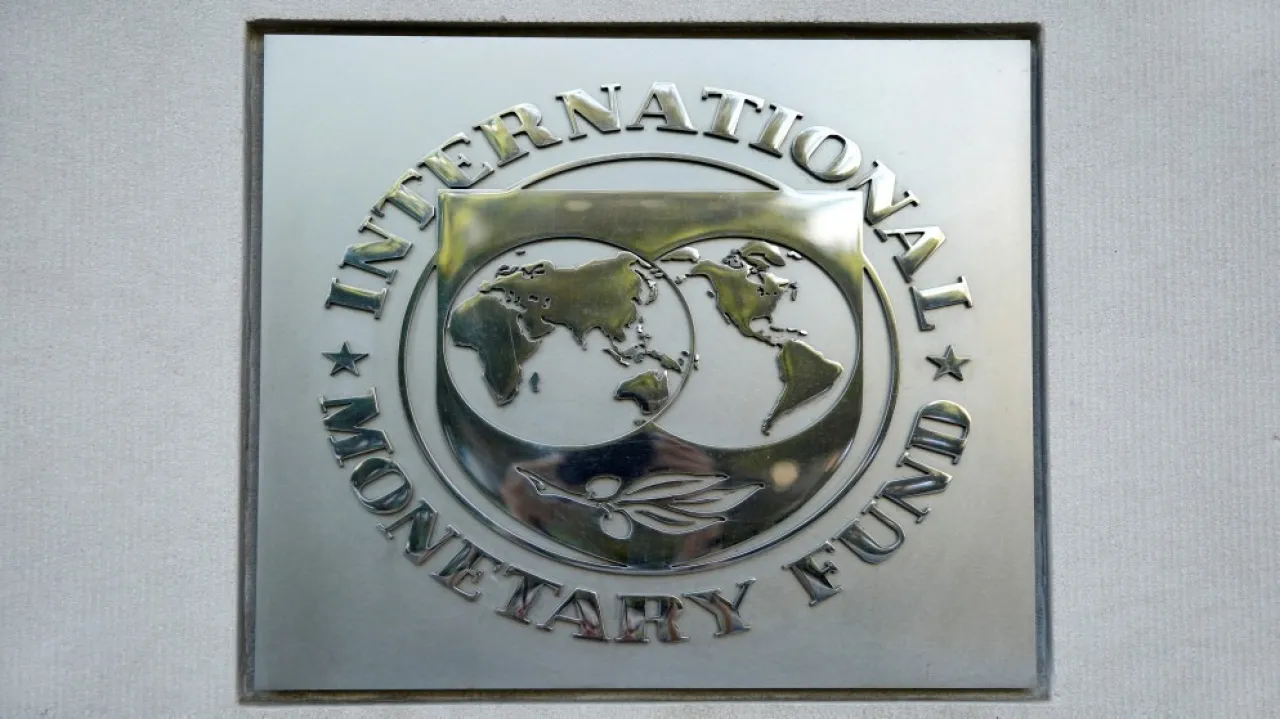
Khaberni - Kristalina Georgieva, Managing Director of the International Monetary Fund, said that the Federal Reserve (the American central bank) might cut interest rates again this year, but it will have to carefully balance between declining growth prospects and indications of a halt in inflation slowdown.
Georgieva told Reuters that the American economy has proven its strength and exceeded most expectations, growing by 3.8 percent in the second quarter, and that domestic demand remains strong despite signs that employment is not as robust.
Georgieva added in an interview conducted with her on Wednesday, "It's a picture that is not entirely clear... Therefore, in this environment, and considering the halt in the slowdown of inflation and that the economy might also be a bit weak, it's crucial that the Federal Reserve do the right thing."
The American central bank had cut interest rates by a quarter of a percentage point at its meeting in September, a move described by the bank's president Jerome Powell and others as a means to keep policy tight enough to curb the economy and exert downward pressure on inflation, while providing a more flexible policy that could help insure against rapid weakening of the labor market.
She said that consumers have not yet felt the full impact of President Donald Trump's imposition of higher tariffs because companies had increased their inventories before the tariffs were raised, indicating that some companies with large profit margins are bearing the cost.
She added that Trump's increase of tariffs comes after decades of very low tariffs in the United States and moves made by other countries about a decade ago to lower their tariffs.
Trump's change of that equation has transformed the global economy into a truly multipolar one, as many countries are now exploring opportunities for cooperation with regional partners or signing multilateral agreements with other regions.
She said that this new world is likely to continue as it is.
She continued, "I don't think we will return to the world we had, if you want to describe it that way, before the COVID-19 pandemic before all these shocks hit us... I see tremendous potential in places like the Association of Southeast Asian Nations (ASEAN), like the Gulf, and in some regions in Africa where there are strong economies, to move in this direction towards more regional integration in trade and financial services, and I think that's a good thing."