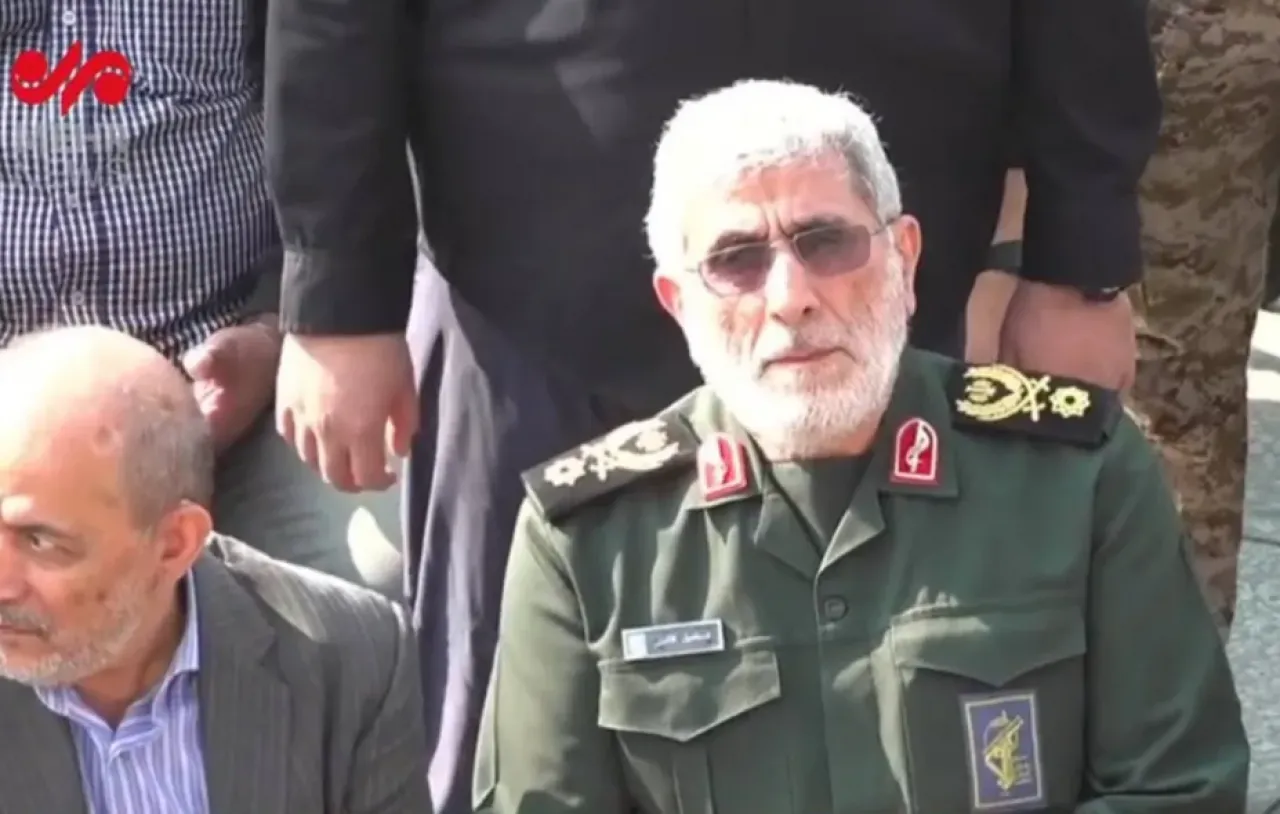
Khaberni - The commander of the "Quds Force" in the Iranian Revolutionary Guard, Ismail Qaani, revealed new details about the "October 7" operation (October) carried out by "Hamas" in 2023, confirming that the first-line leaders in the movement were unaware of its exact timing, including Ismail Haniyeh.
Qaani said in an interview broadcast by the "Naseem" network affiliated with the Revolutionary Guard and state television, "When the operation of the seventh of October began, I was entering Lebanon, and I was thinking about how to open this topic with Hassan Nasrallah, and what we should or shouldn't do. But before I spoke, I noticed that, from the first moment, he was completely immersed in thought."
Qaani continued: "Neither we, nor Nasrallah, nor even the main leaders of (Hamas) were aware of the exact timing of the operation beforehand." He added: "Ismail Haniyeh was on his way to the airport heading to Iraq, and he learned of the start of the operation on his way back."
However, Qaani confirmed, which increased the ambiguity and confusion about the backstage of the operation, that "Nasrallah began planning early for the post (Aqsa Flood) phase."
Ismail Haniyeh held the position of head of the political bureau of the "Hamas" movement and is considered one of its most prominent political leaders. In July 2024, he was assassinated in Tehran following an explosion targeting his residence in Za'franiya neighborhood, during his visit to participate in the inauguration ceremonies of the Iranian president Masoud Bazshkian.
Unlike leaders who acknowledged targeting him, Israel has not publicly and officially spoken about the assassination of Haniyeh to this day, nor has Qaani's name appeared on any of the Israeli target lists.
Qaani's statements shed light on the ambiguity that preceded the attack carried out by the "Hamas" movement from the Gaza Strip, which resulted in hundreds of deaths in Israel, and triggered an unprecedented war.
Although Israel has repeatedly accused Iran of planning or funding operations against it in Gaza and Lebanon, Tehran usually denies direct involvement and asserts that its support is political.
Regarding the pressures that "Hezbollah" is facing in Lebanon, Qaani considered that this group "is growing stronger and more stable despite the pressures and psychological wars it faces." He emphasized that "(Hezbollah) represents a significant force in the region, and it is rapidly rising in a way that cannot be broken or weakened" in his words. He added: "The resistance is growing stronger and more resilient, and all the weapons of the enemy and its psychological wars have not been able to weaken it. The resistance continues and will not disappear, and (Hezbollah) will remain strong and steadfast as it has always been."
Where was Qaani?
During the interview, Qaani commented for the first time on widely circulated news about an assassination attempt against him, saying: "It was all rumors... We acted in a way that prevents the enemy from easily uncovering communications." Looking back to the early weeks of October 2024, the Iranian general was a prominent name in the media due to the ambiguity surrounding his fate, whether he had been killed during Israeli strikes on the southern suburbs of Beirut, or whether he had disappeared for security reasons, according to unconfirmed reports. Qaani said: "I was acting in a way that prevents the enemy from easily uncovering communications, and so sometimes they launched rumors in an attempt to track communications." He added that "the leadership moves with complete secrecy, and their communications are protected," saying: "I even hesitated to go on TV to participate in the program because of the rumors." He confirmed that forces had taken doubled measures to ensure the safety of leaders, countering all attempts targeting them. Speculations spread about the fate of the "Quds Force" commander after reports stated that he had gone to Beirut, in October 2024, to closely supervise the situation of "Hezbollah" following the killing of the general secretary Hassan Nasrallah. At that time, "Reuters" reported from Iranian officials themselves that they "lost contact with Qaani who was in Lebanon after Nasrallah's death," before Iraj Masjedi, deputy commander of the "Quds Force," declared that Qaani "was in good health and carrying out his activities."