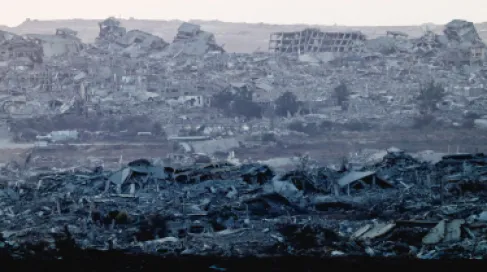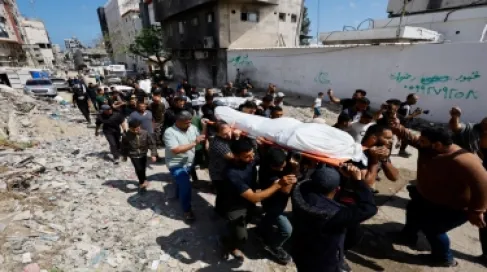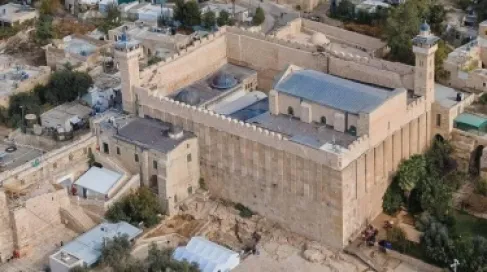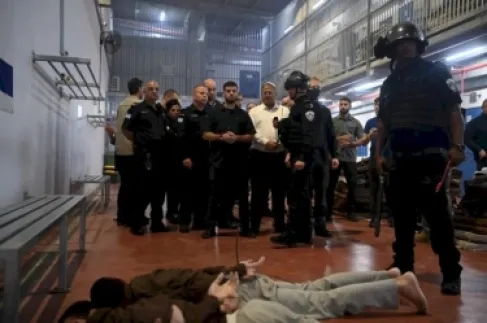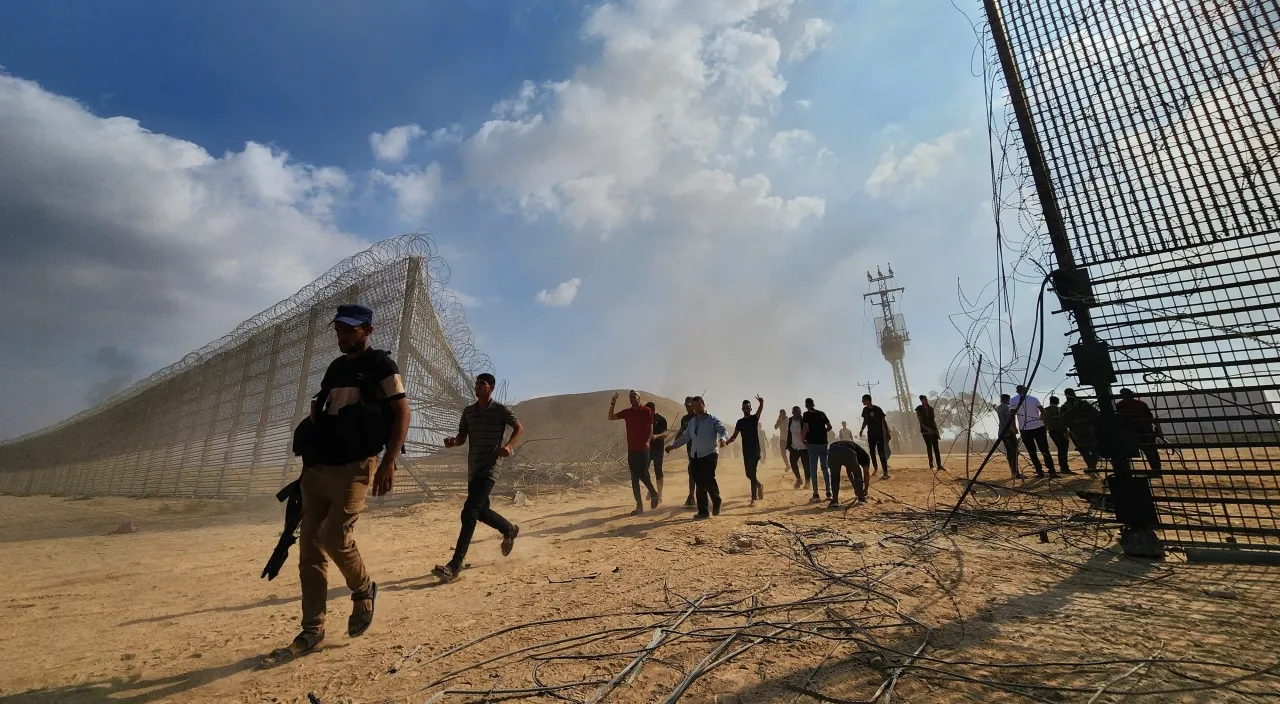
Khaberni - Two years after the Al-Aqsa Flood operation, carried out by the Palestinian resistance on October 7, 2023, the situation in the region seems different, along with Israel, where Prime Minister Benjamin Netanyahu exploited this event as much as possible, to present Israel as a victim, requiring the falsification of facts and fabrication of stories to serve the narrative of the occupation that it suffered its own "September 11," implying that everything before must be completely different from everything after, and that it is in the position of a victim defending itself. However, the facts on the ground told a different story. In Gaza, more than 67,000 martyrs fell at the hands of the occupation army, in addition to the missing, tens of thousands of injured, and hundreds of thousands of displaced persons after almost every home in the sector was destroyed, making the Gazans the true victims. Despite Israel's attempts to use "anti-Semitism" as a hook to describe any movement against the genocide it leads, the facts confirm that it lost the battle of consciousness, and did not succeed in its attempt to portray the Al-Aqsa Flood operation as arising from a vacuum, and that the conflict began afterward, obscuring that the operation came after the rampant occupation in the West Bank, particularly in terms of settlement activity, exacerbating the suffering of Palestinians in Gaza, alongside the heightened frequency of raids on Al-Aqsa Mosque, especially in 2022, especially with the presence of the most right-wing government in the country's history.
Today, two years after October 7, Israel finds itself amidst clear global isolation, vividly demonstrated in what transpired during the proceedings of the United Nations General Assembly, along with continued worldwide protests denouncing the war and Israel's unprecedented aggression. Domestically, it seems that the state of polarization post two years of aggression is returning to Israel, despite the general unification of Israelis behind their government in its brutal war on Gaza, which extended to the West Bank and other fronts, where the Israeli society acted like a single tribe.
After losing the image of deterrence following the "Al-Aqsa Flood" operation on October 7, 2023, which included extensive and coordinated operations on multiple fronts, by land, sea, and air, with an offensive nature that mimicked the style of regular armies, and directly targeted army camps, creating a shock for both the political and military levels, Israel worked to restore this image, with all its bloody might on various fronts, resulting in significant military successes against Iran and Hezbollah in Lebanon and in Syria, killing more than 67,000 Gazans, aside from the tens of thousands of injured, and hundreds of thousands of displaced and starving people in the sector, amid a dominance of the instinct for revenge and retribution on the basis of teaching Gazans a lesson they will not forget, which is still ongoing for two years, manifested in genocide with absolute American support and Arab and global silence, and now escalated recently visibly.
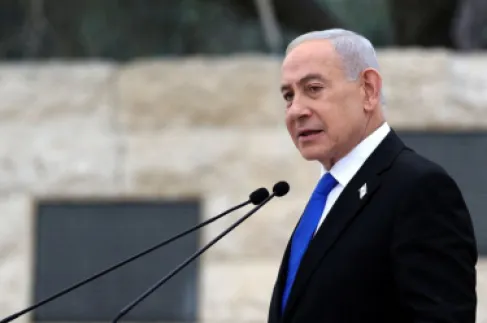
Investigations related to the failure of October 7th by the occupying army are still ongoing, conducting operational investigations at more than 40 locations, which saw clashes in the Israeli areas surrounding Gaza, and what happened there from military and prior intelligence failures, poor coordination among forces, lack of soldier readiness, and failure of defense systems, etc., amid Hamas's surprise attack. It was notable that none of the Israeli intelligence agencies, such as the Shin Bet and the Military Intelligence Division, had uncovered Hamas's plan before the attack. However, the most prominent demand in Israel today, on the level of investigations, is the formation of an official investigation committee, and the announcement by Prime Minister Benjamin Netanyahu that he takes responsibility for the failure, like other officials, such as the former Chief of Staff Hertsi Halevi did. However, Netanyahu has not officially declared taking responsibility, and carries it on the security level, refusing to this day to form an official investigation committee, instead preferring a government committee that he controls and influences its members.
Netanyahu has not officially announced taking responsibility, and holds it at the security level, also refusing to this day to form an official investigation committee
In connection, two years after the genocidal war, a special poll conducted by the Israeli Institute for National Security Studies (INSS) offers a complex picture. The majority of the Jewish public in Israel indicated that their trust in the Israeli military remained the same or increased (51% and 19% respectively), while about one-third (28%) stated that their trust in the military had declined. In contrast, trust in the government saw a sharp decrease, with 61% of the public stating their trust in the government had decreased, compared to 38% who said it remained stable. 43% of Israelis believe that the security situation in Israel has improved since October 7, compared to 42.5% who see it as deteriorating. Two years after the war, 51% of Israelis still fear the possibility of another similar event happening again on the Gaza border. Regarding the Israeli military's readiness to protect towns in the coming years, the majority of Israelis believe the military is highly or very highly prepared to protect the northern (53.5%) and southern (57%) towns, yet, 37% harbor significant doubt about its ability to protect the settlements in the occupied West Bank at a rate of 39%. The survey results show that the majority of the Jewish public (53%) believe the government's decisions during the war were based on low or very low security considerations only, which might indicate their mistrust in the government, believing its decisions are politically driven. On the two-year anniversary of the war, the Israeli Ministry of Security announced that since October 7, 2023, the number of soldiers and security personnel killed has reached about 1152, "including 487 (about 42%) under the age of 21, while 141 were over the age of forty. The data also recorded about 80,000 psychologically injured. Official institutions acknowledged about 34,000 physically or psychologically disabled, out of more than 36,000 requests submitted to the National Insurance Institute, with other requests still being considered.
Severe polarization after the unity
Post October 7, 2023, most Israelis united behind the aggression on Gaza, after a state of polarization dominated Israel, based on the government's plans to undermine the judiciary. Despite the current challenges facing the state of occupation—security, political, and social—gradually, polarization seen before the war is returning. This became evident recently and over the last two years, through demonstrations supporting a deal to return captured Israelis, and others supporting the government obstructing it, some of which involved tensions and disagreements, and even running over protesters. Many Israelis consider the occupation state, which was keen on recovering every captured soldier, no longer so, rather it caused the army's attacks on Gaza to kill a number of them. A wide segment, even including analysts and former generals, see that since the beginning of the current aggression, Israel has lost many of the "values" it was founded on, including the government abandoning the captured.
But there are other polarizing actions, reflected through the Israelis' trust in institutions. According to a comprehensive study conducted by the "תַּחְלִית" Israeli Institute, "trust in institutions is collapsing, but what is more dangerous is the severity of the polarization between camps. In the last three years, a clear trend can be observed consisting in the non-random classification of public institutions as politically aligned with a particular camp, thus deriving the level of trust in that institution." For example, "the comparison between the trust of opposition voters and coalition voters in the same institutions produces an inverted image. While the Supreme Court enjoys the trust of 76.4% of opposition voters, only 10% of coalition voters trust it. The worst off is the government's legal adviser, trusted by only 4% of coalition voters, compared to 74.3% of opposition voters."
Feeling of isolation
In any public Israeli place these days, it is possible to observe a general dissatisfaction with the Israelis' feeling of isolation; they are outcasts in the world politically, sports-wise, in tourism, and in various other areas. They clearly feel unwelcome. Many have even encountered recent incidents of being ejected from restaurants and other places. They are also closely watching the massive demonstrations around the world, especially in Spain and Italy during this period, supporting Gaza.
And there is a prevailing feeling that Israel lost the battle of consciousness and narrative, and that the damage is irreparable in the near term, even according to current and former Israeli officials. All of this comes despite the vast sums Israel allocates for its propaganda abroad, investing them in influencers, activists, and various other tools and means. Despite Israeli officials, some of them in the occupation state's overseas missions, trying to frame what is happening as "anti-Semitism," which is the first thing Israel proclaims in its defense, media and political voices, and many other circles, hold Netanyahu and his government responsible for the deterioration of Israel and Israelis' stature and reputation on the international stage due to the aggression on Gaza.
Media and political voices hold Netanyahu and his government responsible for the deteriorating stature and reputation of Israel and Israelis on the international stage, due to the aggression on Gaza
It's not only the world’s populations rejecting the aggression or advocating for the recognition of the State of Palestine. But many countries have canceled arms deals with Israel, such as Spain for example, not to mention others keeping their deals in the dark. All this at the peak of the war of extermination and starvation, and the wave of international recognition of the State of Palestine, made Netanyahu admit himself that Israel is experiencing isolation, which will deepen, and it will have to rely on itself. But even before that, Israeli plans were introduced, almost from the beginning of the war of extermination, to increase reliance on local industries for ammunition and related supplies, following the shortage it faced during a period, due to the massive quantities used in Gaza, Lebanon, Iran, Yemen, Syria, and elsewhere.
Damages in various areas
The damages have affected various areas in Israel, including tourism, where the number of tourists arriving has sharply decreased, as many airlines have stopped their flights to and from Tel Aviv, with some still doing so, as well as the closing of hotels and tourist sites for a relatively long period. Many businesses and commercial interests have also closed or reduced their activities, especially in the south and north, although many have resumed operations in recent months. The citizen is paying the price for the significant deficit in the budget and raising taxes, due to war expenses and increased budget of the Ministry of Security, inflation, and severe price increases, among others, apart from the damages in the education sector.
Apprehensions regarding elections
Recently, apprehensions from Israeli circles have surfaced regarding the potential attempt by the current government to postpone the scheduled date for the upcoming Knesset elections, set for October 2026, using security pretexts. Amid the general debate on elections, after the political and social crises following October 7, 2023, a decent proportion of Israelis believe the upcoming elections will not be fair. According to a survey conducted by the "Institute for Freedom and Responsibility," associated with Reichman University in Herzliya earlier this year, the percentage reached 29%. The institute explained that before that and after most recent election rounds, fears of election rigging and widespread vote theft were heard, especially from the Likud Party and the political right. Currently, fears from the political opposition are also heard regarding tampering with the integrity of the upcoming Knesset elections, for example, through the control by the current coalition over the Central Elections Committee, or by affecting the ability of Arab parties to participate in the upcoming elections. What the site reports is not far from what happens in reality, including Netanyahu's insistence on appointing David Zini as head of the "Shin Bet," a body that has extensive powers in elections.
Israeli circles are apprehensive about the current government's potential attempt to postpone the date of the upcoming Knesset elections, scheduled for October 2026
The debates around elections have gained additional momentum after a statement published in September/October last year by former Prime Minister Naftali Bennett, who is preparing to return and compete in the upcoming elections, caught the attention of the Israeli press, which described some of it as exceptional. Bennett clarified that he received countless inquiries about whether the elections would be held at all, and promised that "we will not allow anyone to postpone or disrupt the elections." He wrote that he addresses the leaders of the security and law enforcement agencies, explaining that he is aware of the immense pressures exerted on them, but he requests: "Do not agree to violate the law or manipulate the rules due to political pressure. You are responsible for your actions. Do not be afraid. Soon the current government will be replaced." A number of analysts considered the statement a message to Netanyahu, noting that protest organizations and opposition blocs talk a lot about the intention to harm the integrity of elections, deter Arab voters from voting, and seek to exclude Arab parties from competition. Some considered the talk of disrupting elections, or postponing them, as spreading like a plague recently, in liberal circles on the political map, and among opposition voters, and as a "natural reaction in the face of the criminal and mafia-like behavior adopted by the ruling coalition, which tramples on every basic rule, and wages a war against the judicial system, with determination no less than that used by the Israeli military in its maneuvers inside Gaza."