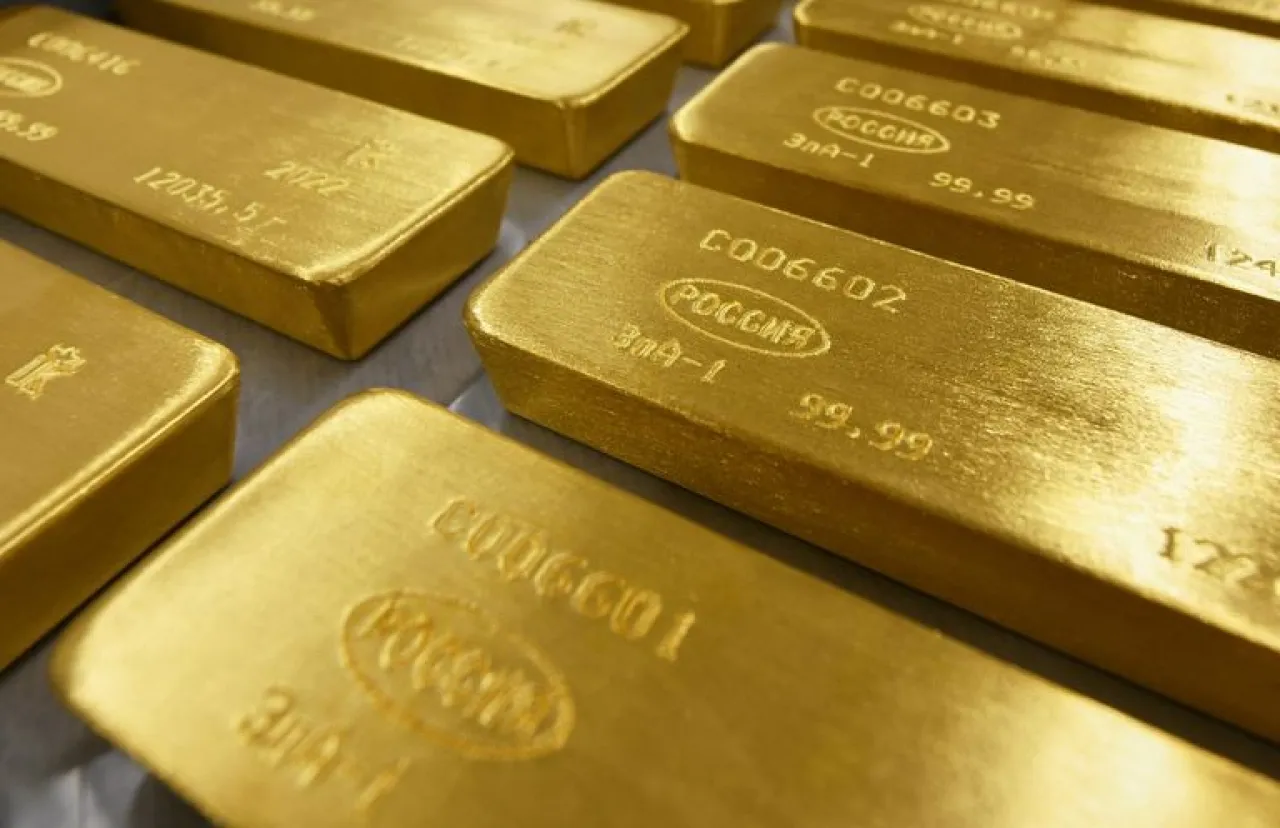
Khaberni - Gold continued its strong rise in global markets, driven by a set of economic and political factors, as it approaches the $4,000 per ounce barrier, amid expectations of reaching new record levels in the upcoming period.
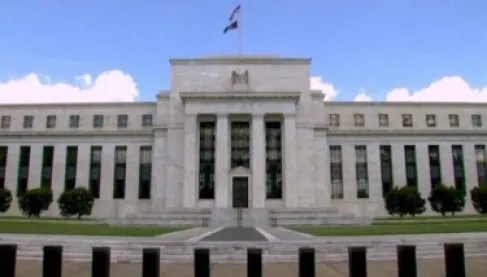
This sharp rise in the prices of the precious metal follows a series of developments that have enhanced its appeal as one of the most important safe havens during times of turmoil, particularly amid global geopolitical volatility and changes in the policies of major central banks, including the U.S. Federal Reserve.
Before Donald Trump's return to the White House, gold prices began a strong ascent that nearly doubled its value in less than two years, clearly reflecting deep shifts in investor behavior and their inclination towards safe assets away from fluctuations in the stock and currency markets.
Gold traditionally benefits from three main factors that drive its prices up:
Lower interest rates, which reduce the opportunity cost of holding it compared to yield-generating assets.
Rising inflation rates, which enhance its role as a store of value and a tool for hedging against the erosion of purchasing power.
Weakness of the U.S. dollar, which enhances the attractiveness of the yellow metal to global investors as it is denominated in dollars.
At present, these three factors are converging in favor of gold. The Federal Reserve has begun a cycle of interest rate cuts since last month, at a time when inflation rates remain high and exceed targeted levels.
Meanwhile, the United States is experiencing a state of increasing political disturbances, shaking confidence in the strength of the dollar as a global reserve currency and enhancing the attractiveness of gold as a safe and stable alternative.
However, a new notable factor at this stage is the strong return of individual investors to the gold market. According to Bloomberg data, Exchange-Traded Funds (ETFs) recorded significant investment inflows during last September, totaling more than 100 tons of gold, the highest level of monthly inflows in over three years.
An ounce of gold
Despite this significant increase, data shows that the total global holdings of gold are still below their peak in 2020, indicating that the market still has considerable room to climb further in the coming months.
In this context, analysts at Goldman Sachs expect gold prices to reach about $5,000 per ounce if investors shift just 1% of their holdings in U.S. Treasury bonds to the precious metal, a scenario that seems likely amid continuing global economic and financial risks and growing uncertainty about the future of the American economy and monetary policies.
What are the reasons for the record rise in gold prices?
Reduction of U.S. interest rates by the Federal Reserve, which has reduced the cost of holding gold compared to other assets.
Continued high inflation in major economies, which has increased the attractiveness of gold as a hedging tool.
Weakness of the U.S. dollar due to political and financial uncertainty in the United States.
Global geopolitical disturbances that have pushed investors towards safe assets.
Increased investment demand from Exchange-Traded Funds (ETFs) and individual investors in Asia and Europe.
What are the current global and local gold prices?
The price of an ounce of gold globally ranges from about $3950 to $3980 in the latest trades, approaching the $4000 barrier for the first time in its history.
The price of 24-karat gold per gram in Arab local markets ranges from $254 to $260 (according to momentary price fluctuations).
The most traded 21-karat gold ranges between $220 and $225 per gram, depending on the country and local exchange rate.
Where are gold prices heading in the coming period?
Analysts at Goldman Sachs and J.P. Morgan expect gold to surpass the $5,000 per ounce level by 2026 if interest rate reduction policies and the decline of the dollar continue.
Continued inflow of institutional investments may support the upward trend in the medium term.
Any global political stability or sudden monetary tightening could temporarily slow the rise.
Could we see a decline in gold prices?
The possibility of a short-term correction is real if investors choose to take profits upon touching the $4000 level.
A renewed rise of the U.S. dollar or an increase in bond yields could temporarily pressure gold.
Experts believe any decline would be a limited correction within a long-term upward trend, supported by increased global demand.
Even if prices temporarily decrease, gold is still on a strategic upward trajectory until 2026.