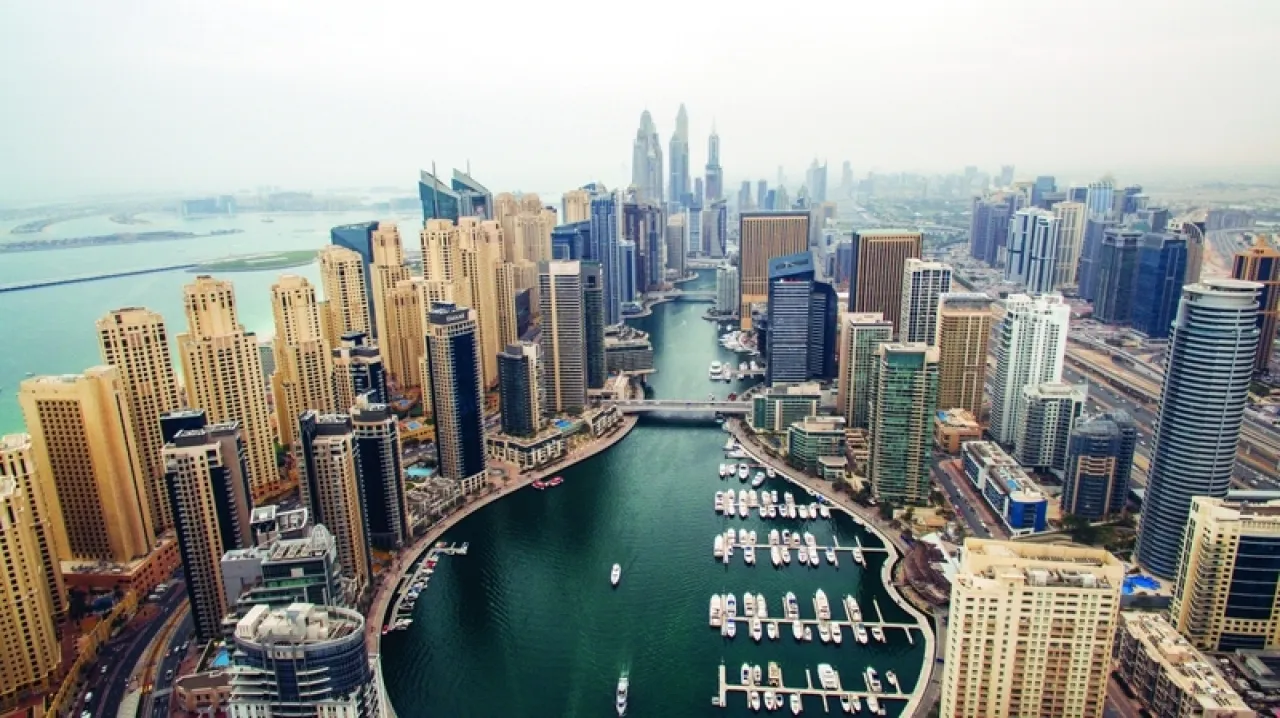
Khaberni - Real estate professionals confirmed that the rental market in Dubai saw a marked variation in the average annual rental prices for different residential categories in September, driven by changes in demand and the quality of the real estate offerings, with some key areas recording selective increases.
They explained to “Emarat Today” that the market is moving according to three main price levels: the official real estate index, the price circulating in the market, and the price set by the owner based on their personal circumstances, which creates a clear difference between the announced values and the realistic ones.
They said that the variation in rental prices in Dubai is reshaping the demand map among areas, asserting that tenants' options are currently distributed between mid-range areas like Deira and Al Nahda, and luxury areas like Jumeirah and Palm Jumeirah, according to income and lifestyle.
They anticipate that the market will continue its moderate movements during the last quarter of this year, driven by an expansion in the residential offerings in Dubai’s real estate market, creating a balance between supply and demand, noting that the development of new residential projects will help contain price increases and support market balance.
Reset
In detail, the Vice President of the Real Estate Sales Department at “Bayut,” Veepa Ahmad, said that “data from August and September indicate that the rental market in Dubai does not move uniformly but reflects high flexibility in interacting with actual demand by area,” explaining that slight increases in areas like (Dubai Marina and Business Bay) are offset by a slight decline in areas like (Deira and International City), indicating tenant mobility according to their residential and financial priorities.
She added: “We noticed in September an increased demand for smaller units, which explains the 2.5% growth in studio rentals in Jumeirah Village Circle, in contrast to a slight decline in other areas, reflecting the growing category of individuals and professionals looking for flexible and budget-appropriate accommodations.”
Veepa Ahmad noted that despite some slight decreases in rental prices at Jumeirah Beach Residence (JBR), it still tops the list of most expensive areas across all categories, whether studios, one bedroom, or two bedrooms, indicating the continued high demand for premium beachfront locations, supporting the ongoing rising trend of its rentals.
She indicated that “recent movements suggest that the market is undergoing a gradual resetting phase, as some areas begin to achieve relative stability or even limited decline, especially in larger apartments,” pointing out that this trend may continue in the coming months, driven by the expansion of the real estate offerings and increased competition among areas.
Tenant movements
Meanwhile, the manager of “Awad Gargash Real Estate,” Raad Ramadan, said, “The marked discrepancy in residential rental prices between August and September reflects the dynamic nature of Dubai's real estate market,” explaining that this is due to several factors, the most important being the quality of the property, its geographical location, and the availability of demand in each area.
Ramadan pointed out that tenants’ movements are primarily based on income level and housing needs, where some move toward moderately priced areas such as (Al Nahda and Global Village), while others prefer luxury areas like Jumeirah and Palm Jumeirah, which have high prices due to their prime locations and sea views.
He stressed that “the supply and demand equation remains the primary driver of rental market movements,” noting that vibrant areas like (Dubai Marina and Business Bay) maintain high rent rates, owing to their proximity to business centers and services.
Ramadan explained that the real estate market in Dubai is moving according to three main price levels, the first being the index price issued by official entities, which forms the legal ceiling for annual increases, and the second is the market price circulating on real estate platforms, reflecting the instantaneous supply and demand.
The third level, Ramadan stressed, is represented by the “personal price” set by the owner based on their particular circumstances, which often exceeds the official reference prices.
He emphasized that the disparity between the three levels reflects the dynamic nature of the market, where the field reality is not only measured by indicators but by daily interactions with the market and the actual trends of demand.
He predicted that the market will witness a relative stability in the last quarter of 2025, noting that rental price movements will remain linked to the expansion of the offerings and the distribution of demand among areas, adding that “the development of new housing projects will contribute to containing price increases and supporting market balance.”